
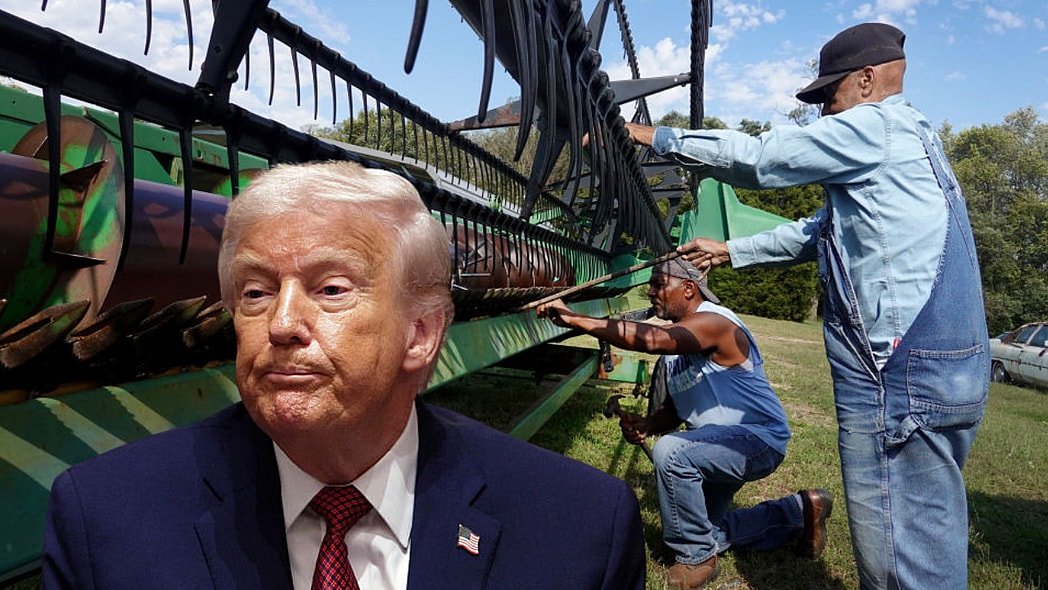
The Trump administration announced on Monday that American farmers will receive $12 billion in relief aid as they struggle to keep their farms afloat amid rising costs and a decline in markets.
The one-time payment is intended to provide farmers with a much-needed economic boost as the markets endure the effects of President Donald Trump’s global tariffs on foreign trade. The U.S. Department of Agriculture (USDA) said the federal funds to “bridge payments for American farmers impacted by unfair market disruptions” would be received by the end of February.
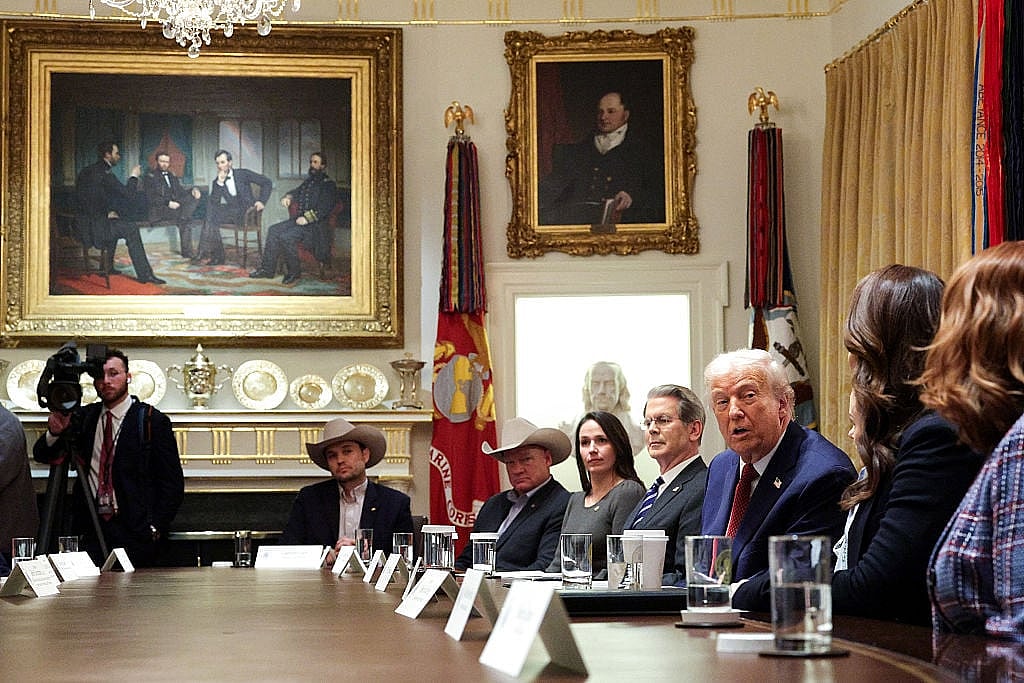
“We’re taking a relatively small portion of [tariff revenue] and we’re going to be giving and providing it to the farmers in economic assistance,” Trump said of the tariffs during a roundtable with farmers announcing the aid package at the White House. “We love our farmers, and as you know, uh, the farmers like me.”
While farmers welcome the economic relief, Black farmers, none of whom were invited to the White House’s Monday roundtable, are likely to see little of the benefits due to cultural and historical barriers.
“That’s not going to help farmers like myself, who need help now. And many Black farmers aren’t going to get this,” John Boyd, founder and president of the National Black Farmers Association, told theGrio after Monday’s announcement. “This stuff is really more money for large-scale white farmers, point blank, and Black farmers ain’t gonna get a dime…it’s not targeted for us in the first place.”
Boyd, who represents 150,000 Black farmers nationwide, explained that, due to institutional barriers and cultural mistrust Black farmers have of the federal government as a result of decades of racial discrimination, most Black farmers do not report their acreage to the USDA, which is part of the requirement to receive the latest $12 billion relief.
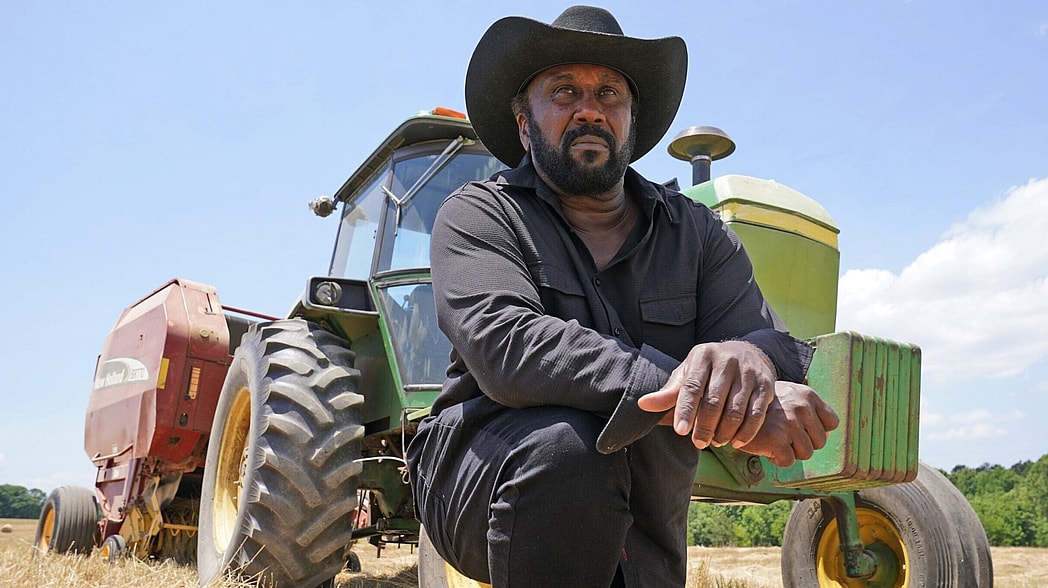
During a recent national conference with thousands of Black farmers, Boyd said members were instructed to get a farm serial number and report their acreage to the USDA, which was met with “pushback.”
“[They] were saying, ‘I don’t want the government to know all my business, how much I’m planning, what I’m planning, and when I’m planning it, and they don’t want to help me,'” Boyd recalled. “I see and feel that argument, I do, because I’ve been there. But also when there’s a pot of money like this, if you’re not in that system, and if you’re not set up, you can’t get [the money].”
The longtime civil rights activist told theGrio, “They do that on purpose,” adding, “In my professional experience, they do it because they know that that’s a way around Black farmers participating.”
“If the farmer can prove that they’re farming and prove how much they get, they should get some too,” he argued.
Boyd said he would’ve liked to have raised these concerns, or “red flags,” with the Trump administration, had he or other Black farmers been invited to the White House on Monday.
“We are farmers, and we still should be at the table, whether you like Black people in this country or not. Man, I mean, some things are, you know, gotta be put above and over politics.”
The USDA did not immediately respond to theGrio’s request for comment on the concerns raised by Boyd and Black farmers.
Despite the resistance from many Black farmers, Boyd said the national association is still urging them to report their farm serial numbers to their local county offices, regardless of acreage, and report “what it is that you’re doing in those particular areas.”
“We made it part of the national platform at our annual conference this year,” he shared.
A major part of the distrust among Black farmers is a result of actions taken by the USDA, such as sending out loan acceleration notices and slashing federal grants needed to survive. The Trump administration called the grants “woke DEI propaganda.”
“They’ve been trying to sell [Black farmers] out,” said Boyd, who also decried the Trump administration’s lifting of a farm moratorium that was in place under the Biden administration. Without that moratorium, many Black farmers are in jeopardy of shutting down their farms, or worse, losing their land.
“We want to see [the moratorium] go back into effect,” he said.
Democrats in Congress also slammed the Trump administration after Monday’s relief announcement, arguing that the one-time payments will do little to resolve the crisis facing American farmers.
“Trump’s reckless tariffs have been crushing farmers. He found $40 billion to bail out Argentina. But only $12 billion to help the farmers hurt by his policies. You deserve better,” said Rep. Hakeem Jeffries, Democratic leader in the U.S. House of Representatives.
Senate Minority Leader Chuck Schumer said, “Trump blew up farmers’ businesses, then showed up with hush money. A one-time payout won’t fix the damage.”
Reflecting on the multi-pronged crises facing Black farmers specifically, Boyd told theGrio, “We shouldn’t be losing our farms because of something that this President created through his Trump tariff fiasco.”
He added, “We shouldn’t be losing our farms for low crop prices and markets closing up. All of this stuff happened because of the tariffs that this President put in place.”
