
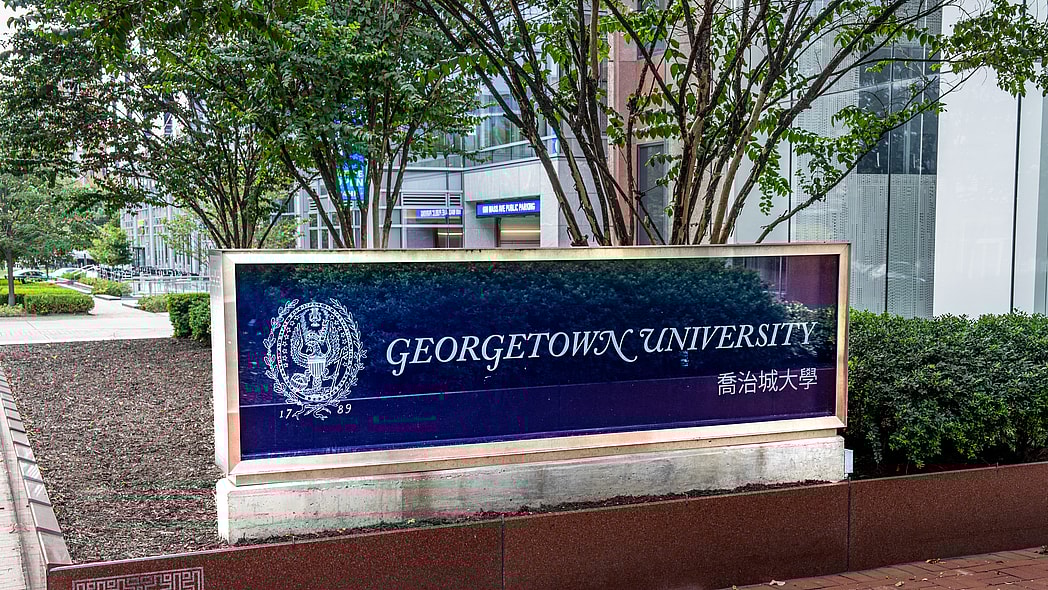
Georgetown University’s Center for Youth Justice is joining Prince George’s County, Maryland’s Legislative Black Caucus, and the Maryland Department of Juvenile Services in their efforts to honor the 200+ Black lives buried in a recently discovered abandoned grave site.
The Forgotten Children Initiative says it is committed to “honoring the memory of incarcerated youth buried in abandoned and lost burial grounds throughout the United States.”
“It’s a really sad and tragic part of our history that really hasn’t been told. It’s a missing piece of history that should be known,” Marc Schindler, an attorney and policy expert leading the initiative, told The Washington Post. “My hope is that Georgetown will be a resource for states and jurisdictions that have these types of burial sites in their location, and want to learn more and start to do the right thing by way of restoring and memorializing these places.”
Though the research hub plans to explore lost burial sites across the country, the program was very heavily inspired by a recent discovery made in Maryland. As previously reported by theGrio, the Maryland Department of Juvenile Services rediscovered the burial sites of 230 Black children who died while confined to the House of Reformation and Instruction for Colored Children, a segregated, state-run juvenile detention facility in Prince George’s County. Researchers found that the 200+ Black boys died between 1870 and 1939 and were believed to have endured harsh conditions and abuse before their deaths.
Now, as Gov. Wes Moor has vowed to allocate $250,000 to the restoration of these sites in the state’s 2026 budget, Georgetown’s initiative hopes to unlock the stories of the people beneath the rediscovered graveyard. The Forgotten Children Initiative launches in January and plans to build on existing research with extensive genealogical work, aiming to locate living family members.
“The research about who the young people are is a very time-intensive, particular type of research we think Georgetown can be helpful with,” Schindler added. “Those children have largely been forgotten and abandoned. There’s been no attention or effort to really find out who those children were, and make sure they are given the dignity and recognition they didn’t get when they were in the custody of the state.”
This would not be the first time researchers discovered abandoned gravesites. In Florida, experts uncovered the burial sites of 51 children who died under state custody at the Dozier School for Boys. This discovery inspired Colson Whitehead’s Pulitzer Prize-winning novel “Nickel Boys,” which inspired the Oscar-nominated film “Nickel Boys.” Similarly, in 2017, a Georgetown University alum, Richard J. Cellini, created the Georgetown Memory Project to identify the 200+ slaves that the university’s founders sold and connect their living descendants, to whom the university had previously promised preferential admission status.
