
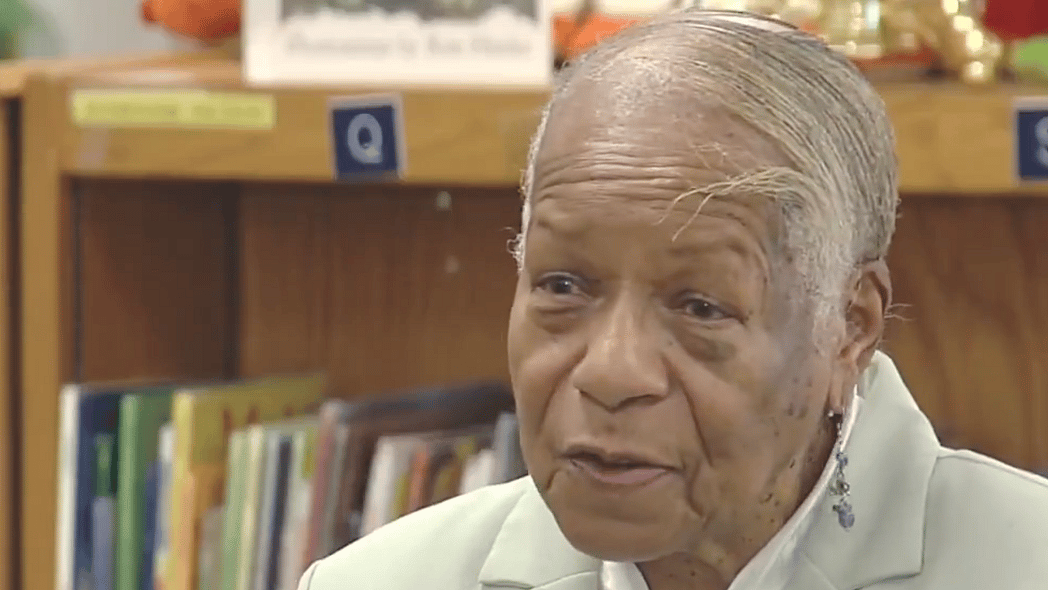
Pauline Copes Johnson, one of Harriet Tubman’s descendants and champions, has died at age 98.
The Harriet Tubman A.M.E. Zion Church in Auburn, NY, where Copes Johnson was an active member, announced the news on December 8. Copes Johnson was Tubman’s great-great-great-grandniece and grew up in the same town where Tubman lived the rest of her life after she freed herself from chattel slavery in Maryland.
Tubman came to Auburn in the 1850s and purchased a home and land there in 1959, according to the National Parks Service. She lived on the property with her parents, brothers, nieces, and nephews, who are among the approximately 70 people she freed as she continued to return to Maryland 13 times after she escaped.
It wasn’t until Copes Johnson was 25 years old that she found out she was related to Tubman, she shared with theGrio in a 2013 interview alongside her daughter, Deidre Stanford. She was born on August 23, 1927, just a little over a decade after Tubman died. According to Copes Johnson, the relation was kept from her because there were still concerns of retaliation from the former slaveholding southern states.
“It was a secret because the confederates wanted her, and although she was dead, they would come after the relatives,” Copes Johnson told theGrio. “They thought I’d give it away because I was very young then.”
The revelation spurred her into a life of research and advocacy on behalf of her great-great-grandaunt’s legacy. One of her more recent struggles was to get Tubman to be on the face of the $20 bill, which currently features a portrait of Andrew Jackson, the seventh president of the United States and a slave owner.
Copes Johnson traveled around the country to speak about Tubman at schools and worked as a docent for the Harriet Tubman home in Auburn. She told theGrio that she didn’t feel a burden carrying on the legacy of the great abolitionist.
“I don’t think it was a terrible thing to live up to her legacy. I think that was meant for us to do,” she told theGrio. “I don’t think they do enough [in schools]. I think Black history should be celebrated every day of the year, every single day because on my part I’m trying to establish that. Otherwise I think people should know about ancestors, where they come, how they were treated.”
Copes Johnson also made historical strides in her own right. She became the first African American telephone operator in Cayuga County, NY, after she was hired to work at the New York Telephone Company in 1945. She was then introduced to the NAACP and became a member of the organization.
