
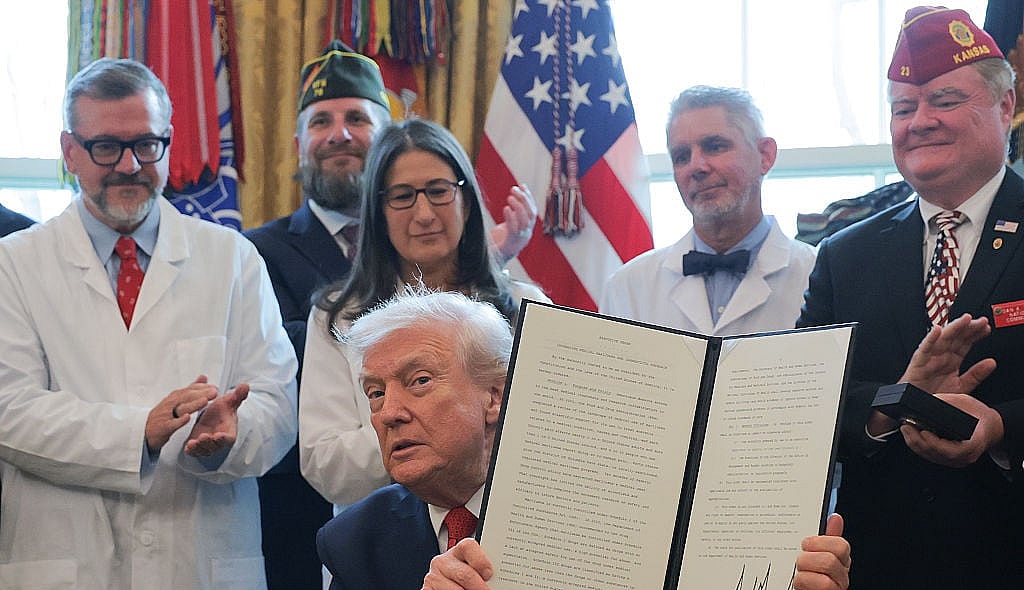
President Donald Trump signed an executive order on Thursday ordering the federal government to reschedule marijuana, a move he was expected to do.
“I’m pleased to announce that I will be signing an executive order to reschedule marijuana from a Schedule I, [to] Schedule III, controlled substance,” said Trump, who said many have called him requesting that he take the action.
From the Oval Office, the president explained, “This action has been requested by American patients suffering from extreme pain, incurable diseases, aggressive cancers, seizure disorders, neurological problems, and more, including numerous veterans with service-related injuries and older Americans who live with chronic medical problems that severely degrade their quality of life.”
While Trump emphasized the medical and research benefits of reclassifying cannabis, he emphasized that his order does not legalize the drug and disparaged its recreational use.
“[The order] in no way sanctions its use as a recreational drug. It has nothing to do with that, just as the prescription painkillers may have legitimate uses, but can also do irreversible damage,” said Trump, who was joined by Health Secretary Robert F. Kennedy and Dr. Mehmet Oz, who runs the Centers for Medicare and Medicaid Services.
He continued, “It’s never safe to use powerful controlled substances in recreational matters, especially in this case…I’ve always told my children, ‘Don’t take drugs, no drinking, no smoking, and just stay away from drugs.'”
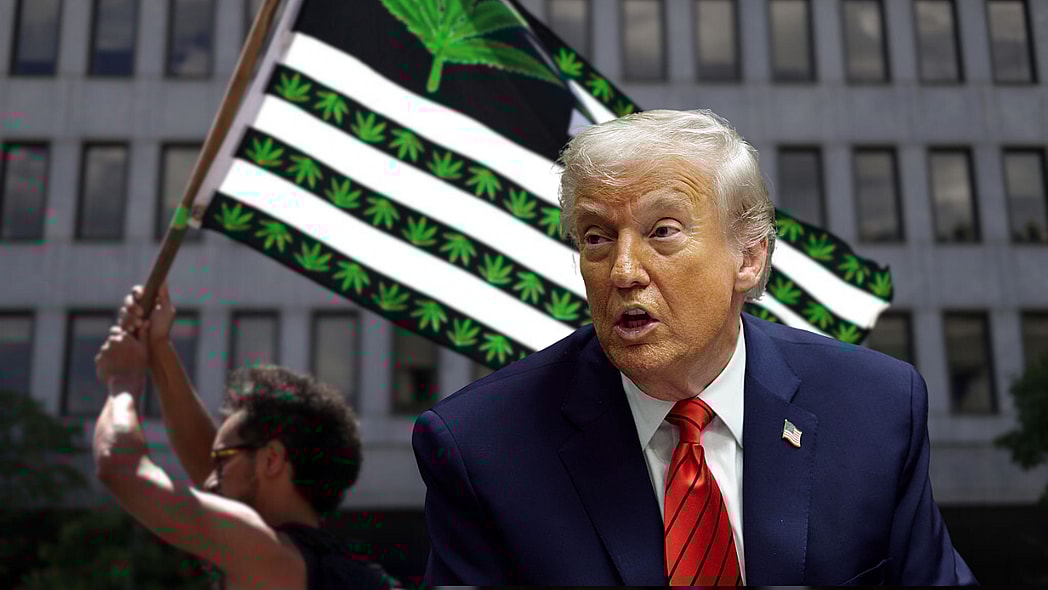
Racial justice advocates and policy experts have for years pushed for legalization or decriminalization of marijuana, considering its prohibition has led to the mass incarceration of Black Americans. Trump’s order does not address what the ACLU calls the “staggering racial bias and financial waste of our country’s counterproductive fight against a drug widely considered less harmful than alcohol.”
Cat Packer, Director of Drug Markets & Legal Regulation at Drug Policy Alliance, told theGrio, “Framing marijuana as a choice between ‘good’ medical use and ‘bad’ adult use creates a false and outdated binary. What actually drives harm isn’t whether cannabis is labeled medical or recreational—or whether products come from hemp or marijuana—but whether people are criminalized or instead have access to regulated products.”
Packer explained, “Most Americans support legal cannabis, and the vast majority of adult-use consumers use it responsibly. If the concern is public health, the answer isn’t 1980s-era ‘just say no’ rhetoric or half-measures like Schedule III—it’s legalization and regulation grounded in science, public health, and equity, not continued criminalization.”
Dr. Jeffrey Singer, a senior fellow at the Cato Institute, said Trump’s move to reschedule marijuana is a “positive step in the right direction.” Still, he said it “won’t significantly change things for people who use cannabis medically or recreationally in states where it is legal.”
He argued, “It might make it easier to conduct medical research on cannabis, and it could help state-licensed cannabis retailers cover business costs, but overall, it just rearranges the landscape of cannabis prohibition.”
