
Editor’s note: The following article is an op-ed, and the views expressed are the author’s own. Read more opinions on theGrio.
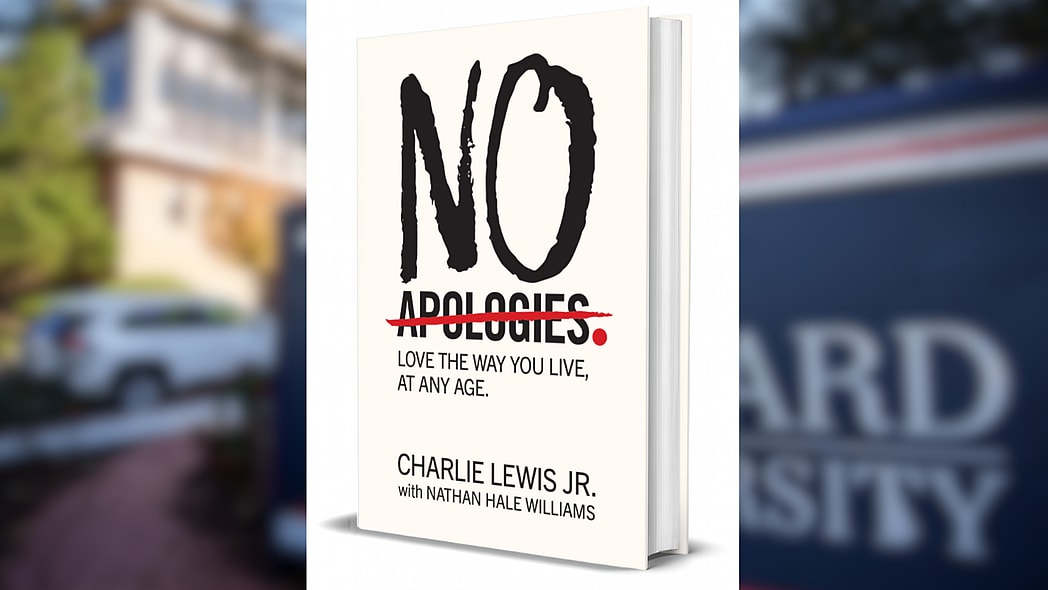
At 58, I did something I never imagined I’d do: I wrote a book. Not because I needed another title. Not because I aspired to be an author. I wrote “No Apologies” because, for the first time in my life, I had the courage to tell my truth.
The truth about a boy from a small Southern town who dreamed beyond the borders of what he could see. The truth about the pressures that hardened me, the identities I carried in silence, the expectations that weighed me down, and the freedom that eventually set me on my own path.
And that freedom began in a place that will always feel like home: Howard University.
I grew up in Statesboro, Georgia, a world built on discipline, duty, and doing what had to be done. My father who was brilliant, determined, and armed with only a sixth-grade education built businesses that sustained our community. He expected me to inherit that life. But even as a child, I wanted more. I devoured encyclopedias, memorized maps, and imagined a life that stretched far beyond our town’s borders.
I didn’t have the words for it then, but what I longed for was space.
Space to breathe. Space to grow. Space to simply be me fully, freely, and without apology.
Howard gave me that space.
Walking onto the Yard in the 1980s was like taking my first full breath. I saw Black brilliance in every direction: intellectual, political, artistic, eccentric, ambitious, unapologetic. For the first time, I saw Black people living expansively instead of defensively. For the first time, I felt both loved and seen.
Howard didn’t just educate me, it liberated me. It showed me that identity is not something to shrink; it’s something to honor, to explore, to stand in with pride.
HBCUs do that better than any institutions in this country. For students like me who are Black, ambitious, queer, curious, and searching HBCUs aren’t just schools. They are lifelines. At Howard, I learned to question the world, to question myself, and to understand that achievement did not require erasing who I was. I learned that community could be a soft landing, not a battleground. And I learned, maybe for the first time, what it felt like to belong.
That foundation carried me through everything that came after. There were the early corporate years where I often felt like an outsider, the cities where I chased community, the heartbreaks, the silence around my sexuality, the health diagnosis that shook me, the rebuilding that saved me. Every reinvention had Howard’s fingerprints on it.
Even decades later, in my fifties, when life slowed me down and forced me to reflect, I found myself returning to those lessons from the Yard. That’s why I wrote “No Apologies.” Because I know I’m not alone. I know I’m not the only one who had to unlearn survival. I’m not the only one carrying the weight of expectations. I’m not the only one who needed to remember who they were before the world insisted on telling them who to be.
This book is not just a memoir.
It’s an invitation — a call to return home to yourself.
And for me, that “home” will always start with an HBCU.
Sometimes I worry we take these institutions for granted. We assume they will always be here, always strong, always tasked with shaping Black excellence generation after generation. But the truth is this: HBCUs survive because we continue to tell the world why they matter.
Howard gave me my life. It gave me the courage to walk away from paths that weren’t mine. It taught me the difference between merely surviving and fully living. It taught me to love myself — loudly, quietly, completely — even when the world made that complicated.
If “No Apologies” stands for anything, it is this:
You deserve a life that reflects your spirit, not your fears.
And if you’re lucky, you’ll find a place — like Howard — that helps you become who you were always meant to be.
I wrote this book because I finally understand that truth. I wrote it for anyone still searching. And I wrote it as a love letter to the institution that saw me long before I learned to see myself.
HBCUs don’t just educate us.They fortify us.They give us language, courage, and community. They teach us to live without apology.
And for that, I will forever be grateful.
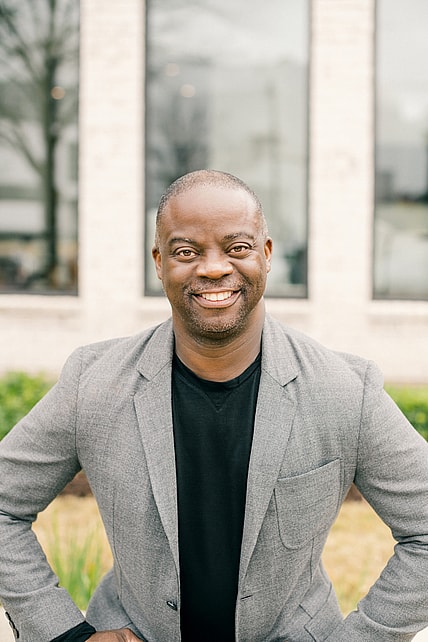
Charlie Lewis, Jr. is an award-winning Associate Broker at Compass and a distinguished lifestyle real estate agent. He’s authored his debut book titled “No Apologies.: Love the Way You Live, at Any Age”. In the Netflix show “Forever”, the character “Uncle Charlie” is based on Charlie. He is the real-life friend of show creator Mara Brock Akil. The character was inspired by Charlie’s deep love for his community and alma mater, Howard University.
