
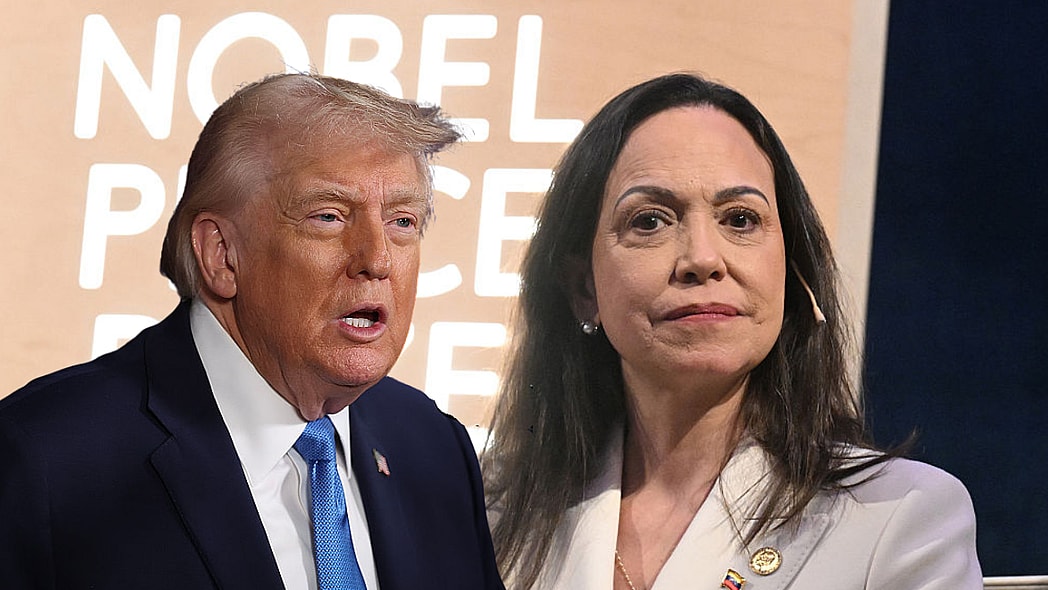
President Donald Trump surprised many in Venezuela when he declined to throw his support behind the Latin American country’s opposition leader, María Corina Machado, following the United States’ capture and removal of authoritarian President Nicolás Maduro. Trump’s refusal to back Machado as Venezuela’s interim leader reportedly stems from a grudge he holds against her for accepting the 2025 Nobel Peace Prize — an award the president repeatedly campaigned for.
According to The Washington Post, the Trump White House views Machado’s decision to accept the Nobel Peace Prize rather than declaring that Trump deserved it more as an “ultimate sin.”
“If she had turned it down and said, ‘I can’t accept it because it’s Donald Trump’s,’ she’d be the president of Venezuela today,” a source close to the White House told The Washington Post.
On Oct. 10, 2025, the Norwegian Nobel Institute awarded the coveted international prize to Machado for her efforts to topple Maduro’s years-long authoritarian rule. The Venezuelan opposition leader was praised as a “brave and committed champion of peace” who “keeps the flame of democracy burning during a growing darkness.”
Trump has for years expressed his desire to win the Nobel Peace Prize, much to the chagrin of his critics who say he is a leader of chaos and lawlessness. However, after returning to office last year, President Trump has managed to temporarily end several conflicts, including Israel’s military conflict in Gaza, the Congo-Rwandan war, and the conflict between Pakistan and India.
Perhaps recognizing Trump’s very public campaign for the award, Machado dedicated her Nobel Peace Prize to Trump for his “decisive support for our cause.”
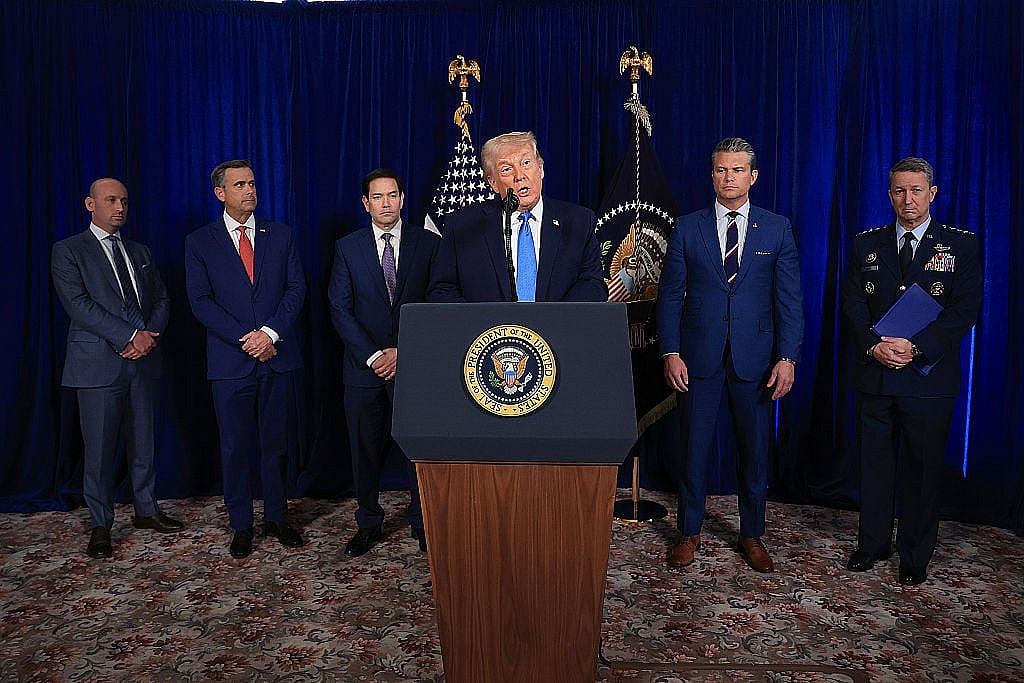
However, Machado’s praise of Trump was not enough to appease the U.S. president. During his Saturday press conference following the U.S. strikes in Venezuela, Trump told reporters, “I think it would be very tough for her to be the leader. She doesn’t have the support within or the respect within the country. She’s a very nice woman, but she doesn’t have the respect.”
Christopher Shell, a fellow at Carnegie Endowment for International Peace, told theGrio that Trump’s decision to sideline Machado reflects Trump’s tendency to bring “personal dynamics” to his foreign policy and “preference for deference and loyalty from allies and partners.”
“This move [also] reflects a growing recognition within the Trump administration that beyond the initial ‘shock and awe’ ambitions of removing Nicolas Maduro, the far more difficult task is governing what comes next. Regime change in Venezuela is unlikely to be achieved simply by installing a U.S.-friendly figurehead in Maduro’s absence,” said Shell, an expert on U.S.-Caribbean policy.”
He continued, “Instead, it may require some degree of engagement with entrenched power structures, including elements of the PSUV, to secure stability and advance the administration’s objectives.”
However, Shell told theGrio what’s most notable about Trump’s decision not to back Machado is that it signals “unlike past U.S. presidents, the democratic credentials of a foreign leader factor very little into Trump’s calculus.”
Associates of Machado told the Post they were caught off guard by Trump’s remarks. In an open letter, Machado applauded Trump’s capture of Maduro.
“What was meant to happen is happening,” she wrote. However, she urged her supporters to be “ready” to “assert our mandate and take power.”
“Let us remain vigilant, active, and organized until the democratic transition is complete. A transition that needs ALL of us,” she said.
