
Racism isn’t just for red states.
New Hampshire is in the spotlight after a recently leaked Signal chat reportedly shows Republican Rep. Kristin Noble, chair of the House Education Policy & Administration Committee, making comments that appeared to endorse the idea of “segregated schools,” suggesting that separating students could yield better test scores.
According to The Granite Post News, the exchange included comments from a user named Kristin Noble, who said, “When we have segregated schools, we can add all the fun stuff lol.”
Others in the chat added a laughing emoji to the comment.
Noble continued by saying, “Imagine the scores, though, if we had schools for them and some for us.”
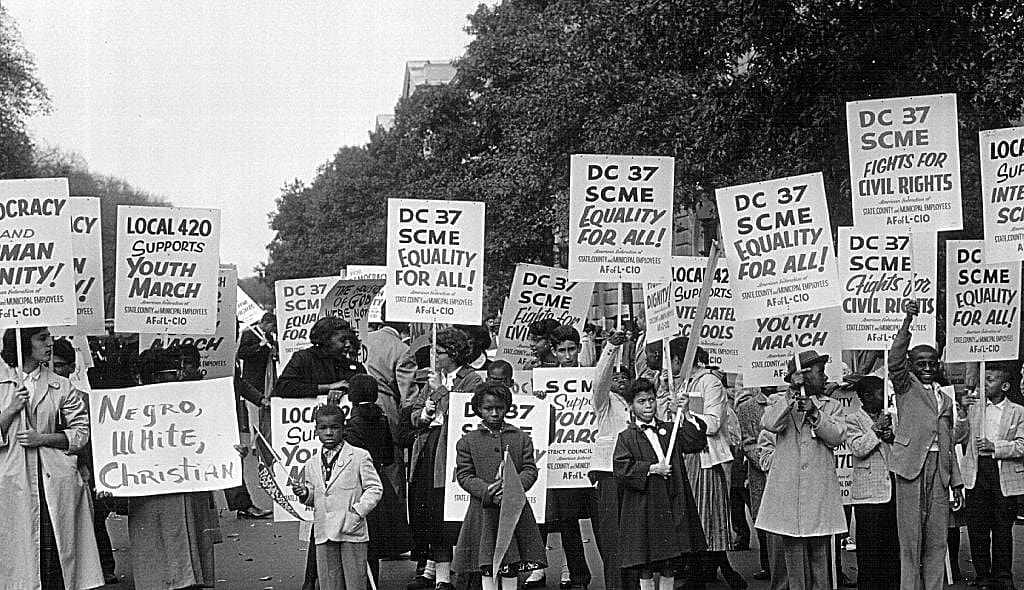
New Hampshire House Democratic leadership swiftly condemned the alleged comments, calling the remarks offensive and reminding the public of segregation’s painful legacy in denying equal opportunity to Black and other non-white students.
House Democratic Leader Alexis Simpson (D-Exeter) released the following statement in response to the Granite Post’s story:
“Segregation is not a relic to be mocked; it is a living scar carved into our schools, our communities, and our democracy,” Simpson said in a statement released in response to the Granite Post’s report. “It was built through violence, enforced by law, and justified by indifference. To laugh about it from the halls of power is to dishonor every child denied opportunity, every family forced to fight for dignity, and every generation that marched, organized, and sacrificed for equal access to education.”
Simpson also argued that Noble’s language is particularly inappropriate, coming from someone in charge of education policy:
“Most concerning is that these comments about segregation were made by members of House Republican leadership, including the Chair of the House Education Policy Committee. We condemn Rep. Noble’s remarks in the strongest possible terms. Whether shouted, whispered, laughed about or typed in a signal chat to your colleagues, racism has no place in our legislature or our future. No one who believes in segregated schools should be leading the Education Policy Committee, “ Simpson said.
Despite the backlash, Noble, who is white, didn’t deny or distance herself from the commentary; instead, she chose to frame the comments as critiques of broad ideological differences in schools rather than a racial issue.
While Noble didn’t respond to a request for comment from InDepthNH, a publication run by the New Hampshire Center for Public Interest Journalism, the House Republican Office emailed a press release on her behalf:
“It’s funny to watch the Democrats feign outrage when I thought they’d be supportive of managing their own schools, with libraries full of porn, biological males in girls sports and bathrooms, and as much DEI curriculum as their hearts desire,” the release read. “Schools like that will have terrible test scores because they focus on social justice rather than academics.”
The release went on to suggest that right-wing families have already been separating their children, touting school choice programs as beneficial options:
“Republicans have been self-segregating out of the leftist indoctrination centers for decades,” the release continued. “If democrats had their own schools, and we had our own, families wouldn’t need to avail themselves of the wildly successful education freedom account program. It’s a win / win proposition.”
The controversy adds to broader national debates over race, equity, school choice, and how public education systems serve diverse communities.
