
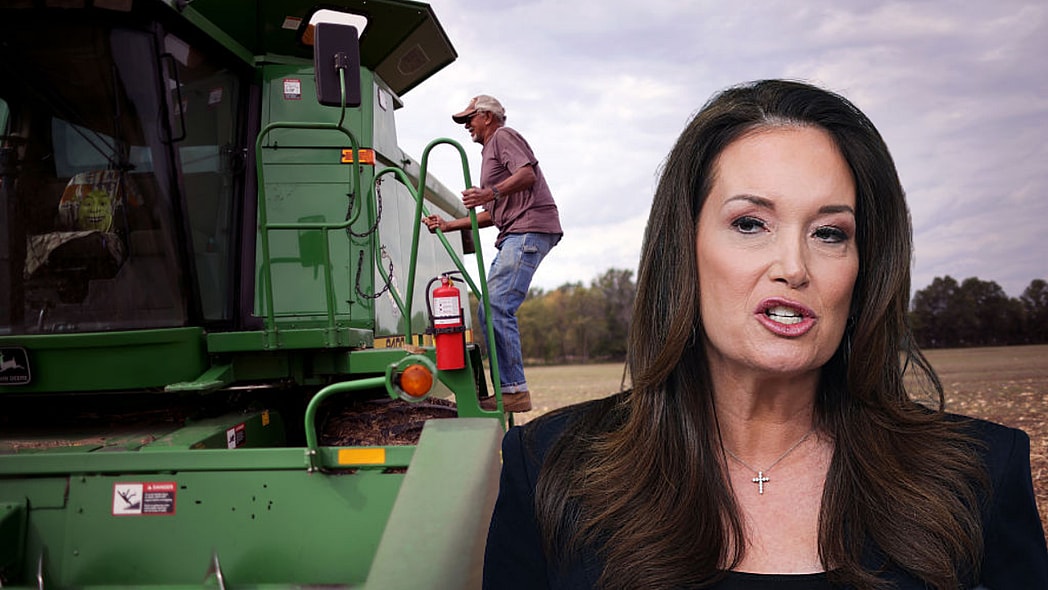
Congressional Black Caucus members of the U.S. Senate are calling out the Trump administration’s final rule to remove the “socially disadvantaged” designation for Black farmers and other marginalized farm operators. In a letter to the U.S. Secretary of Agriculture, Brooke Rollins, first obtained by theGrio, U.S. Senators Lisa Blunt Rochester, D-Del., Cory Booker, D-N.J., Raphael Warnock, D-Ga., and Angela Alsobrooks, D-Md., are calling for transparency and accountability, and are warning of the disparate harms the USDA’s move will have on Black, Latino, Indigenous, and women farmers.
“It elevates corporate agriculture over family farms and community health, erases targeted support for farmers of color and women producers, and threatens to worsen food insecurity just as food costs escalate,” the senators said in the letter delivered on Wednesday. “We urge USDA to reconsider the broader consequences—not only for equity, but for the vitality of rural economies, community health, and the long-term viability of those who feed their hometowns.”
In July 2025, the USDA filed a rule to eliminate the designation of “socially disadvantaged” farmers, which was established by the 1990 Farm Bill to provide outreach and technical assistance to farmers of color. Black and Brown farmers have long faced racial discrimination by the federal government, resulting in several class action lawsuits. In their filing with the Federal Register, the Trump administration argued that there is no longer a need for the socially disadvantaged designation and that the federal government has sufficiently redressed those harms.
“USDA will no longer apply race- or sex-based criteria in its decision-making processes, ensuring that its programs are administered in a manner that upholds the principles of meritocracy, fairness, and equal opportunity for all participants,” the USDA wrote.
The group of Black U.S. Senators points out that the numbers and data in recent years don’t support the Trump administration’s reasoning for removing the designation for Black and underserved farmers.
“USDA’s notion that its discriminatory history has been ‘sufficiently addressed’ rings hollow for many farmers of color and women farmers and overlooks both recent data and lived experiences of producers still navigating barriers to capital, land, and institutional trust,” said the senators.
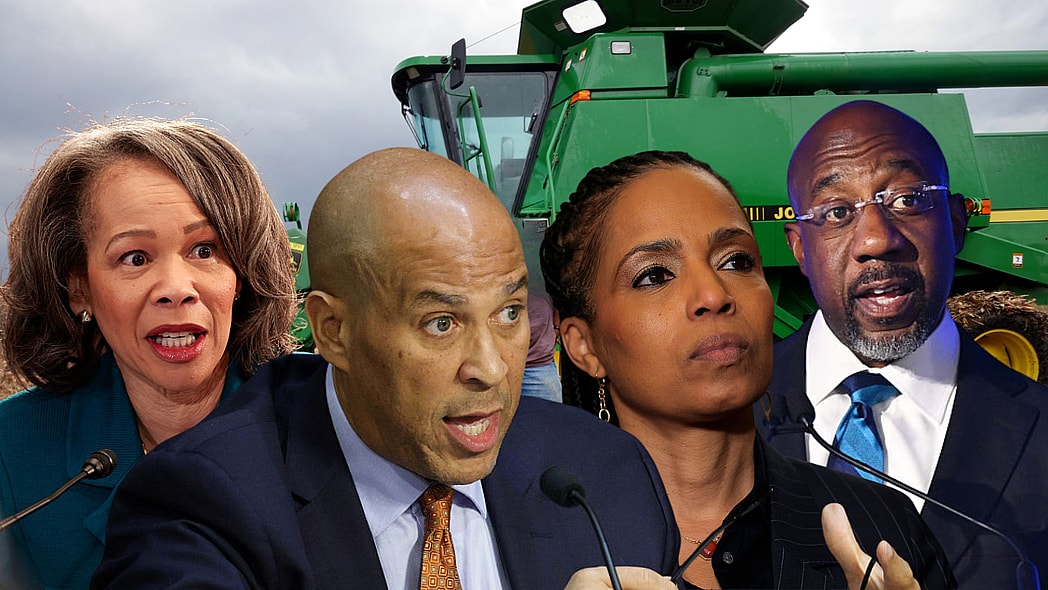
The group of Black U.S. senators notes that the average size of a farm operated by Black producers is 163 acres compared to 450 acres for white producers. They also cite 2022 data showing that only 36% of Black farmers were granted direct loans from the USDA compared to 72% white farmers.
During President Donald Trump’s first term in office, from 2017 to 2021, 99.4% of farmer relief funds went to white farmers, according to the Farm Bill Law Enterprise. There is concern among Black farmers and others that Trump’s second term will produce similar racial disparities.
John Boyd, founder and president of the National Black Farmers Association, told theGrio that Trump’s White House meeting with farmers last month did not include a single Black farmer. When he confronted a Trump official about Black farmers being iced out of engagement with the president and the administration, he was told that they “did not want” them there and were intentionally prioritizing larger, corporate farmers.
The letter from Senators Blunt Rochester, Booker, Warnock, and Alsobrooks highlights that Black and disadvantaged farmers play an integral role in communities across the country that live in food deserts.
“Without this support, many farms risk losing steady customers, undermining their economic viability and reducing access to healthy local food in communities and undermines the goals of the ‘Make America Healthy Again’ campaign by reducing access to fresh, local foods in schools and food banks—especially in low-income areas,” reads the letter to USDA.
“This rule sends an unmistakable signal to farmers of color and women producers that their history of disadvantage and their present-day challenges are no longer acknowledged by the federal government. Without intentional, evidence-based interventions, longstanding inequities will persist.”
Boyd tells theGrio that his association of 150,000 Black farmers was not consulted by the Trump administration before it issued its final rule to eliminate the USDA’s designation of “socially disadvantaged” farmers and the assistance that comes along with it.
The group of Black senators said they were “troubled” that the rule was finalized without “robust public engagement or stakeholder consultation.”
Boyd said that, without a federal government willing to look out for Black farmers, he is urging members of the community to “adopt a Black farmer” to support in their local community. As for obtaining what Black farmers believe they are still owed by the federal government, he said their only recourse is through the U.S. court system.
In their letter, Blunt Rochester, Booker, Warnock, and Alsobrooks pose a range of questions for Secretary Rollins to address, accompanied by a sufficient administrative record to support their decisions regarding socially and economically disadvantaged farmers.
They write, “We request that you answer the questions below and provide a written response outlining the Department’s plan to protect the economic viability of historically underserved farmers and uphold USDA’s commitment to fairness.”
