
If you’ve been hearing it in group chats, seeing it on Threads, or feeling it in your own inbox, you’re not imagining it: a lot of Black women are in a weird season professionally.
Not because we forgot how to show up. Not because we suddenly stopped being qualified. But because the opportunities that used to feel within reach are starting to feel harder to grab. Like the room got quiet, the replies slowed down, and the doors that were cracked open just a few years ago are now closing without explanation.
A recent feature from The New York Times put words to what many Black women have been living in real time—a steep drop in employment over the last year, and the way Black women are responding the way we often do: by turning to one another for support, résumé help, encouragement, and, honestly, a little emotional survival.
In the piece, the Times shares the story of Nneka Obiekwe, a 37-year-old consultant who’s known in her circles as the one who can connect you to the right person. The friend who always has a referral. The one who knows the hiring manager. The one who can make something shake with one introduction.
But even she hit a wall.
Obiekwe started receiving pleas every few weeks, and by autumn, she realized her network wasn’t limitless. The requests kept coming. The layoffs kept coming. And eventually, she understood the problem wasn’t just “Can you put me on?” The problem was that Black women needed each other in a bigger way than just a job lead.
In September, she created a WhatsApp group chat called Black Women Rising, shared the link on Threads, and watched it turn into something much larger than she expected. Within 24 hours, more than 500 people had joined — most of them mid-career or senior professionals who had been laid off in the months before.
As the feature describes it, the messages started rolling in fast with updates from women trying to stay hopeful, and frustration from women trying not to fall apart. “I have a screening call tomorrow. Wish me luck!” Then another: “They said I’m in the lead, but I haven’t heard from them in a month.” The kind of messages that feel familiar to anyone stuck refreshing their email, checking their phone, and wondering if silence means “not yet” or “never.”
Obiekwe eventually moved the group to Discord to better organize the daily flood of conversation, creating channels like “Share Your Good News” and “Vent Among Friends.” It’s the kind of setup that makes sense when people aren’t just swapping résumés — they’re trying to hold onto their confidence.
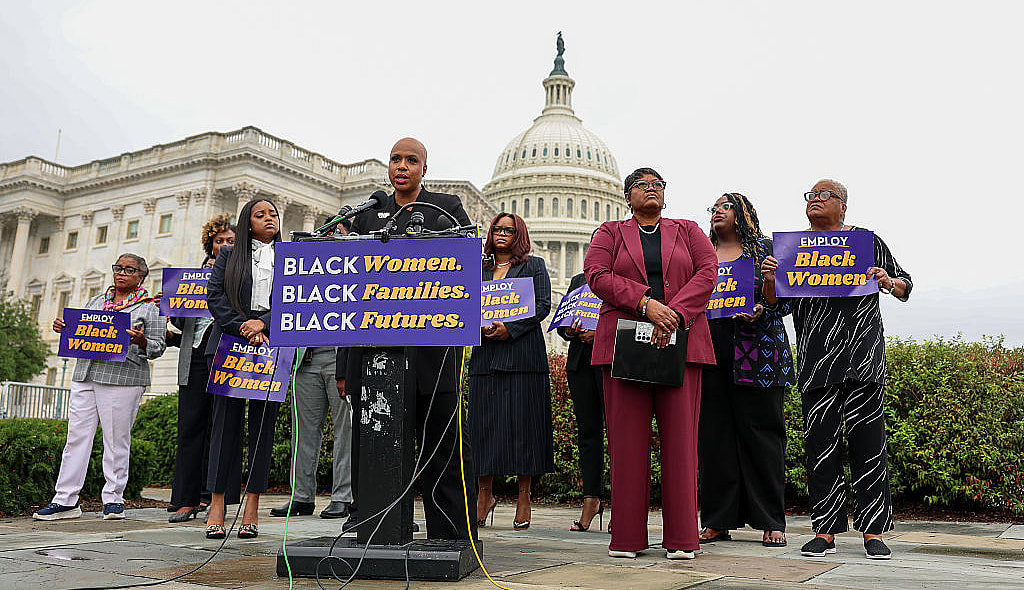
The piece makes clear that the job market isn’t great right now. Hiring has slowed. Artificial intelligence is replacing some knowledge workers. But the Times says Black women have been hit especially hard. The unemployment rate for Black women rose significantly from the start of 2025 to December, reaching 7.8 percent, and that kind of dramatic decline wasn’t seen for other groups.
Research from labor economist Valerie Wilson describes the drop as sharp and unique, especially for college-educated Black women with bachelor’s degrees. She reports that 74 percent of Black women with bachelor’s degrees were employed in 2024, but that rate fell to 71 percent in the first nine months of 2025. Meanwhile, employment among white women with bachelor’s degrees dropped less than one percentage point during the same time.
Wilson notes layoffs tied to mass federal cuts under the Trump administration. She believes private-sector losses, including in professional and business services like human resources, have likely played a major role too.
And this is the part that makes the story sting: it’s not just the numbers. It’s the emotional whiplash underneath them.
After the killing of George Floyd in 2020, Black women’s education and experience started receiving more recognition, and professional doors opened wider. But in the years since, the feature notes that momentum has shifted. The doors began to close again after the Supreme Court ruled against affirmative action in 2023, and companies began quietly withdrawing from diversity and inclusion commitments. The Times adds that President Trump’s return to office accelerated that pullback, and that even Black women who weren’t in D.E.I. work said they felt a chill.
The article also shares the story of Ericka Hatfield, 44, who was laid off from a nonprofit think tank where she was vice president of communications. She told the paper she stopped identifying her race on job applications because she feels it’s hurting her chances — and while she continues searching for senior-level work, she took a front desk job at SoulCycle. Hatfield also joined Black Women Rising and now offers résumé feedback to other women in the chat.
And that’s the question the feature leaves hanging in the air: what happens to a generation of Black women who did everything “right” — got the degrees, built the résumés, climbed the ladder — only to feel like the ladder is being pulled up while they’re still on it?
Maybe Obiekwe’s words capture it best. She says, “There are people who are hanging on for dear life, and they’re calling out, like, ‘When will this season end?’”
Until it does, Black women will keep doing what they’ve always done: finding each other, holding each other up, and building community when the systems fail to make room.
