
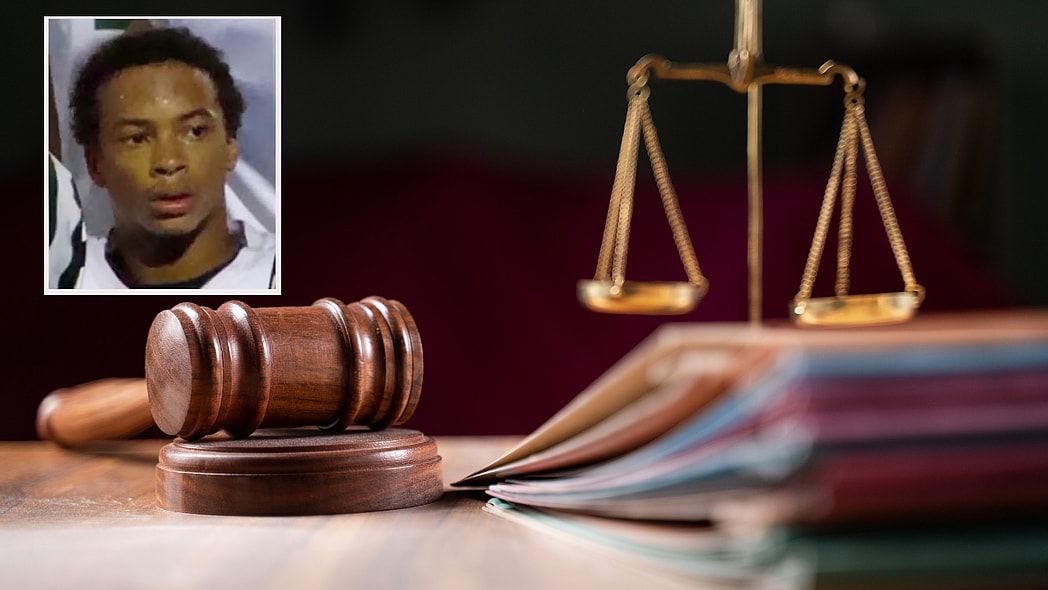
Thirteen years after 16-year-old Corey Stingley was killed inside a Wisconsin convenience store over an alleged $12 shoplifting attempt, last Thursday, a judge accepted a plea deal that finally brought a measure of accountability and emotional relief to the family.
Robert W. Beringer and Jesse R. Cole pleaded guilty to felony murder in connection with Stingley’s 2012 death under a deferred prosecution agreement that allows them to avoid jail time. In exchange, the men publicly acknowledged their role in the events that led to the Black teen’s killing while participating in an extensive restorative justice process with the Stingley family.
Corey Stingley died from asphyxiation after being tackled and restrained by customers inside VJ’s Food Mart in West Allis, Wisconsin. Prosecutors say the men suspected the teenager of attempting to steal bottles of Smirnoff Ice and held him down while waiting for police.
“What happened to Corey Stingley should have never happened. His death was unnecessary, brutal, and devastating,” Dane County District Attorney Ismael Ozanne wrote in a letter to the court, per ProPublica.
An hour-long hearing in a Milwaukee courtroom was filled with family members, community activists, spiritual leaders, and some of Corey’s former classmates. Both of his parents addressed the judge directly.
“Corey was my baby. A mother is not supposed to bury her child,” his mother, Alicia Stingley, said. She spoke of forgiveness, and after the hearing, she hugged Beringer. Corey’s brother, Cameron Stingley, shook both men’s hands.
Under the agreement, Beringer and Cole must each make a one-time $500 donation to a charitable organization chosen by the Stingley family in Corey’s honor. If they comply with the terms and commit no crimes over six months, prosecutors will dismiss the case.
Craig Stingley, Corey’s father, described the moment as the culmination of a relentless 13-year fight: “My 13-year struggle has turned into triumph.”
In a statement filed with the court, the family emphasized that their goal was never punishment alone.
“We sought not vengeance, but acknowledgement — of Corey’s life, his humanity, and the depth of our loss,” the statement noted. “We believe this agreement honors Corey’s memory and offers a model of how people can come together, even after profound harm, to seek understanding and healing.”
The Stingleys described Corey as a “vibrant, loving son, brother, and friend,” adding that the restorative justice process brought “truth, understanding, and a measure of healing that the traditional court process could not.”
The case had long been closed without charges. Prosecutors initially declined to bring criminal cases, saying the men did not intend to kill Corey when they restrained him. Surveillance footage shows a third man, Mario Laumann, who died in 2022, holding Corey in a chokehold while Beringer and Cole assisted in restraining him. A witness told police Laumann was “squeezing the hell” out of the teen.
The Milwaukee County Medical Examiner ruled Corey’s death a homicide, citing a brain injury due to asphyxiation after a “violent struggle with multiple individuals.” Under Wisconsin law, felony murder applies when someone dies during the commission of another crime—in this case, false imprisonment.
“There is no doubt Cole, Beringer and Laumann caused Corey Stingley’s death,” Ozanne wrote. “Simply put, Corey, a teenager, was tackled and restrained to the ground by three grown men because they suspected him of shoplifting.”
Ozanne concluded that Laumann “strangled Corey Stingley to death,” noting that the video showed his arm across Corey’s neck for several minutes “as he fades out of consciousness.” Had Laumann still been alive, Ozanne said, prosecutors likely would have sought a lengthy prison sentence. While Ozanne found no evidence that Beringer or Cole knew Corey was in medical distress, he said their actions were still unlawful and intentional.
Corey Stingley’s death came the same year as the killing of Trayvon Martin, whose case galvanized national attention and helped spark the Black Lives Matter movement. Corey’s killing, involving three white men restraining a Black teen, received little attention outside Wisconsin.
After years of unsuccessful appeals to prosecutors, Craig Stingley uncovered a rarely used “John Doe” statute that allows private citizens to ask a judge to review whether a crime occurred. He filed such a petition in 2020, leading to Ozanne’s appointment as special prosecutor.
In 2024, Ozanne informed the family that while evidence of a crime existed, a conviction was uncertain, opening the door to restorative justice. Through the Andrew Center for Restorative Justice at Marquette University Law School, the Stingley family met face to face with Beringer and Cole under the supervision of a retired judge.
Ozanne said the process “appears to have been healing for all involved.” In a joint statement, Beringer and Cole said they came to understand “the profound ripple effects” of the incident and expressed sorrow that Corey’s “time on this earth ended far too soon.”
Similarly, Milwaukee County Circuit Court Judge Laura Crivello called the agreement fair and just, hoping that the Stingley family’s resolution “makes other people see similarities in each other and not differences,” and “makes them think about restorative justice and how do we come together.”
