
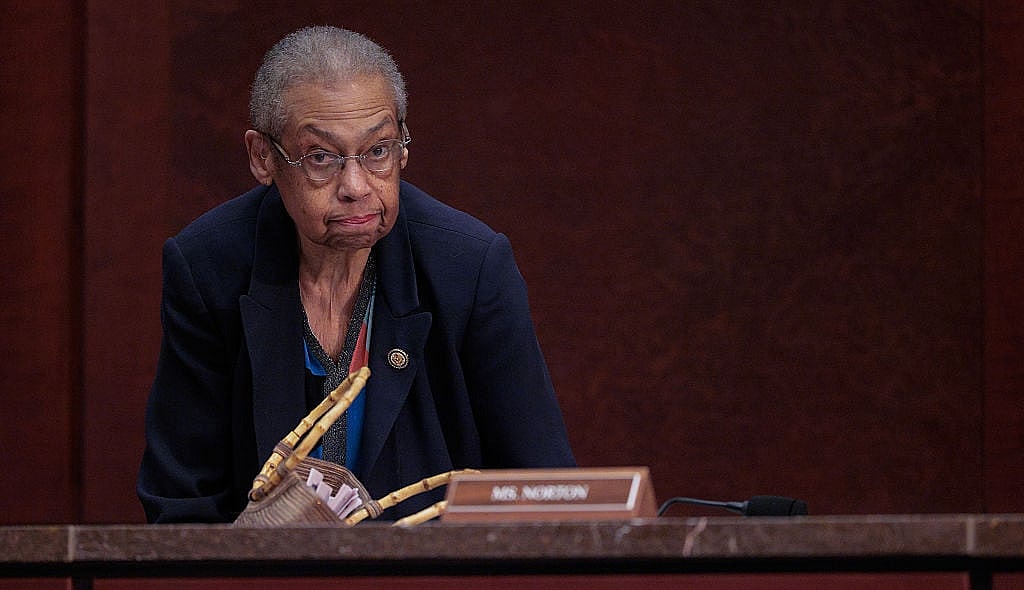
U.S. Delegate Eleanor Holmes Norton, who has represented the District of Columbia in the United States Congress for 35 years, has confirmed her retirement following news that her team filed paperwork to terminate her re-election campaign.
“With pride in our accomplishments, gratitude to DC, and confidence in the next generation, I announced I’ll retire at the end of this term,” said Norton, the oldest member of Congress. “The privilege of public service is inseparable from the responsibility to recognize when it’s time to lift up the next generation of leaders. For D.C., that time has come.”
The retirement of Holmes Norton, a revered giant in D.C. politics, comes after calls for her to step aside over concerns about her ability to serve amid signs of decline.
The congresswoman was notably absent during President Donald Trump’s federal crackdown in the nation’s capital, in which he declared a crime emergency, despite local leaders noting that crime had dropped to a decades-low. The president’s actions threatened the district’s self-governance, as authorized by the 1973 District of Columbia Home Rule Act.
“While my service in Congress is ending, my advocacy for your rights, your dignity, and your capacity to govern yourselves is not,” said Holmes Norton, who has long championed D.C.’s decades-long quest for statehood.
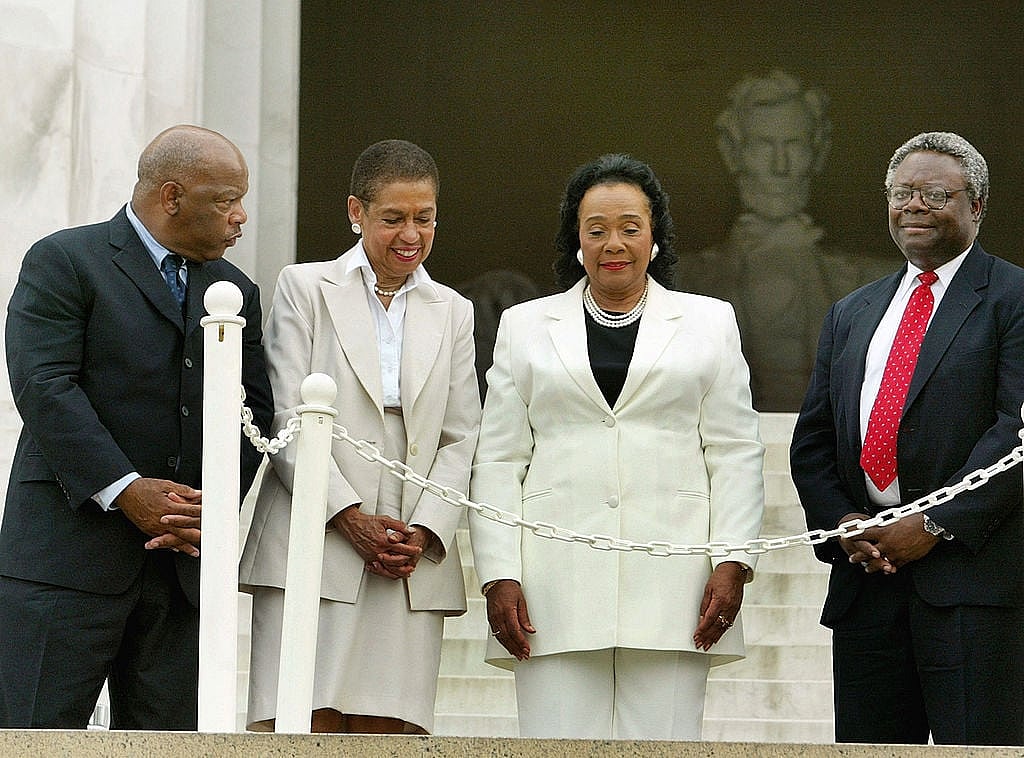
Elected as a non-voting member of Congress in 1990, Holmes Norton served as an accomplished attorney who argued and won a case before the Supreme Court as a tenured professor at Georgetown Law. In 1977, she was appointed by President Jimmy Carter as the first woman to lead the Equal Employment Opportunity Commission. The civil rights leader also notably helped organize the 1963 March on Washington.
In recent years, staff and colleagues grew concerned about Holmes Norton’s ability to perform her duties as a U.S. delegate for D.C., prompting several to challenge the hometown legend for her seat in the 2026 primary.
In reacting to Holmes Norton’s retirement, the Congressional Black Caucus saluted the “dean” of the caucus for being a “guiding force for our members for decades, sharing her wisdom and expertise and helping to shape generations of leadership.”
“In the District of Columbia, Congresswoman Norton has been a fierce defender and advocate for D.C. Home Rule and statehood on behalf of residents who have long been denied voting representation in the national legislature,” said CBC Chairwoman, U.S. Rep. Yvette D. Clarke. “The CBC is deeply grateful for her leadership, mentorship, and lasting impact on D.C. and our nation.”
D.C. Councilman Robert White, who was the first major candidate to announce a campaign against Holmes Norton, praised the longtime congresswoman as an “icon” whose “storied career” had “transformed how the nation views civil rights.”
“Congresswoman Norton has fought every day to advance civil and human rights, expand gender equality, promote inclusive economic growth, and strengthen a judiciary that reflects the full diversity of the American people,” said White. “Without Congresswoman Norton’s leadership, many of the neighborhoods and iconic developments in the District as we know it today would not exist, and the movement for statehood would be dramatically less advanced.”
The primary election for the U.S. delegate of D.C. is June 26. The winner of the crowded primary will almost certainly go on to win the general election, as Washington, D.C., has never elected a Republican presidential candidate since it began participating in presidential contests in 1964.
