
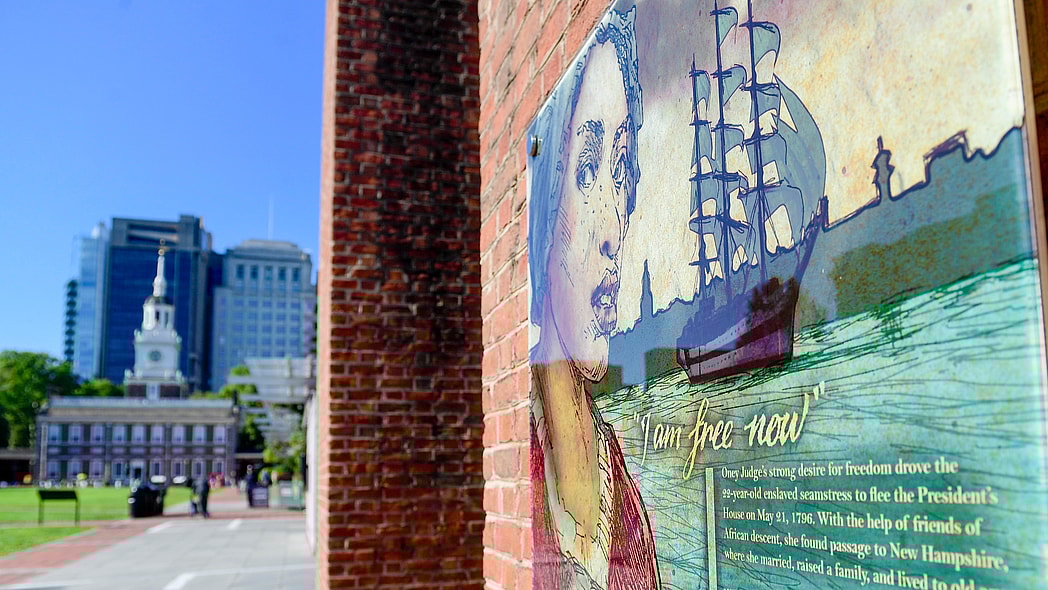
Weeks after a museum display depicting the history of chattel slavery in the United States at the site of the former President’s House on Independence Mall was removed, a judge is warning the Trump Administration regarding its actions.
“You can’t erase history once you’ve learned it. It doesn’t work that way,” Senior U.S. District Judge Cynthia Rufe, an appointee of President George W. Bush, said on Friday (Jan. 30).
The display was erected in tandem with the National Park Service two decades ago. Workers used crowbars to remove the display earlier this month, in line with Donald Trump’s executive order signed last January to “restore truth and sanity to American history.” Outdoor plaques, panels and other materials were displayed in telling the stories of nine people who had been enslaved on the grounds. Some of their history has been unearthed in the last twenty years.
“Although many people feel strongly about this (exhibit) one way, other people may disagree or feel strongly another way,” Assistant U.S. Attorney Gregory in den Berken said in court. “Ultimately, the government gets to choose the message it wants to convey.”
Rufe immediately shot the notion down.
“That is a dangerous statement you are making. It is horrifying to listen to,” she said. “It changes on the whims of someone in charge? I’m sorry, that is not what we elected anybody for.”
Rufe said she would visit the site before making her ruling. The city of Philadelphia is fighting the Trump Administration over the removal of the display and hopes that it will be restored. According to In den Berken, the government cannot be forced to tell a certain story. Lawyers for the city argue that history cannot be told “carte blanche,” depending on who is in office.
The nine individuals were enslaved by George and Martha Washington and although biographical details about them were listed on the display, their names Austin, Paris, Hercules, Christopher Sheels, Richmond, Giles, Oney Judge, Moll and Joe are engraved on a cement wall.
