
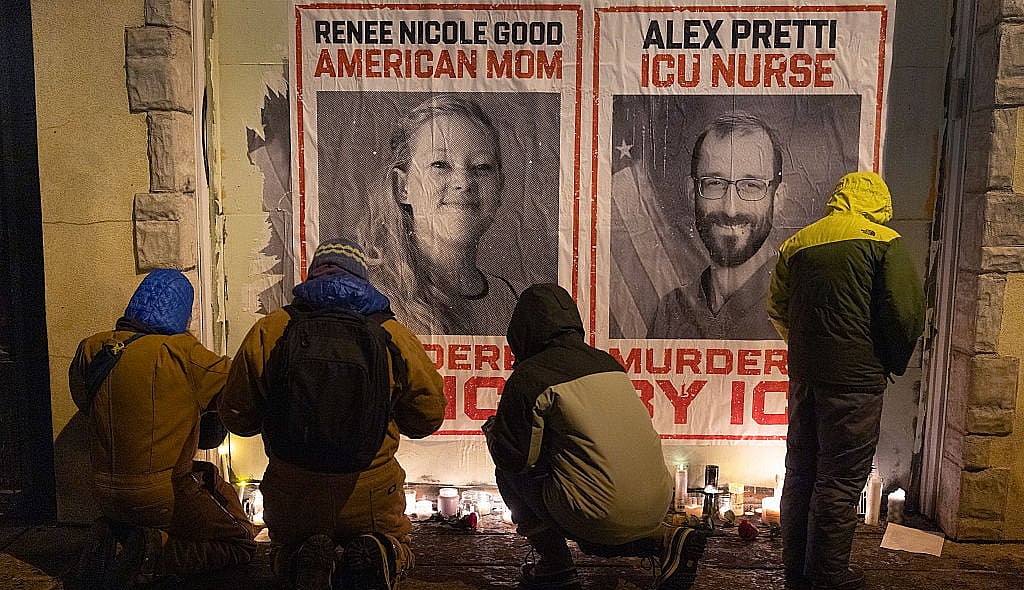
The death of Alex Pretti, a 37-year-old man shot and killed by federal agents during a Minneapolis protest against increased immigration enforcement, has been officially ruled a homicide. This determination only adds new weight to growing concerns about how federal authorities used force and how the incident was initially described to the public.
On Monday, Feb. 2, the Hennepin County Medical Examiner’s Office released its findings, listing Pretti’s cause of death as multiple gunshot wounds. The manner of death was ruled a homicide, with the report explicitly stating that Pretti was “shot by law enforcement officer(s).” The examiner noted no other medical conditions that may have contributed to his death.
Pretti was killed on Jan. 24 as demonstrators gathered in Minneapolis to protest heightened immigration enforcement activity in the city. The shooting immediately sparked outrage and confusion, particularly as federal officials and eyewitnesses offered sharply different versions of what unfolded in Pretti’s final moments.
According to the Department of Homeland Security, agents were carrying out what officials described as a “targeted operation” against an undocumented individual wanted for violent assault. DHS Assistant Secretary Tricia McLaughlin said Pretti approached U.S. Border Patrol officers with a 9 mm semi-automatic handgun and “violently resisted” attempts to disarm him, prompting an agent to fire what the department characterized as defensive shots.
But video footage reviewed by The New York Times appears to tell a different story.
The footage shows Pretti standing among a group of protesters with both hands visible. As federal agents deploy pepper spray into the crowd, Pretti is seen holding a cellphone in one hand. Moments later, he is pinned to the sidewalk by officers. At no point in the footage does he appear to be holding or reaching for a weapon.
A witness later said Pretti had been trying to help a woman who had just been pepper-sprayed by agents when he was confronted. That account, paired with the video evidence, has fueled widespread skepticism about the government’s explanation and renewed calls for transparency and independent oversight.
While the medical examiner’s ruling does not assign criminal responsibility, classifying the death as a homicide makes clear that Pretti’s killing was the result of another person’s actions—not an accident or medical emergency. For civil rights advocates and community leaders, the finding underscores the need for further investigation into whether federal agents acted appropriately.
Pretti had encountered federal authorities just days earlier. A video recorded 11 days before his death shows him kicking a federal vehicle during an altercation, after which an agent pushed him to the ground. Officials have pointed to that incident as context. Still, critics argue it does not justify lethal force—particularly during a protest where witnesses say Pretti was unarmed and attempting to assist someone else.
His death comes amid heightened national tension over immigration enforcement and the expanded presence of federal agents in local communities. In Minneapolis, a city still grappling with the legacy of George Floyd’s killing, Pretti’s death has reopened painful questions about accountability, use of force, and whose lives are deemed expendable during moments of public unrest.
For many in the community, the medical examiner’s ruling is not closure. Instead, it marks the beginning of a deeper reckoning—one that demands clarity, accountability, and answers about how a man holding a phone at a protest ended up dead at the hands of the federal government.
