
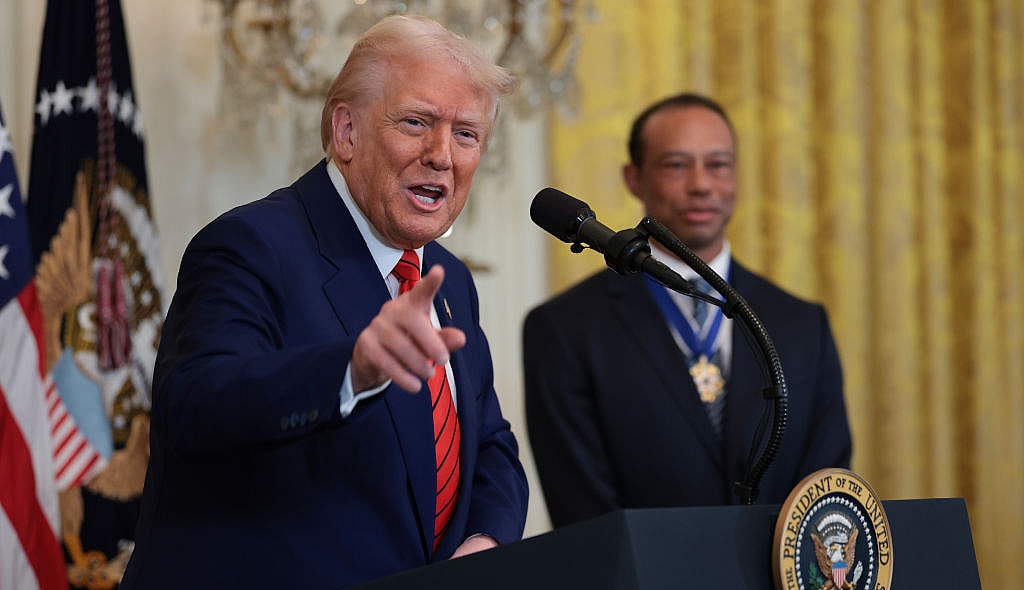
To mark the start of Black History Month, President Donald Trump signed a proclamation honoring the commemorative observance, which turns 100 years old this year. In it, Trump acknowledges the countless contributions of African Americans, but draws a political line in how Black history is discussed in America.
“For decades, the progressive movement and far-left politicians have sought to needlessly divide our citizens on the basis of race, painting a toxic and distorted and disfigured vision of our history, heritage, and heroes,” writes the 47th President of the United States. “This month, however, we do not celebrate our differences.”
While Trump, who highlights the country’s 250th anniversary this year, recognizes the unique contributions of Black Americans to “government, laws, military, economy, workforce, and culture,” he emphasizes that Black history is “not distinct from American history.” Instead, he notes, “the history of Black Americans is an indispensable chapter in our grand American story.”
“For 250 years, these principles have inspired and informed the independent, bold, and pioneering American spirit. It is our bedrock belief in equality that drove Black American icons to help fulfill the promise of these principles. And it is our unwavering commitment to liberty that continues to sustain our Nation’s greatness,” said the president.
Dr. Marcus Anthony Hunter, a professor of sociology and African-American studies at UCLA, tells theGrio of the proclamation, “commemoration must be coupled with accountability.”
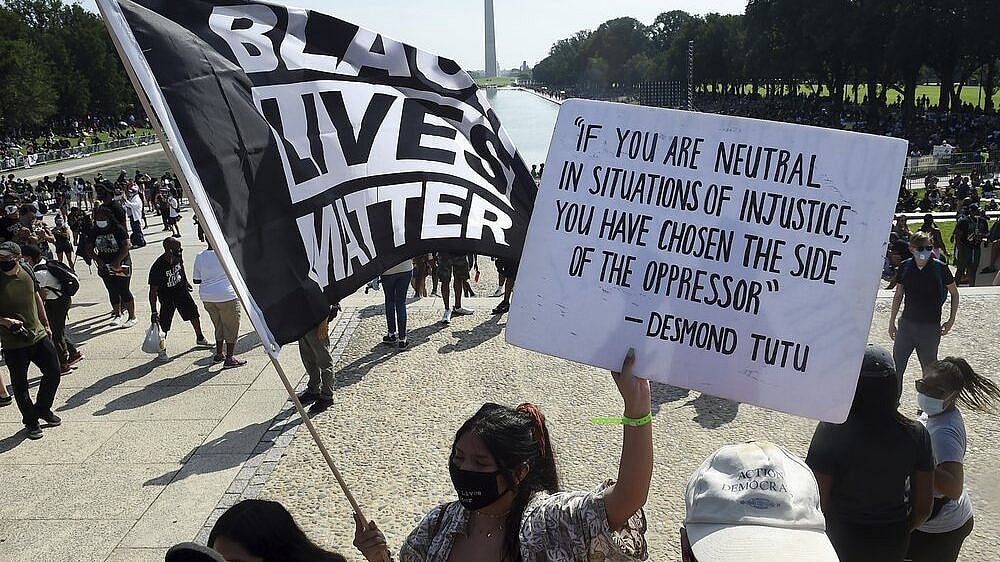
“It’s not enough to declare a month of recognition when the systems we rely on to repair justice are not themselves just. Here we can think about ICE, for example, and a host of other organizations, institutions within the federal government, which are currently disserving the Black community and other communities during this month,” said Hunter, a longtime racial justice advocate who has helped draft congressional bills related to reparations and restorative justice.
Dr. Hunter said what was most interesting from the presidential proclamation is Trump’s acknowledgement of slavery as a major feature of America’s history at time where the teaching of slavery in classrooms has come into question amid the Trump administration’s efforts to rid the country of what it deems to be diversity, equity or inclusion, or simply DEI.
The proclamation reads, “We celebrate the contributions of Black Americans to our national greatness and their enduring commitment to the American principles of liberty, justice, and equality — the principles that wrested the Western Hemisphere from monarchies and empires, ended slavery, saved Europe, put a man on the moon, and built the freest, most just, and most prosperous society ever known to mankind.”
“It is striking because a large part of the assault on education and also the banning of books has been around the discussion of slavery as a fact. So even though it’s in passing, it is name-checked as a part of American history at 250 years old,” Hunter told theGrio. “That should be noted and also uplifted, because the base that supports President Trump tends to be in denial about slavery as a fact of America. And he actually is stating it.”
During his first term as president, Trump vehemently rebuked the framing of slavery and racism as a core feature of America’s history, as explored in journalist and author Nikole Hannah Jones’s “The 1619 Project.” To counter that historical fact, Trump created a “1776 Commission” to instead promote “patriotic education.”
By viewing every issue through the lens of race, they want to impose a new segregation, and we must not allow that to happen.
“Critical race theory, the 1619 Project and the crusade against American history is toxic propaganda, ideological poison, that, if not removed, will dissolve the civic bonds that tie us together, will destroy our country,” Trump said in September 2020.
Trump’s passing mention of slavery struck Dr. Hunter as ironic.
“I read it and said, ‘Okay, so all of this time Nikole Hannah Jones was right,” he told theGrio.
