

Editor’s note: The following article is an op-ed, and the views expressed are the author’s own. Read more opinions on theGrio.
When I think about education across America, I don’t start with policy. I start with place.
I grew up in Memphis and went to Whitehaven High School. Like a lot of kids, I did not spend much time thinking about school systems or governance. I remember hallways, teachers who knew my name, and the shared understanding that school mattered. Not as a guarantee, but as a door that could open if you did the work.
Whitehaven shaped how I saw education long before I led a school system. It taught me that schools must reflect the communities they serve and that stability, high expectations, and adult attention matter. Children and families in communities across America urgently need exactly those attributes in their classrooms – and the school systems that serve them must not be afraid to embrace change.
So when I became superintendent of Memphis’ Shelby County Schools in 2013, I stepped into the role during a period of real disruption. The district had just gone through a historic merger. We were managing financial strain, aging buildings, and a system that too often asked families to accept outcomes no one would accept for their own children. I was responsible for every school in the district, including the one that raised me.
Graduation rates told part of that story. Too many students weren’t making it to the finish line, and Black young men were disproportionately represented in that group. Improving graduation outcomes became one of my clearest priorities. Graduation is not the end of a student’s journey, but it is a critical checkpoint. It reflects whether a system is organized around student success or around managing its own complexity.
The work was steady, practical, and unglamorous. We focused on stabilizing school leadership, improving facilities, reducing $100 million in district debt, and putting stronger supports in place for schools that had been asking for them for years. We worked to distribute resources where they were needed most and raise expectations across the system, not just in a handful of schools.
By the time I stepped down in early 2019, graduation rates had increased across Shelby County Schools, including for Black male students, who reached 75.3 percent, reflecting steady improvement. It wasn’t everything that needed to happen, but it was real progress, driven by educators, families, and students who showed up every day.
That experience continues to shape how I think about education now.
Today, my work at City Fund, a national foundation aimed at transforming education, is grounded in the same question that guided me as a superintendent: how do we help communities build school systems that work better for families, especially those who have had the fewest good options?
Last fall, City Fund partnered with Bloomberg Philanthropies and UNCF to launch a $20 million initiative to support public schools, developed in partnership with Historically Black Colleges and Universities. The idea is straightforward. HBCUs are trusted institutions with deep roots, strong educational expertise, and a long history of turning opportunity into achievement. Bringing those strengths into closer partnership with K–12 education can open pathways earlier and make them clearer.
In Alabama, that work is taking shape now.
Later this month, I Dream Big Academy will officially cut its ribbon on the campus of Stillman College in Tuscaloosa. The timing matters. Opening a new public school during Black History Month is a reminder that the work of expanding opportunity is not symbolic. It is structural. Students will attend school each day on a college campus, learning in a setting that makes the next step visible and familiar.
In partnership with Tuskegee University, another Alabama community is preparing to reopen an existing public school with new academic supports and closer ties to higher education. In both cases, local boards approved the schools, local educators helped design them, and families chose them.
This work is not about choosing sides in education debates. Public education is strongest when it adapts to the people it serves. Families don’t all want the same thing, and children don’t all learn the same way. What they want is a real chance.
Research shows that when schools are well designed, well led, and held accountable, students benefit. Black students, in particular, have seen meaningful academic gains in high-quality public charter schools. That evidence should push us to expand what works, thoughtfully and responsibly, while continuing to strengthen the systems families rely on every day.
When I think back to the young men I met in Shelby County classrooms, I don’t think about policy debates. I think about whether they believed the system expected something of them. Whether they felt seen. Whether the adults around them believed they would succeed.
That question still matters.
Later this month, a ribbon will be cut at a new public school on the campus of an HBCU. Students will walk into a building designed by local educators, shaped by community priorities, and rooted in an institution that has helped generations turn education into opportunity.
Black History Month does not require grand statements. It calls for follow-through. It asks us to keep building schools that open doors, to support leaders who take responsibility for outcomes, and to stay focused on what students experience inside those classrooms every day.
That work is practical. It is local. And it is ongoing.
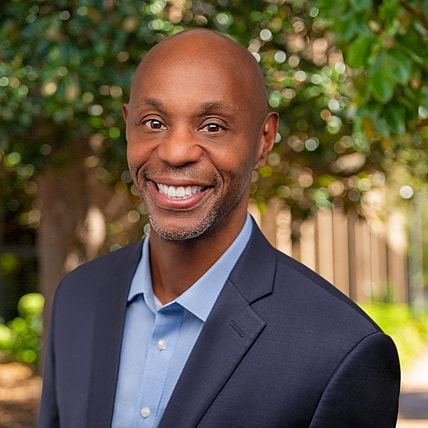
Dorsey Hopson is a Partner at City Fund, where he works with local leaders to improve student outcomes, strengthen K–12 ecosystems, and expand access to high-quality schools. He previously served as Superintendent of Memphis City and Shelby County Schools, leading the largest district merger in U.S. history while advancing early literacy, expanding school options, and building community partnerships. Earlier, he served as General Counsel for multiple districts and as a corporate defense attorney. Hopson holds degrees from the University of Memphis and Georgia State University College of Law.
