
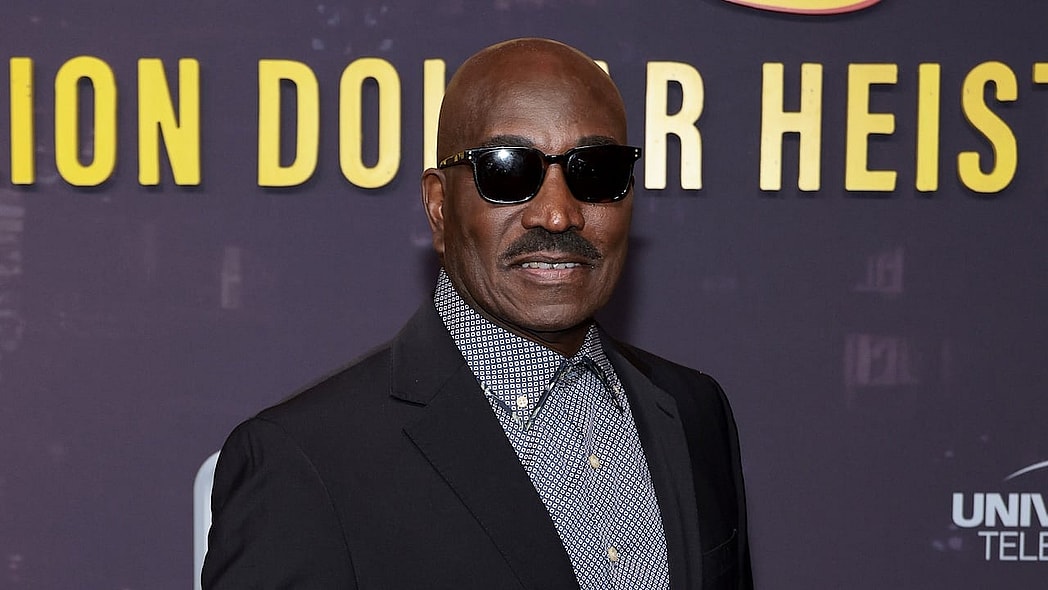
A moment of vulnerability veered left for actor Clifton Powell.
The “Next Friday” and “Menace II Society” alum took part in a “Black Men Trust Black Women Roundtable” hosted by SisterSong Women of Color and Kendrick Sampson’s BLD PWR organization featuring a mix of actors such as Luke James and J. Alphonse Nicholson, activitists like The Conscious Lee and creatives, focused on the Black man’s role in supporting reproductive justice and building healthier relationships with Black women.
At one point, when content creator Joseph Irvin explained his feelings about accountability and the older generation regarding Black women, the conversation got heated.
“What Luke [James] brought up was accountability, like yes, we can talk about what our families did to us, but eventually, and I know white people try to say this and I don’t really like that … it comes to a point where you decide, how do I want to live my life?” Irvin, a gay man, told the table around the 51-minute mark of the roundtable. “I haven’t talked to my daddy in six years, I don’t give a f–k about what my family has gone through, I know what I will go through. You can only say that for so long.”
He added, “Black women are tired, and several people in here have talked about going to counseling, have that upon yourself. Stop waiting for a woman to tell you what you need to do. Take that upon yourself.”
As Powell attempted to interject, Irvin dived deeper into his point.
“Another thing that happens is, you live your life for so long, and I’m not meaning no disrespect by this. But when you hit your 60s and your 70s? ‘I wanna be right. I wanna live my life right. I want somebody to take care of me and protect me’ and that’s what a lot of women have issues with.”
The point struck a nerve with Powell, who previously admitted that he just learned “how to love” in his 60s. The moment of learning and unlearning prompted Powell to defend himself and his lived experience, sparking a generational conflict between two men who’ve seen things differently in their relationships with Black women.
“Let’s get to the truth of this. You can’t fix no sh-t unless you meet somebody whose health is on another level to help you understand,” Powell says. “I’m not indicting anybody, I’m telling you what the sh-t is. You can’t fix some sh-t that you don’t know about, bruh. Then you get there at 69 and 70 and say, ‘I thought I was being loved all this time.’ That’s what our parents have gone through.”
Powell ultimately agreed that he should be in therapy, highlighted by generations of trauma and lack of communication passed down.
“You gotta hold yourself accountable once you figure it out,” Powell said. “When you hurt somebody, where you leave them is where they stay.”
Watch the full discussion below.
