
Editor’s note: The following article is an op-ed, and the views expressed are the author’s own. Read more opinions on theGrio.
Netflix’s new highly anticipated three-part documentary, “Reality Check: Inside America’s Next Top Model,” arrives with all the glossy nostalgia of early 2000s reality TV, and the uneasy feeling that its central figure still is still due for a reality check of her own.
The series revisits the meteoric rise of “America’s Next Top Model,” which ran from 2003 to 2018 and spanned 24 cycles. For many, it was campy, chaotic appointment television. For others, especially a new generation discovering it on streaming services, it’s closer to a pop culture fever dream.
The makeovers alone have aged like milk. Contestants were pressured to widen or close gaps in their teeth, chop off their hair against their will, or install tacky, heavy weaves. Photo shoots — when they weren’t being racist, insensitive, or making light of violence against women — veered from avant-garde to outright dangerous. And through it all, young women and eventually men starting from cycle 20, often plucked from modest backgrounds with little industry protection, were expected to endure the humiliation ritual in the name of a highly coveted modeling career jumpstart package.
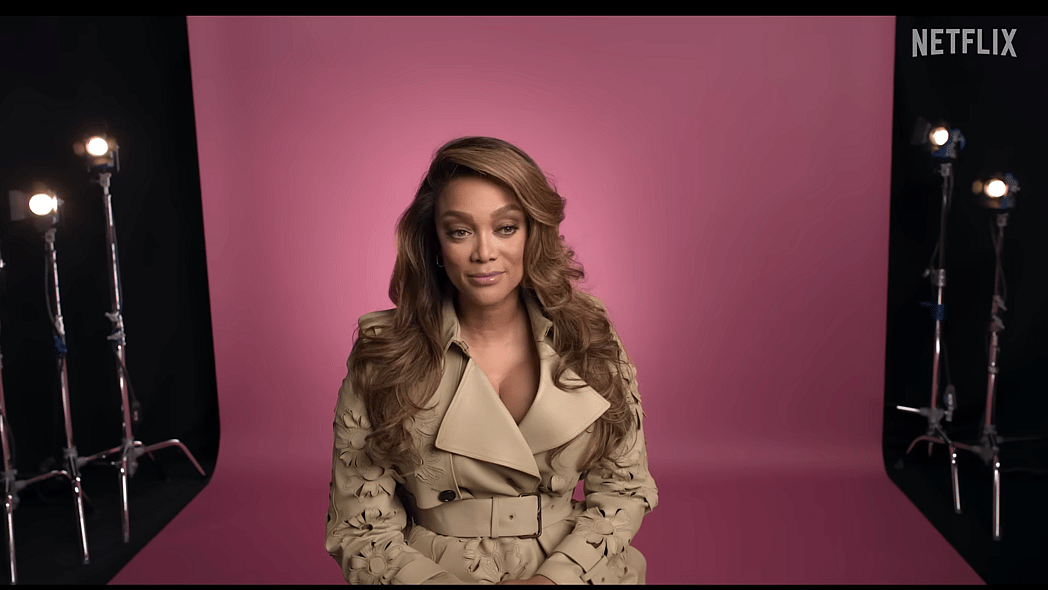
The documentary doesn’t dispute much of this. In fact, Tyra Banks opens by acknowledging that, in some moments, she went “too far.” What’s striking, though, is not that she misremembers the show. It’s how she seems to remember it. While giving it a very generous read, seeing her as a champion of diversity in the industry, her tone remains largely aloof, as if the cultural reckoning happening around her and the show hasn’t quite caught up with her yet.
Take Shandi Sullivan from Cycle 2. During a trip to Milan, production encouraged the contestants to socialize. After drinking heavily, Sullivan blacked out and slept with a man while her boyfriend was back home. Cameras captured not only the drunken encounter but also the devastating phone call in which her boyfriend berated her on national television.
Speaking on “Reality Check,” Sullivan was candid about the shame and trauma that followed. Viewers revisiting scenes from the episode are now questioning whether what happened should have been treated as entertainment or something more in line with an assault. Yet in the documentary, responsibility is largely deflected. Banks suggests certain situations weren’t in her lane to control. Other former producers echo the sentiment.
It’s a disappointing chorus that gets repeated.
Shandi is far from the only former contestant to be severely let down. Several of the Black women who appeared on the show, in particular, had very challenging experiences made all the worse because Banks was often at the center of their experience, in a position to do something about it, or at the very least someone they felt should understand. Ebony Haith endured comments about her skin, being labeled “aggressive,” and a humiliating haircut during Cycle 1. Dani Evans, who won Cycle 6, was pressured to close her signature gap tooth, only to later be shut out of the industry after doing so. Tiffany Richardson’s infamous “We were all rooting for you!” moment from Cycle 4 remains one of reality TV’s most memeified scenes, but for Tiffany, it was a public shaming she’s still reckoning with.
Not everyone walked away with a bad experience, however. The show did launch the careers of several notable figures, including supermodel Winnie Harlow, model and actress Yaya DaCosta, and reality TV star, model, and actress Eva Marcille. Celebrity hairstylist Kiyah Wright, who has worked with Banks for over 20 years, publicly defended her. In a lengthy Instagram post, Wright credited Banks and “Top Model” with shifting culture by bringing high-fashion editorial beauty into everyday living rooms. She described the environment as formative, saying it sharpened her craft and opened doors that led to Emmy-winning work on “The Tyra Banks Show.”
“Was it intense? Of course. Excellence usually is,” she wrote. “But what I experienced was growth, exposure, discipline, and opportunity at the highest level. Tyra moves with the times. She takes risks. She pushes boundaries. She gave sooooo many girls a shot. I was one of those girls.”
Both things can be true. “America’s Next Top Model” undeniably democratized fashion fantasy. It gave young women — especially Black women — visibility in a space that historically excluded them. It also normalized emotional manipulation, overserved contestants, and blurred ethical lines in the name of ratings. Reality TV in the early 2000s was the Wild West. Cast members across franchises have since spoken about inadequate mental health support, exploitative contracts, and long-term fallout. The industry as a whole has much to atone for.
Still, this documentary felt like an opportunity for something deeper from Banks herself. At one point early on, Banks notes, “I haven’t really said much,” and after three hours, she still hasn’t. Beyond acknowledging that she found some comments about weight unacceptable or that some of her crashouts were motivated by her own experiences in the industry, there is little in the way of a meaningful apology or direct reckoning with the women who say they were harmed. The refrain is essentially, “That was the time.”
And yes, it was. But growth requires accountability. Then again, Banks famously coined “smizing,” smiling with your eyes while keeping the rest of your face neutral. Watching “Reality Check,” it’s hard not to notice the smize remains firmly in place
