
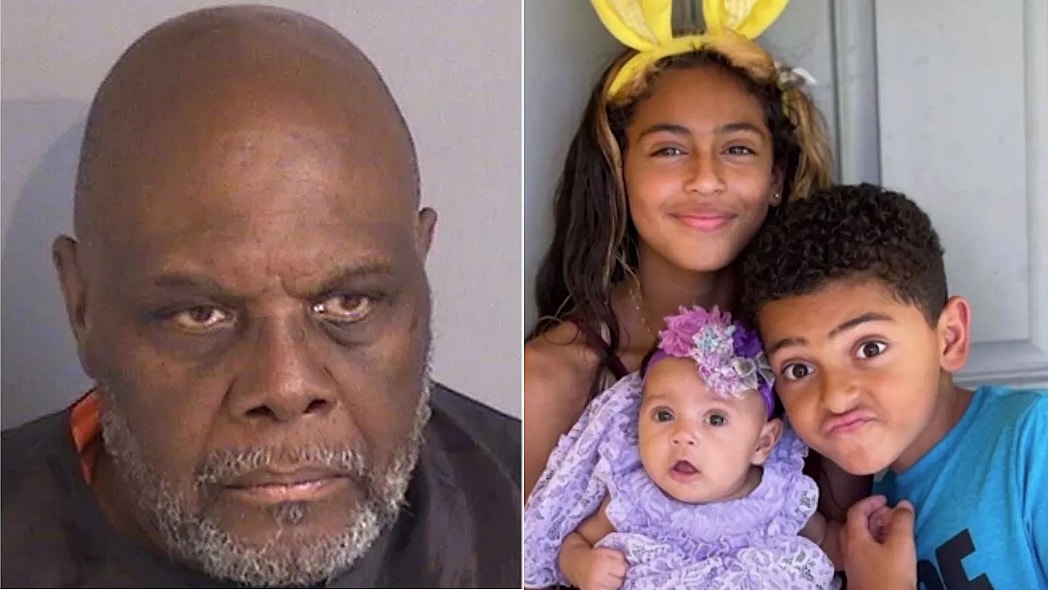
The legal standard of parental responsibility was pushed to its furthest limit in court this week as a Florida father will spend the rest of his life behind bars after being sentenced for his role in a deadly 2023 crash that killed a grandmother and three young children.
Richard Seymour Ferguson, 69, was sentenced this week to 444 months, just over 37 years, in prison after a jury found him guilty of manslaughter by culpable negligence. Prosecutors said Ferguson allowed his 15-year-old son, who did not have a driver’s license or permit, to operate a vehicle before the crash that claimed four lives.
Ferguson, who has been diagnosed with stage 4 prostate cancer, received a sentence that effectively means he will likely die in prison.
The incident occurred on Sept. 3, 2023, when the teenager drove the family car through a stop sign at speeds reaching 83 mph in a 30 mph zone. The high-speed impact killed 11-year-old Anayari Hernandez, 9-year-old Marvin Cruz, and 1-year-old Mylie Cruz, as well as their grandmother, Trinidad Hernandez.
During sentencing, the presiding judge said a punishment beyond the minimum guideline sentence was warranted, given the magnitude of the loss suffered by the victims’ family.
Ferguson addressed the court and expressed remorse.
“Each day is living in grief and regret, and in pain that knows no limit,” he said. “I am truly, deeply sorry for your loss. I know that the weight of my remorse can never compare to the weight of your pain.”
For Sabrina Hernandez—the daughter of Trinidad and the mother of the three children lost—the courtroom proceedings were not about sympathy, but about the permanent void left in her home. Throughout the trial, Hernandez served as a powerful voice for her family, rejecting the defense’s focus on Ferguson’s personal hardships and emphasizing that while his family can still visit him, her family exists only in memory.
In an emotional victim impact statement, she urged the court to impose the maximum sentence, noting that Ferguson would continue living while her loved ones could not.
“This man is still alive; your guys’ family is still alive,” she said in court. “If I want to hug my children, I have to hug a vase full of ashes that sit in my living room.”
Defense attorneys had asked the court for leniency, citing Ferguson’s serious health challenges. Hernandez acknowledged sympathy for his illness but criticized what she described as attempts to shift responsibility onto his son during earlier proceedings.
“I pray that the Lord comforts him in his bad health,” she said. “But it’s a pathetic excuse for a man to sit here with your head down and can’t even take accountability.”
Under the terms of a plea agreement, Ferguson’s son, who was driving at the time of the crash, will remain in juvenile custody until he turns 19.
The case has renewed conversations around parental responsibility, juvenile driving laws, and accountability when adults permit minors to operate vehicles illegally. Prosecutors argued throughout the trial that the tragedy was preventable and stemmed from an adult decision that placed multiple lives at risk.
For Hernandez, however, the legal outcome cannot restore what was lost.
Her mother and children, she told the court, are gone forever.
