
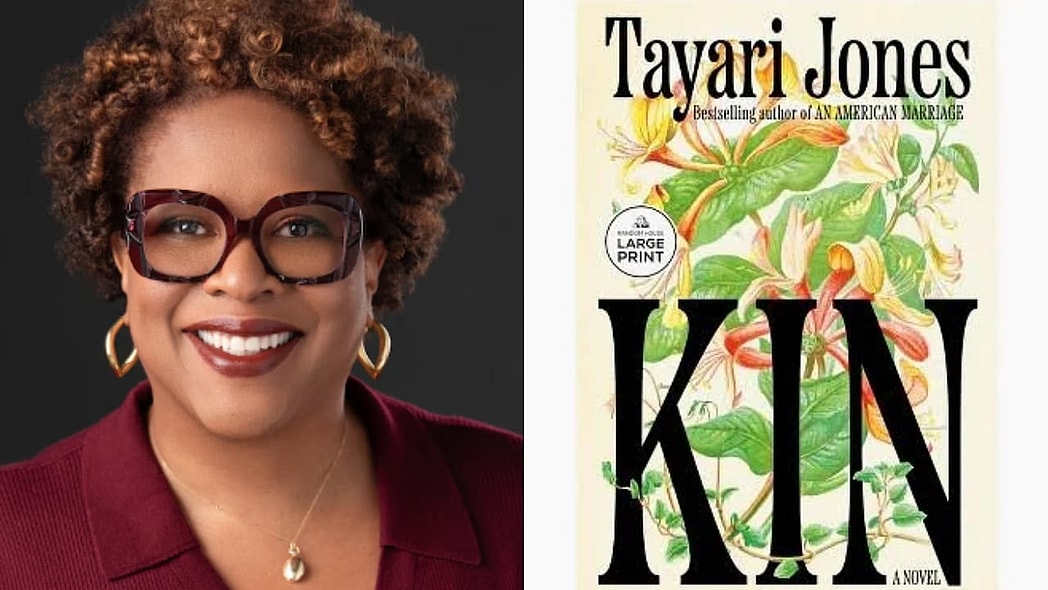
Tayari Jones had a different kind of writer’s block.
The bestselling author of “An American Marriage” and “Silver Sparrow” knows what it means to make magic on the page and in the classroom as a professor at Emory College. But when it came to turning in her latest book assignment, the clock was still ticking, going on seven years, and the story was nowhere to be found.
“I was under contract to write a contemporary novel about Atlanta and gentrification,” Jones tells theGrio in an extensive interview this past week. “But the story wasn’t happening. It didn’t have that pixie dust. So I took out a pencil — like an old school pencil sharpener pencil — and just started writing the way I wrote as a child, for my own pleasure. And that’s when I met my characters.”
Meeting her characters may sound like an unusual way to describe the writing process. After all, novelists are gods of letters. They build hearts, minds, and spines letter by letter, choosing their characters’ own adventures. So why was Jones caught off guard by the encounter? She was once skeptical of writers who described storytelling as if it were out of their control. Now she knows better.
“You don’t choose your story. The story chooses you. I didn’t believe that until it happened to me. I thought what I was writing was backstory,” Jones explains. “But once I got a hundred pages in, I had to realize what I thought was backstory was the story.”
The two characters who emerged from the darkness of the unknown were Annie and Vernice. Black girl best friends born in the Jim Crow South in Honeysuckle, Louisiana, both without mothers to know or love them due to tragic circumstances.
Despite their intertwined roots that make them almost like sisters, life takes them down different paths, with Annie hitting Southern roads in search of healing and Vernice gracing the campus of Spelman College, determined to write her ticket to freedom via an education.
Although Jones set the novel at the height of segregation, Black American readers will find that much like their own lives in this country, there is space for the presence of the other things that make life worth living: joy, laughter, enlightenment, and even sexy romance.
“Racism is running in the background all the time of our Black lives. But we don’t just sit around being oppressed. We do other stuff,” Jones reflects. “There are moments when we can put racism out of our heads — and then here come the racism. You’re enjoying a piece of cake, and here come the racism.”
Jones also takes extra care to demonstrate the nuances of the Black American experience, which include class differences that readers can likely relate to. While Vernice is in Atlanta learning to hold tea cups properly, Annie is in the deep south learning how to wash soiled sheets to save her life not long after the two part.
“Class is very fluid in the Black community,” Jones tells theGrio. “Most bougie people haven’t been bougie their whole lives. And even if they have, every bougie person has cousins who are not bougie.”
“Black colleges are often people’s first exposure to Black upward mobility. People imagine the polished graduate miniaturized into a freshman. But for many students, that campus is the first time they’ve seen what is possible.”
In “KIN,” readers see how possibility transforms a Black woman’s entire life, from her hair and choices in men down to the knickers and panties she wears. Annie and Vernice could not be on more different paths of social class grooming, and their veering apart creates many hilarious moments.
“Life is a little bit funny,” Jones notes. “Part of being human is that things are a little bit funny. Even when I’m writing about mass incarceration or wrongful incarceration, there is still humor. Because we are human.”
A Spelman grad conjures a Spelman girl
Jones’ own humanity is part of the magic of “KIN.” The setting of Spelman College, where much of the story takes place, is one that the author inhabited herself at the tender age of 16.
“I owe it all to Spelman College,” Jones tells theGrio. “I met a writer, and she was my teacher. She became my first audience. She took me seriously — and I learned to take myself seriously.”
In addition to her professor, Jones had the privilege of witnessing the legendary Johnnetta B. Cole, Spelman’s first Black female president, leading both institutionally and one-on-one.
“There I was, the youngest person in the world, 16 years old, youngest person ever. And I wasn’t even a terribly worldly 16-year-old. I was a kind of wide-eyed 16-year-old. And freshmen had to say what they were interested in. And I said, ‘I would like to write.’ And then that was that.
And I was walking across campus — it was the eighties — and Dr. Johnnetta Cole was walking quickly across campus in sweatpants with Spelman down the leg. And she saw me and said, ‘Tayari,’ you know she’s got that big voice, ‘Tayari, how is the writing?’
And I said to myself, the next time I see her, I’m going to have something to say. I’m going to have something to show. I’m going to be able to tell her it is going well.”
Cole is surely proud of how well it’s going for Tayari Jones now. Jones won the 2019 Women’s Prize for Fiction for “An American Marriage,” along with an NAACP Award and the coveted Oprah’s Book Club Pick seal of approval.
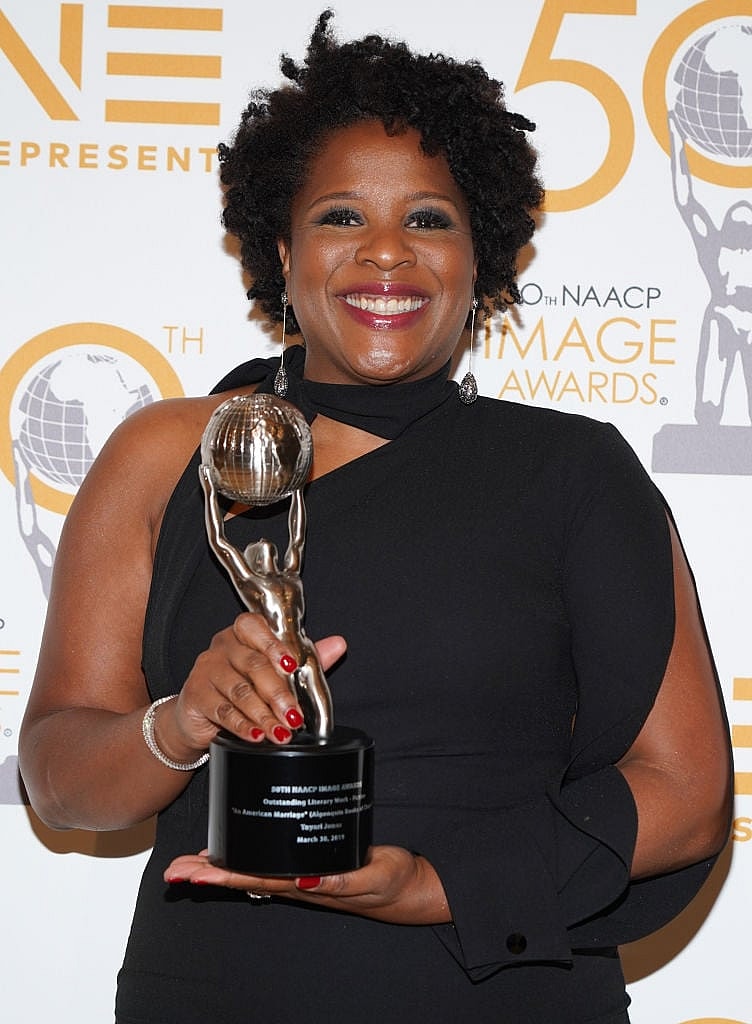
Winfrey showed lightning can indeed strike twice by surprising Jones while she was meeting with her publisher this week with the news that “KIN” would again be an Oprah’s Book Club pick.
That intention on Oprah Winfrey’s part to celebrate Jones in this golden era of her career is but a microcosm of the ways Black women uplift each other’s work and creativity regularly in an often hostile world.
“One thing I have found is that Black women are wonderful friends,” Jones reflects. “The media has made it seem like Black women are only frenemies to each other, but that has just not been my experience. Yes, I have had a few people I’ve put out of my life. But by and large, Black women have shown up.”
“Anytime you see a successful Black woman, Black women are behind her holding her up. We need to start understanding that really is our norm.”
“Reality TV has made all this money on telling Black women we cannot trust each other. And what you consume in the media can make you doubt your own experience. We be out here trusting each other, loving each other — and you watch so much TV you start to think, ‘Does my best friend not love me?’ Your best friend does love you. Your best friend is your next of kin.”
And there it is.
In that thought, Jones reveals much about her own thinking when it comes to what her characters’ friendship represents in her latest book.
The appreciation of the bond between Black women was only further forged through grief and tears.
“During the pandemic, I lost three close friends,” Jones reveals. “One of them I had known since the third grade. Another I had known for 20 years. They were witnesses to my life. Without them, part of the record of who I am has been lost.
Your friends — your old friends — they are the archive of your heart. They have the archive of your heart. And while I still carry the archive of theirs, the archive of my heart in many ways has been lost.”
Through the rollercoaster of discovery, growth, pain, and reconnection in Annie and Vernice’s “KIN” story, readers will learn that even during loss, true sisterhood always has the power to restore.
“With friendship, you are choosing to re-up on that relationship constantly,” Jones says. “You are always recommitting. And how you are with your friends — that really shows who you are.”
Natasha S. Alford is an award-winning journalist, author, and media executive, currently serving as Senior Vice President and Chief Content Officer at theGrio. She is the author of American Negra, an International Latino Book Award–winning memoir. Follow her at @natashasalford across social platforms for the latest.
Watch the full interview with Tayari Jones on theGrio’s YouTube channel.
