
Editor’s note: The following article is an op-ed, and the views expressed are the author’s own. Read more opinions on theGrio.
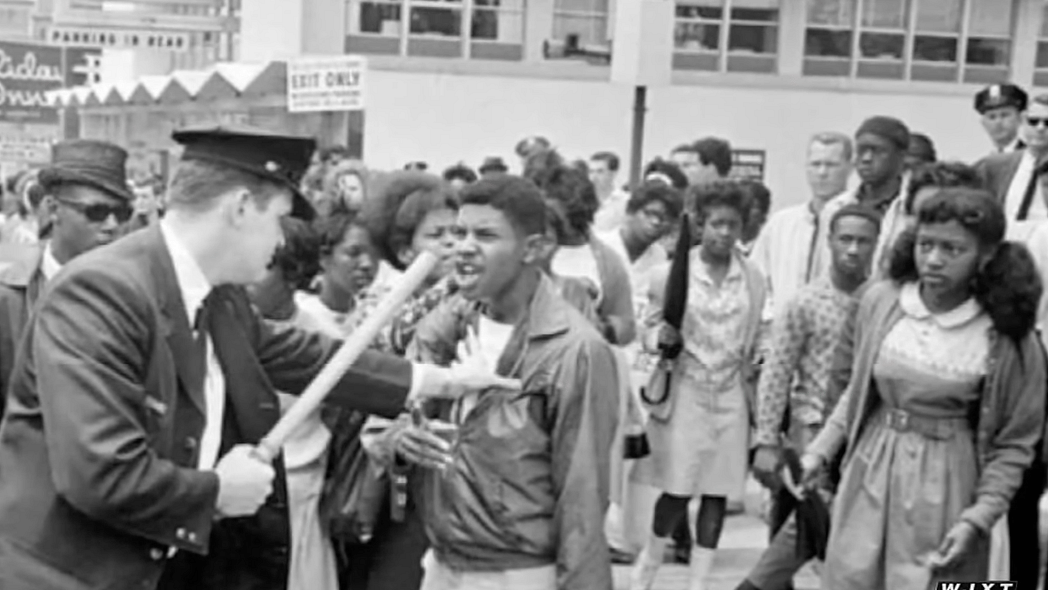
I was 42 years old when I first heard the story of my father’s role in Ax Handle Saturday. It was a vicious racist attack on nonviolent Black teen students by 200 axe handle-wielding white boys and men in 1960 in Jacksonville, Fla.
It was a part of history where my father played a central role. But one he didn’t discuss.
During my formative years, my father, Dr. Arnett Elyus Girardeau, Sr., was arguably one of the most powerful Black politicians in the country. He was the first Black man to represent Jacksonville in the Florida Legislature since his great-uncle Richard L. Brown (1881-1883). My father served as a Democrat in the Florida House of Representatives from 1976 to 1983, and in the Florida Senate from 1983-1992. The list of accolades and achievements in his entry in the 1990-1992 Florida Senate Clerk’s Manual is well over a page, single-spaced and in small font, detailing two decades of legislative service, four decades of public service, and distinguished military service.
My father’s legislative achievements were numerous, including contributing to the creation of a majority-minority Congressional district that connected Black communities from Jacksonville to Orlando, and electing a Black woman to Congress in 1992. He was a founding member of the Florida Conference of Black State Legislators, and the first Black Senate President Pro Tempore.
There are an additional 23 lines of “highlights” that include awards from a variety of state, local, and national organizations, including Howard University, his beloved alma mater (undergraduate and dental school), and awards named for his friends and fellow Civil Rights pioneers, Harry T. Moore award (assassinated on Christmas Day, 1951 with his wife, Harriet), and Clanzel Brown.
My unique perspective on the pioneers of the Civil Rights movement in the Southeast from 1958-1976 is that of a daughter born after the height of institutional violence, coming of age in the decades of institutional silence on the worst atrocities. Rather than join the Black sisterhood at Spelman College, or follow him to his beloved Howard University, I was educated at Harvard College (then Harvard-Radcliffe), a bastion of Northeastern liberalism, but without academic engagement in Black history and political achievement. Despite successfully completing classwork in American History at two of the leading History Departments—Harvard and Duke University—I had no idea that my own father had played a pivotal role in such historical events. My mother, a country girl from North Carolina, may not have known.
It took years for me to fully comprehend just how thoroughly the invisible legal and societal frameworks had shaped our understanding of local history, and my own. It took years to heal from erasure of everything that I thought was true about myself and my history; it took years to trust.
My father started his Civil Rights work in 1960 during a summer home from Howard Dental School, which convinced him to abandon the safety of the HBCU and “Black Mecca” for his hometown, Jacksonville, which was preparing to boil over in Civil Rights turmoil. He and Alton Yates, a young Air Force veteran, worked with high school students who were beginning to boycott downtown stores in a nonviolent protest against segregation. I learned that as a single man, Dad felt that he had nothing to lose and everything to gain by supporting the youth of his community.
On August 27, 1960, my father was the adult “sergeant” accompanying the high school students in a park when they were attacked by more than 200 white baseball bat and axe-handle-wielding thugs – presumed members of the Ku Klux Klan – on the way to a nonviolent sit-in.
The attack was blacked out in the white media, leading to denials lasting to this day. The attack, now known as Ax Handle Saturday, was still almost completely unknown until the 40th anniversary in 2000. The full story has not been made public, and no comprehensive study has yet been produced.
According to Rodney Hurst, the student leader of the protest, the college protests of February 1960 were electric. Black high school students – especially those who had been students of former Negro league baseball player and civil rights activist Rutledge Pearson, who taught in Jacksonville–were ready to play their part. Hurst, Pearson, and the other adults chose my father to be the one adult who could negotiate with the police when they came.
The night before the sit-in, those who were called the “invisible empire” were spotted handing out axe handles to men and boys in Heming Park, the downtown plaza watched over by the ubiquitous “Johnny Reb” Confederate Statute. The next day, the peaceful protesters were attacked by the mob. The police never came.
Hurst says that white newsagents did have copies of the media coverage by the Pittsburgh Courier, Life Magazine, and the independent Black-owned Florida Star newspaper; those “in the know” could get them to sell those from “under the counter.” Women and children would not have been privy to that information. Most members of Jacksonville’s white community vehemently deny the fact that it took place at all. Their direct experience outweighs the archival evidence. By blacking out local media coverage of the attack, the white power structure created a bifurcated public memory.
Starting with the 40-year anniversary in 2000, Black community members began a series of public remembrances, with a historical marker, yearly commemorations, and a neighborhood mural depicting scenes from the attack. In retrospect, Ax Handle Saturday was in plain sight but my father’s only direct acknowledgement was when he handed me a copy of a Princeton University student’s senior thesis on Ax Handle Saturday, and later had me attend the memorial events.
As the children of a political figure, my brother and I were told that our privacy and family life was sacrificed for “the Black Girls and Boys of the community.” They were the students who had risked their lives in pursuit of civil rights. We had not been born during the riots that followed the assassination of Rev. Martin Luther King Jr. in 1968, or the attacks on nonviolent teenage protesters in 1960. Within 12 years, my father was elected to represent them all – Black and white – in the Florida legislature.
In public, I saw his extraordinary connection to regular folk; I didn’t understand the nature of their common struggle because it was kept hidden from public view. All we knew was that Dad had an incredible connection with other Black men, nothing short of what we saw in the video of President Barack Obama with Team USA. He was devoted to all working people and especially those in his hometown, the “neighborhood” that raised him: Jacksonville. From my vantage point, he demonstrated a profound connection with Black men from similar backgrounds – Civil Rights pioneers, politicians, and those in public-facing roles.
Known widely as “Doc,” my late father was a dentist born and raised in segregated Jacksonville. He focused on politics as an instrument of bettering the common man. He is all but forgotten, but Dad was the most powerful Black politician in the State of Florida during the late Jesse Jackson’s historic 1988 presidential campaign.
Upon hearing of Rev. Jesse Jackson Sr.’s death recently, I immediately sent prayers for love and strength to his loved ones and wider community. The countless social media posters brought to mind the time of the historic 1988 Democratic National Convention address, which I watched from the vantage point of the Jimmy Carter’s family’s box in Atlanta’s Omni Coliseum. I was a college student then, volunteering with the Democratic National Convention; my father, a State Senator, was seated on the floor as part of the Florida delegation.
Back then, already known as a Civil Rights leader, Jackson was also teaching us a new way to see ourselves. Within a few months of this address, we would start referring to “African-Americans” rather than just “Blacks.” I was sure that Jackson used that term at the Convention, but the transcript shows differently. I am grateful to have such memories, archival records, and the ability to research and independently evaluate information — all necessary for a working democracy.
“You must not surrender. You may or may not get there but just know that you’re qualified. And you hold on, and hold out. We must never surrender. America will get better and better. Keep hope alive,” Jackson told the crowd.
Now that I have experienced discrimination within elite power structures, I have a better understanding of what even the most celebrated, powerful men must have endured as the price of fighting for their dignity as men, and why they wanted to keep any perceived weakness or victimhood away from their daughters. To be sure, my Dad and other Civil Rights figures lived long enough to have complicated lives. As an expert in ethics and archives, I ensure their stories are told ethically and legally.
On those occasions when our parents took us to legislative functions, we were meant to gain exposure to all parts of the power structure. As a child, it was great fun to attend a party in a museum by the river, eat jumbo shrimp from the Gulf of Mexico, and watch history being made. As an adolescent, it was the height of embarrassment when, invariably, he made a beeline for the Black security guards, servers, and musicians. I was embarrassed by his insistence on acknowledging them publicly rather than treating them like background noise.
“Hey, man,” he would say, a wide smile crossing his face.
They would shake hands and spend a moment determining whether they knew each other from “The Neighborhood,” had friends in common, or something else. It wasn’t just the polite connection of a constituent and legislator, although they often were constituents. It was the natural extension of “The Nod” that we give each other in public. Dad was breaking one of the unspoken rules. Decades later, I am glad that he did. He provided me with the structure that I use every day to navigate the attacks on democratic institutions.
For whatever reason, he could not bring himself to tell me the truth about his own Ax Handle Saturday. When I did finally learn about the attack, I found that I was unprepared for the enormity of learning that my father and his friends had fought off an assault by local white men and boys. Most likely, they included the fathers and brothers of the childhood friends who never visited our neighborhood or invited me to a stay-over or a party.
Years before I knew about the 1960 Ax Handle Saturday attacks, I developed an aversion to that same downtown area. Downtown Jacksonville was known for two things: the sound of “Big Jim,” the steam-power whistle that told workers when their day began and ended, and the intense smell of roasting coffee from the Maxwell House plant. In January of 1977, my parents and I flew to Washington, D.C. to watch Jimmy Carter being inaugurated as president. We were accompanied by a campaign worker and her son; my three-year-old brother was left with his caregiver. The airplane encountered turbulence, which my body associated with the smell of coffee; I became physically ill every time that we went downtown.
Growing up in the 1970s and 1980s, downtown trips were restricted to accompanying my mother to pay taxes or visit the Educational Credit Union. Respectability politics meant that we had our own parks, movie theaters, and municipal swimming pools. There was no need to be out of place, except for trips to the William Hayden Burns Library. The Black neighborhood did not have its own library. For a reader, trips to the glittering green building were worth the occasional queasiness. The queasiness was from the smell of coffee, but it also could have come from spending the day in a building named after Burns, the segregationist politician.
When Burns was mayor from 1949-1965 and Florida governor from 1965-1967, the library, downtown parks, and other areas were strictly off-limits to Blacks. My father sometimes told stories of growing up as a Black child in Jacksonville during the Depression.
“When I was a little boy,” he would say, “I decided to walk through Confederate Park. I was walking through the park when I saw a little white boy with his leg stuck out to trip me. I acted like I didn’t see it, but when I got up on him, I knocked that little white boy’s legs out from under him and ran away!” He would gleefully smack his hands together as if to mime “lickety-split.” As a child, I may have laughed at the tale, but as I got older, I would will the ground to swallow me up from the embarrassment of hearing another one of my father’s stories. Sometime after my father’s death in 2017 at 88, my cousin shared a copy of her oral history interview with him.
He told the same story to his niece with a markedly different ending. He described the white boy, and his jaunt through the forbidden territory, and said, “‘He tripped me.”
Arnetta C. Girardeau, MA, MSLS, JD, is a librarian, lawyer, and historian specializing in the ethical stewardship of cultural heritage. As founder of Sustainable Cultural Heritage LLC, she champions data sovereignty through the “invisible frameworks” of copyright and archival ethics. Her perspective is rooted in a dual heritage: five generations of Florida Civil Rights activism and nearly four centuries of Free, enslaved, and Indigenous ancestors in the Carolinas. When not defending communal narratives in the age of AI, she’s likely the only Black woman decades-long R.E.M. habit who can explain the copyright of your family archive.
