
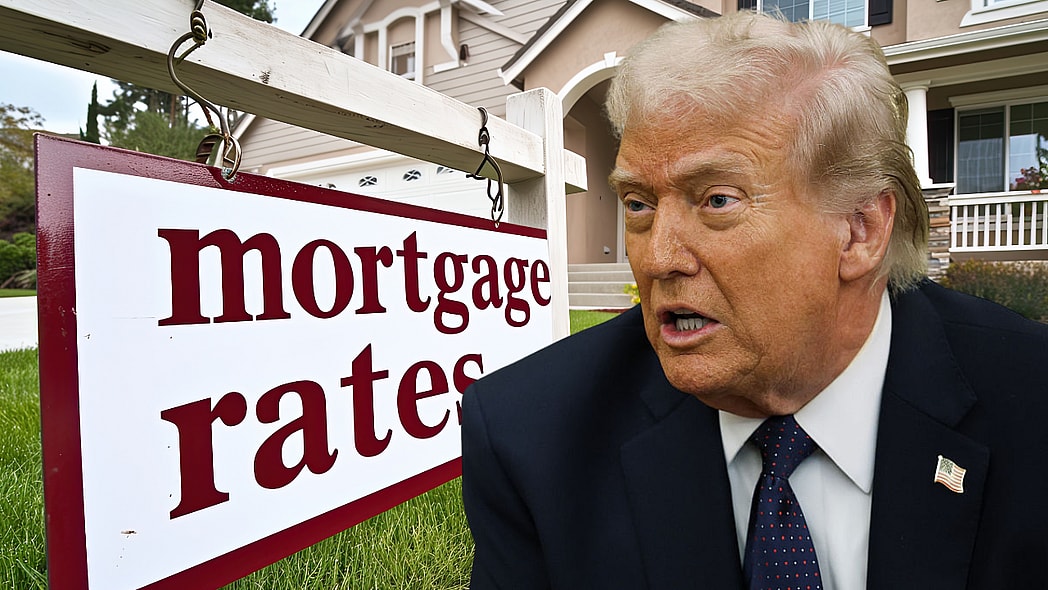
President Donald Trump‘s war in Iran isn’t just driving up the cost of gas; it’s also taking an early toll on mortgage rates—a barrier for Black prospective homebuyers.
Freddie Mac, the government-backed mortgage financing giant, reported on Thursday that the average 30-year fixed-rate mortgage has jumped to 6.11%, marking two consecutive weeks of increase. According to The New York Times, the average had slipped below 6% in late February, signaling confidence to some buyers and sellers that the markets would soon loosen. The difference in rates could mean hundreds of dollars in mortgage payments.
Despite initial optimism, the United States’ and Israel’s joint military action against Iran, widening across the Middle East, has caused an energy crisis and, as the Times notes, sparked “new inflation concerns in financial markets.”
“Home buyers have already been struggling with high prices, as well as rising insurance and property taxes. Mortgage rates were one source of relief, having fallen from much higher levels in recent years,” the New York Times reported. If the gradual rise of mortgage rates continues, home buyers could be further priced out of the housing market.
The latest mortgage rate report comes as markets finally saw some relief following the U.S. Supreme Court’s Feb. 20 ruling against President Trump’s global tariffs, which had created market confusion and driven up prices. There are also concerns that the impacts of the war in Iran could halt hope for further cuts to the federal funds rate.
The latest developments could especially hurt Black home buyers, who already face historical and current barriers to homeownership. Despite gains over the decades after the passing of the 1968 Fair Housing Act, which prohibited racial discrimination in housing, the racial homeownership gap in America has widened in recent years. Following the housing market crash of 2008, Black Americans struggled to see the benefits that white families saw during its recovery.
As the Urban Institute notes, “The decline in Black homeownership threatens to exacerbate racial inequality for decades to come. Homeownership remains the principal way most families build wealth in this country.”
The housing market has struggled to come back to pre-pandemic levels. During the pandemic, record-low interest rates sparked a buying frenzy that drove up home prices. As a result, millions of homeowners refinanced their mortgages at low rates and have shown reluctance to sell and take on new mortgages at current rates, which are significantly higher.
A New York Times/Siena poll shows that a majority of Americans (54%) feel homeownership is out of reach. According to a recent report by Redfin, about one in four Americans is delaying plans to buy a home or car as a result of concerns over the burgeoning war in the Middle East.
