

Video footage from the legal depositions of young, white former staffers working for the Trump administration’s now-disbanded Department of Government Efficiency has gone viral.
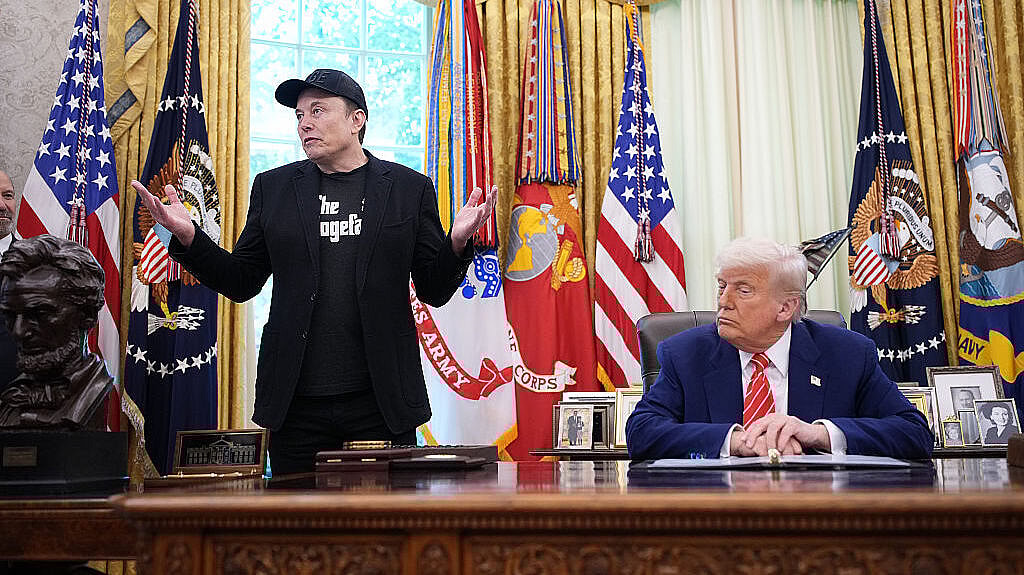
The staffers, both political appointees in their 20s, worked on behalf of then-White House senior advisor, billionaire Tesla owner Elon Musk, to eliminate so-called “waste and fraud” in government spending. Much of their work focused on executing President Donald Trump‘s anti-DEI executive orders by flagging and eliminating funding associated with DEI, communities of color and the LGBTQ+ community.
However, both ex-DOGE staffers, Justin Fox and Nate Cavanaugh, admit to relying on AI like ChatGPT and their own judgement to identify funding elimination targets despite having no expertise or experience in making such judgement calls. The two young political appointees flagged grants that used keywords like “BIPOC,” “Tribal,” “homosexual” and “LGBTQ,” but did not flag “white.”
As the New York Times reports, the depositions come from a federal case actively being litigated in which groups impacted by the indiscriminate cuts accuse the Trump administration of violating their First Amendment and equal protection rights. The groups’ publication of the depositions of Fox and Cavanaugh resulted in public outrage.
When asked what his understanding of what “DEI” was (which stands for diversity, equity and inclusion), Fox was unable to provide an answer, despite being responsible with determining whether funding for organizations from the National Endowment for the Humanities were to continue or be terminated.
“I don’t remember it off the top of my head…my understanding was exactly what was written in the [executive order],” said Fox, who was tasked with identifying projects that would be disqualified for federal funding.
Cavanaugh told lawyers that he and Fox would rely on their own “personal judgment call” when determining whether a program or contract was in compliance with Trump’s broad anti-DEI directives. When asked if any history of “scholarly peer review,” Cavanaugh said he did not. When asked if he thought it was appropriate for 20-something year-olds with no experience to be making such decisions, the former Trump staffer said he did not think it was inappropriate.
“I think a person can have enough judgment from reading books and being well informed outside of traditional experience to make judgment calls about obvious things like a grant that literally lists DEI in its description to know whether it violates an executive order. I don’t think you need to have a scholarly peer review background to do that,” said Cavanaugh.
When a lawyer followed up to ask Cavanaugh what books he has read to inform him on how to determine grant making decisions, he replied, “I did not read a book on how to discern whether a grant includes DEI or not. I read the actual description of the actual grant.”
Civil rights attorney Ben Crump rebuked the Trump administration’s decision to put young, inexperienced staffers in charge of determining what was critical funding for organizations, namely nonprofits.
“A DOGE staffer tasked with flagging grants for “DEI” struggled to define the term during a deposition, after documents reportedly revealed that DOGE staff canceled 97% of National Endowment for the Humanities grants in just 22 days. This is incredibly disturbing. WHY are decisions affecting education and culture being made without what appears to be a full understanding of DEI?!” Crump wrote on Threads.
“DOGE was a welfare program. Recent depositions reveal how deeply unqualified these taxpayer-funded employees who wreaked havoc for people in true need of federal funding assistance were,” said Janai Nelson, director-counsel at the NAACP Legal Defense Fund. “Don’t ever let them tell you it’s about ‘merit’ when this type of rank incompetence and bigotry is rewarded with a paycheck funded by yours.”
