
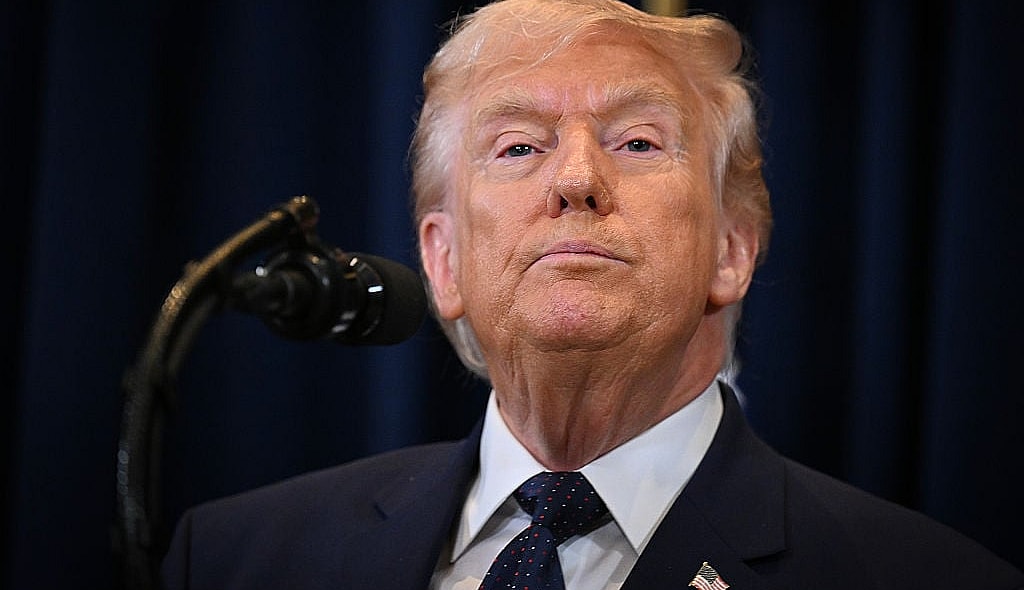
President Donald Trump said Monday he is postponing threatened U.S. strikes on Iranian power plants for at least five days, citing what he called “productive” talks aimed at ending the war. The announcement came just hours before a deadline he had set for Iran to reopen the Strait of Hormuz, a critical global shipping route.
In a post on Truth Social, Trump said discussions were underway toward a “complete and total” resolution of the conflict. Speaking to reporters in West Palm Beach, Florida, he claimed Iran had reached out to “make a deal” and said 15 points were under discussion, including a guarantee that Iran would never obtain a nuclear weapon. Trump said his special envoy Steve Witkoff and his son-in-law Jared Kushner were leading the talks and added that Israel would be “very happy” with a deal.
Iran swiftly rejected the claim of direct negotiations. In a statement published by the semiofficial Mehr News agency, the Foreign Affairs Ministry said there was “no dialogue between Tehran and Washington.” It suggested Trump’s decision to delay strikes was intended to ease energy prices and buy time for military planning. Iranian state media described the move as Trump having “backed down” after Tehran warned it would retaliate against any attack on its energy infrastructure.
Now in its fourth week, the war began Feb. 28 when Israel, alongside the United States, launched strikes on Iran. The conflict has roiled the Middle East and shaken global markets. Iran has effectively closed the Strait of Hormuz, through which roughly 20% of the world’s oil supply passes, by attacking shipping in the area.
The International Energy Agency’s executive director, Fatih Birol, warned Monday that the world faces an energy crisis worse than the oil shocks of the 1970s and the disruption caused by the war in Ukraine combined. Oil prices have surged more than 70% since the start of the year, and U.S. retail gasoline prices have risen 93 cents per gallon.
Over the weekend, Trump had given Iran 48 hours to reopen the strait or face U.S. bombing of its power plants. Iranian officials responded by threatening to strike electricity targets across the Persian Gulf and to mine the Gulf if invaded.
Despite Trump’s pause, Israeli strikes continued in Tehran. Analysts say it is unclear whether the latest developments signal a real diplomatic opening or a temporary shift before further escalation.
