
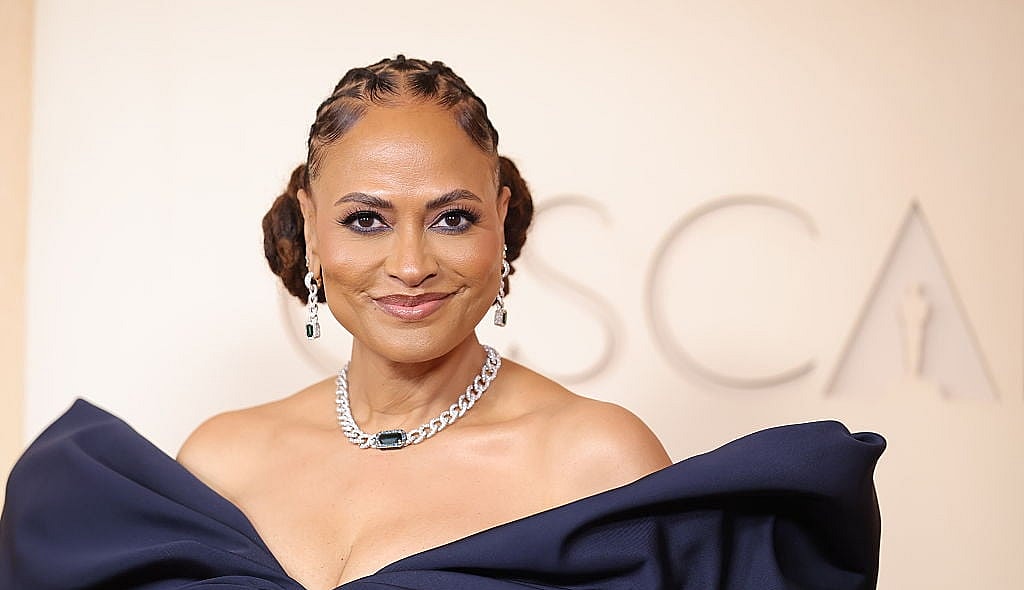
In the digital age, the “gatekeepers” of Hollywood are no longer hidden behind iron gates and mahogany desks. Sometimes, they’re right in your mentions. Such was the case for a social media user named AJ, an aspiring filmmaker who recently took to Threads to lament the ticking clock of his dreams.
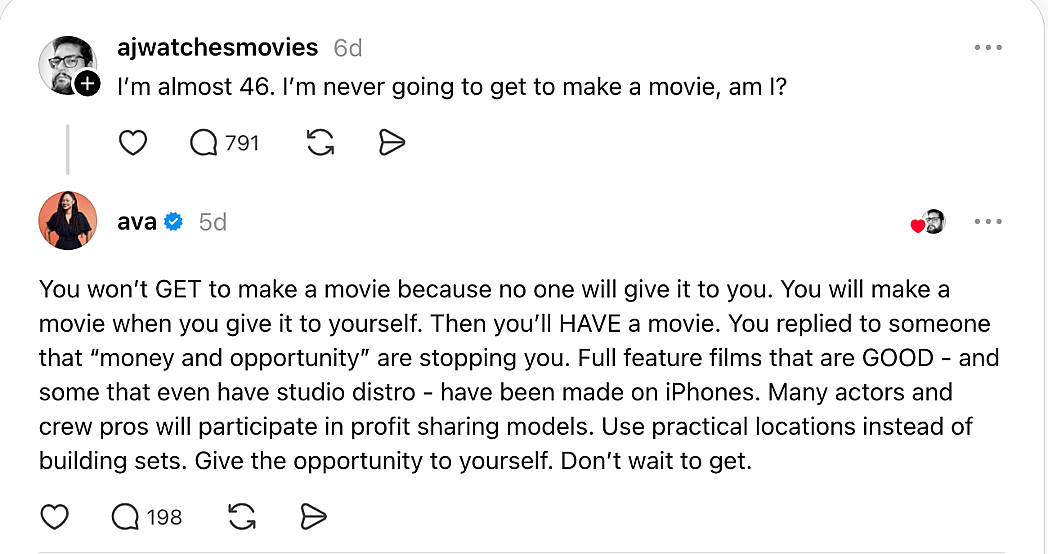
“I’m almost 46,” he wrote. “I’m never going to get to make a movie, am I?”
It’s a sentiment that resonates with anyone who has ever felt the weight of a dream deferred by the realities of aging and “the industry.” But the pity party was short-lived. Academy Award-nominated director Ava DuVernay stepped into the thread, not just to offer a pat on the back, but to deliver a sharp, necessary masterclass in self-determination.
DuVernay’s response was a surgical strike against the “permission culture” that often paralyzes artists.
“You won’t GET to make a movie because no one will give it to you,” DuVernay replied. “You will make a movie when you give it to yourself. Then you’ll HAVE a movie.”
The distinction between “getting” and “giving” is the core of DuVernay’s own origin story. Before she was heading Selma or 13th, she was a publicist who decided to pick up a camera and tell her own stories. By reframing the narrative from “being chosen” to “choosing oneself,” she challenged the idea that a filmmaker is defined by their proximity to big-budget opportunities.
When the user cited “money and opportunity” as his primary roadblocks, DuVernay countered with the hard facts of modern production. We are living in an era where technical barriers have reached an all-time low.
The era of technical gatekeeping is effectively over, as DuVernay points out that the tools for a full feature film are likely already in your pocket. Modern technology has advanced to the point where films shot entirely on iPhones, such as Sean Baker’s Tangerine, have successfully secured studio distribution. Beyond the hardware, the logistical hurdles of labor and sets are also shifting; many industry professionals are now willing to participate in profit-sharing models for compelling stories, while utilizing practical, real-world locations can eliminate the astronomical costs of building professional soundstages.
Her advice serves as a reminder that “opportunity” isn’t a gift; it’s oftentimes a DIY project. In 2026, the distance between an idea and a finished product is only as long as the filmmaker’s willingness to pick up the tools they already own.
In a field where vision and perspective are the primary currencies, DuVernay’s intervention suggests that age is only an enemy if you spend your time waiting.
By shifting the focus from the calendar to the craft, she moved the goalposts from “becoming a producer” to simply “producing.”
