
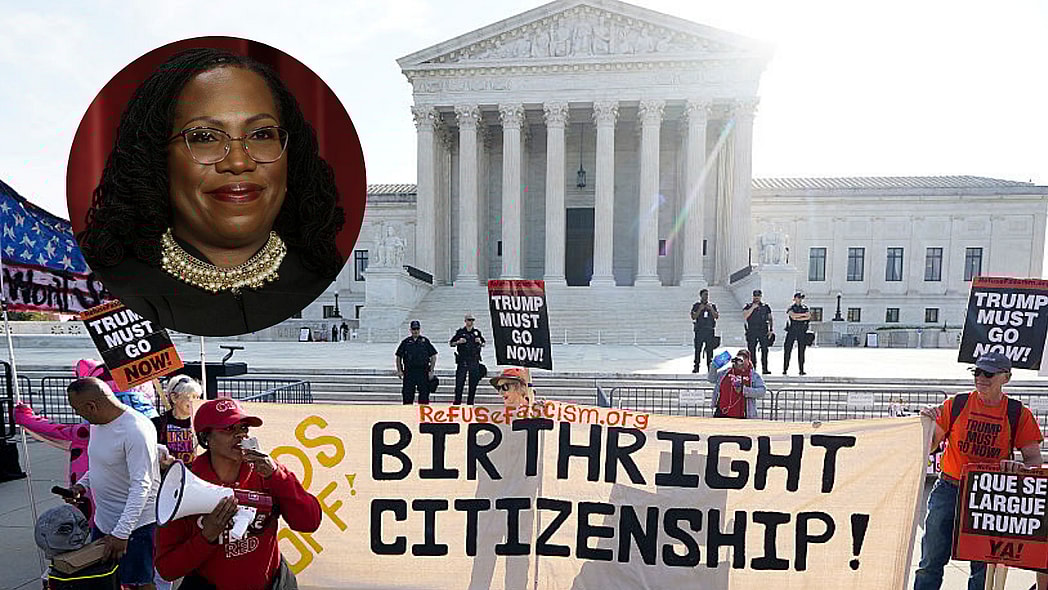
The United States Supreme Court appeared to cast doubt on President Donald Trump‘s executive order ending the constitutional right of birthright citizenship for non-U.S. citizens during oral arguments on Wednesday. As Trump sat in the public gallery, marking the first time that a sitting U.S. president attended oral arguments before the Supreme Court, a majority of the justices poked holes in the government’s legal arguments.
The case, Trump v. Barbara, centers on the first clause of the 14th Amendment, which states, “All persons born or naturalized in the United States, and subject to the jurisdiction thereof, are citizens of the United States and of the State wherein they reside.” The amendment was intended to ensure that Black Americans, and those formerly enslaved, received citizenship after the end of slavery and the American Civil War.
The Trump administration argues that when Congress drafted the 14th Amendment in the 1860s, it did not intend to include the children of parents who are in the United States illegally or temporarily. Instead, argued U.S. Solicitor General D. John Sauer, the birthright citizenship clause and the federal court rulings that followed granted citizenship exclusively to children whose parents are U.S. citizens, formerly enslaved, or noncitizens who are “domiciled,” meaning they have a permanent home where they intend to stay indefinitely.
A majority of the justices, including Justices Neil Gorsuch and Amy Coney Barrett, who were nominated to the bench by Trump, expressed concerns about the legality and practicality of the president’s executive order.
“How does this work? Are you suggesting that when a baby is born, people have to have documents, present documents? Is this happening in the delivery room? How are we determining when or whether a newborn child is a citizen of the United States?” queried Jackson, the court’s only Black female justice.
She added, “So are we bringing pregnant women in for depositions? What? What are we doing to figure this out?”
Jackson also challenged the government’s theory about which non-U.S. citizens are “domiciled” and thereby have an “allegiance” to the United States. The Harvard Law-educated justice noted that during World War II, Japanese babies in U.S. internment camps were given birthright citizenship.
“So it seems as though this concept of allegiance of the parents really wasn’t driving birthright citizenship, at least at this period of our history,” she said.
There were several other signs that the Supreme Court is leaning toward rejecting Trump’s effort to restrict birthright citizenship, including conservative Justice Neil Gorsuch questioning the government’s position on whether the children of Native or Indian Americans would be considered U.S. citizens based on its legal “domicile” theory.
“I think so,” said Solicitor General Sauer, though the Trump administration has throughout the case pointed to the tribal exception that denied Native Americans U.S. citizenship until 1924, when Congress passed the Indian Citizenship Act.
Following Wednesday’s hearing, President Trump, who walked out of the courtroom after an hour of oral arguments, wrote on Truth Social, “We are the only Country in the World STUPID enough to allow “Birthright” Citizenship!” A Supreme Court ruling against Trump’s birthright citizenship order would mark the president’s second major defeat of one of his signature policies. After the court struck down his global tariffs, Trump called the ruling a “disgrace” and labeled the justices “fools and lapdogs.”
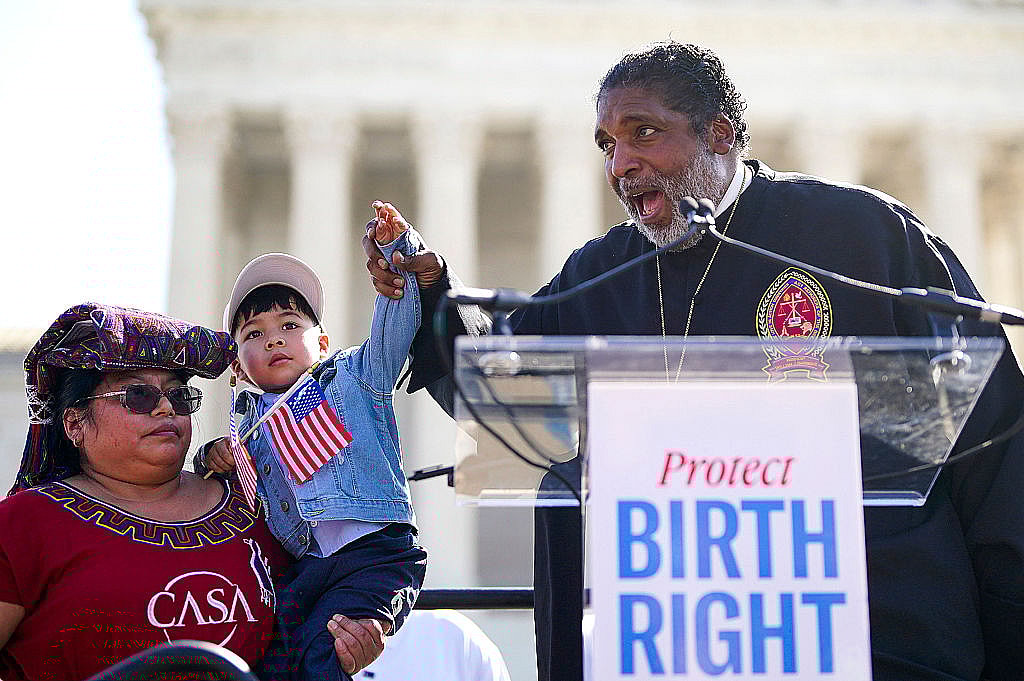
NAACP President and CEO Derrick Johnson said of Wednesday’s historic oral arguments, “For more than a century, birthright citizenship has ensured that everyone born in this country is recognized as fully American, without exception or qualification. This administration’s blatantly unconstitutional executive order has invited chaos, sanctioned racial and ethnic profiling, and placed countless families at risk of exclusion in the only home they have ever known.”
The civil rights leader added, “The NAACP will continue to fight to protect citizenship as a fundamental civil right and to ensure that our nation does not reverse course from its progress to equality and belonging.”
