
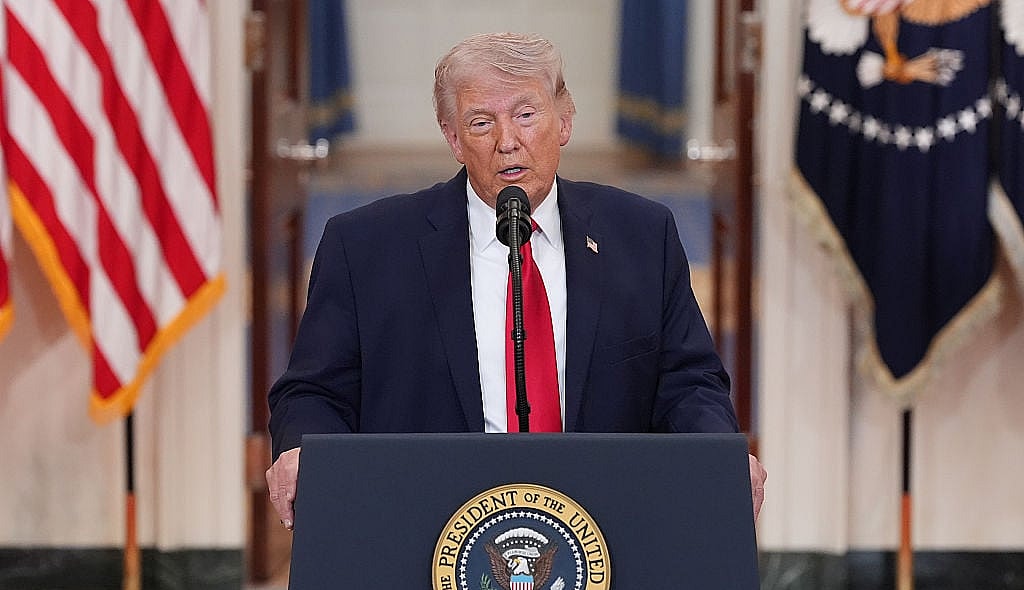
President Donald Trump delivered a primetime televised speech on Wednesday night, claiming victory in the war in Iran and promising Americans that the U.S. military operation in the Middle East will soon end and that high gas prices will come down.
“We are going to finish the job, and we’re going to finish it very fast. We’re getting very close,” Trump said a month after launching “Operation Epic Fury.”
The president said his joint war with Israel was necessary to combat Iran’s attempts to rebuild its nuclear program, claiming that Iran was close to having “missiles that could reach the American homeland, Europe, and virtually any other place on earth.”
“They had some weapons that nobody believed they had,” said Trump, even though his Director of National Intelligence, Tulsi Gabbard, told Congress last month that there had been no efforts by Iran to rebuild its nuclear enrichment program after a separate military operation ordered by Trump last summer was claimed to have “obliterated” it.
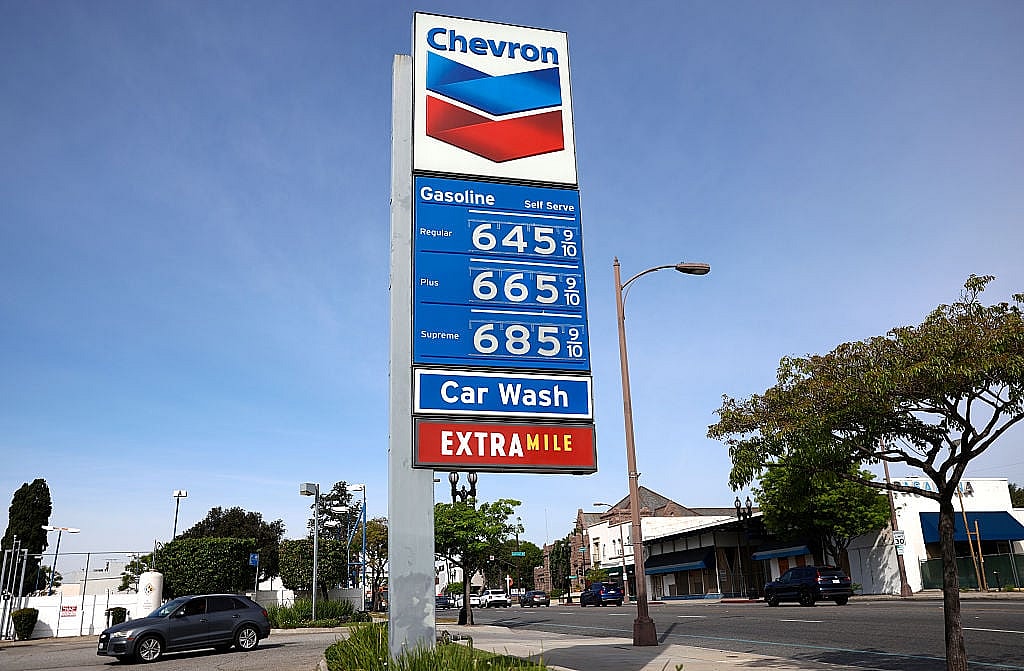
Amid skyrocketing gas prices, which are now averaging more than $4 a gallon, President Trump acknowledged, “Many Americans have been concerned to see the recent rise in gasoline prices here at home.” He called it a “short-term increase” and vowed that when the conflict is over, the Strait of Hormuz–which the Iranians are currently blocking and driving up oil markets–will “open up naturally.”
“They are going to want to be able to sell oil, because that’s all they have to try and rebuild. It will resume the flowing and the gas prices will rapidly come back down,” claimed the president, who said the U.S. would, over the next two to three weeks, “bring them back to the stone ages, where they belong.” He also said diplomatic discussions with Iran amid the war are “ongoing.”
Despite Trump’s remarks and assurances, it remains to be seen when the U.S. will withdraw troops from Iran and when the economic pains caused by the war will actually end.
“President Trump left the American people less clear today on the path to leaving the Middle East and ending the war than they were at the start of his speech. We wanted to know why this was worth the financial and human capital this continues to cost us,” said Victor LaGroon, a U.S. Army veteran who worked as an intelligence analyst and a former Biden administration official.
LaGroon told theGrio, “Instead, we heard a disjointed run-on speech that was less about a strategy and more about his legacy and varied justifications on why he’s forced us into a needless war none of us can afford, while everyday Americans can no longer afford the American dream.”
According to polling, most Americans do not support the U.S. war in Iran and blame Trump for rising gas prices.
“Donald Trump’s actions in Iran will be considered one of the greatest policy blunders in the history of our country, failing to articulate objectives, alienating allies, and ignoring the kitchen table problems Americans are facing,” said U.S. Senate Minority Leader Chuck Schumer after Trump’s remarks.
Asha Castleberry-Hernandez, a national security expert and former U.S. Army veteran who worked in the Middle East, told theGrio that even if Trump backs out of Iran, there is a potential “loss for the United States” should Iran continue to control the Strait of Hormuz, where more than 20% of the world’s oil flows.
“It still impacts us in terms of the pain at the pump, the gas prices. It still impacts our commercial activities,” said Castleberry-Hernandez, who is the founder of the Diversity in National Security Network.
Trump said on Wednesday night that European and Asian countries that rely on the oil moving through the Strait of Hormuz should “take care” of the passage and protect the oil “they so desperately depend on.” He said of the United States, “We don’t need it.”
Castleberry-Hernandez notes that, as unpopular as the war is in the U.S., it is even more unpopular overseas among U.S. allies, who were not briefed by the U.S. before launching strikes in Iran. “If they do get involved, I think it’s going to be really limited, or it’s going to be nothing,” she said.
Despite President Trump’s assurance that the war will soon come to a close, Castleberry-Hernandez warns that his vow to hit Iran hard over the next few weeks sounds “more escalatory,” which could prolong the war. The national security expert said other prolonging factors include failed diplomacy, as the deployment of more troops could make it more difficult to negotiate with Iran.
Ultimately, she said, Iran’s intent is to “prolong” the war so that the United States, Israel, and other countries can “feel the brunt of the economic cause.”
Though Trump yet again attacked his predecessor, former President Barack Obama’s 2015 Iran nuclear deal, which included the return of $1.7 billion of Iran’s previously sanctioned money, Castlberry said, “The deal worked.” However, after Trump terminated the deal during his first term in office and is now engaged in war during his second term, she said the conditions are “different.”
“If Trump wanted to negotiate a new deal, it would be harder to get a deal like Obama’s. In fact, it would be worse because of the fact that there is new leadership [in Iran],” said Castleberry-Hernandez. “There are a lot more hardliners. And then also he’s going through military action and killed 40 of Iran’s leaders.”
She added, “That is worse than being able to do what we did through the Iran deal, where we’re using diplomacy, we used the international community to verify and check that they were not growing their [nuclear] program.”
