
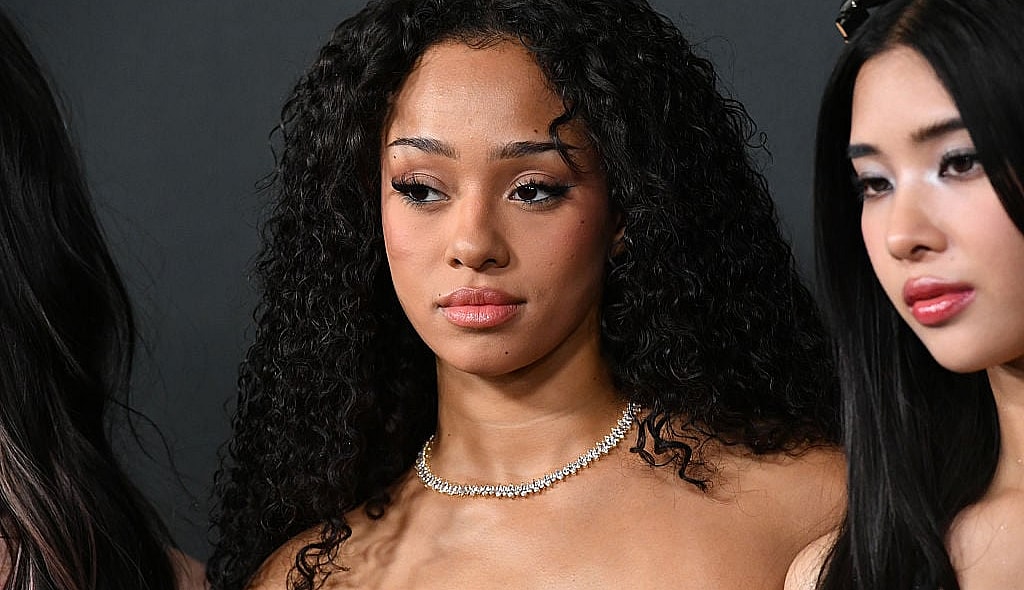
Once upon a time, girl groups dominated the music industry. However, as time went on, the age of all Black girl groups began to dwindle, and fans were introduced to more diverse ensembles like “Pussycat Dolls,” “Little Mix,” “Fifth Harmony,” “Katseye,” and more. While these groups are perceived to have somewhat equal racial and ethnic representation, there is a pattern that consistently reveals itself in these pop-music groups, particularly in how the Black women are treated. In recent weeks, this conversation has been reignited by Katseye
The global pop group, formed on Netflix’s reality competition series Pop Star Academy: Katseye, features Daniela Avanzini, Manon Bannerman, Lara Raj, Megan Skiendiel, Sophia Laforteza, and Yoonchae. That was until HYBE and Geffen Records announced that Bannerman, the group’s only Black girl, would be taking a “temporary hiatus from group activities to focus on her health and wellbeing.” Since then, Bannerman has remained relatively quiet, aside from a statement reassuring fans that she is safe and taking care of herself.
“Sometimes things unfold in ways we don’t fully control, but I’m trusting the bigger picture. Thank you for standing by me. I love you endlessly and can’t wait to see you again,” she shared at the time.
This week, however, Bannerman broke her silence since February via WeVerse, writing: “Thank you so much for all the love and support you’ve been sending my way. I’m really grateful for the patience and kindness everyone has shown during this time. HxG and I are having positive conversations, and I feel supported. I’m happy, and I’m healthy. I’ll share more soon. Thank you for always being there for me.” Additionally, fans noticed the singer removed the group’s name from her bio, which many speculate may signal her departure from the group.
As we often celebrate the representation that comes with having at least one Black member in a popular band like Katseye, moments like this leave many wondering: but at what expense? When news of Bannerman’s hiatus broke, many were quick to point out disparities in how she was treated compared to her bandmates, echoing a long-standing pattern in pop girl groups.
Prior to her hiatus, Bannerman was very honest about the reality of being the only Black member in the international girl group. In an interview with The Cut, the “Katseye” member reflected on how producers portrayed her in their Netflix series, particularly underlining how the “lack of work ethic” narrative placed on her carried over beyond the show.
“Being called lazy, especially as a Black girl, is not fair. Now I feel like I always need to put in extra work to prove something, even though I really don’t,” she shared.
And Bannerman is not the first token Black girl from a girl group to share this sentiment. Melody Thornton of the Pussycat Dolls echoed the same pressure not to be the “weakest link” during her time in a girl group.
“The one thing that I always kept in mind was, ‘You can’t be messing up. You got to keep it together because you are the Black girl. People know that, people see it, and they want to see you win, so you must prevail through any adversity – whatever it looks like,” Thornton told Essence GU.
Seventeen years after the Pussycat Dolls formed, young girls met Fifth Harmony, which featured Normani. Like Thornton, Normani was the Black girl in the pop group, and since their indefinite hiatus in 2018, she’s been open about feeling overlooked and having to “do the most in order to be seen” during her time in the band
“For so long, I felt hidden,” she told People magazine in 2024. “I was the only Black girl. Not to say that the girls didn’t want to be there for me, but I don’t think that they knew how to because my experience was my own.”
Similarly, former Little Mix singer Leigh-Anne compared her experience as the only Black woman in the group to “feeling like I have to work 10 times harder and longer to mark my place in the group because my talent alone isn’t enough,” in a 2020 interview. And as Leigh-Anne noted in a recent interview, it is a “vicious cycle” that Black girl-group members continue to face.
Girl groups are often platformed as examples of sisterhood and friendship for fans. But this generational pattern is a heartbreaking reminder of how tokenism does more harm than good.
