
This includes spoilers.
A24’s “The Drama,” directed by Kristoffer Borgli and starring Zendaya and Robert Pattinson, arrived in theaters last week, shocking and delighting audiences in equal measure. Intense online reactions have been sparked as more viewers discover the twist that sets the entire “drama” in motion. But depending on who you are, you may not see the same movie.
Whereas some viewers saw a provocative psychological dark romance about secrets and forgiveness, many Black women saw a Black woman being forced to defend her humanity inside a predominantly white social circle after doing nothing more than sharing her truth. In other words, just another Tuesday.
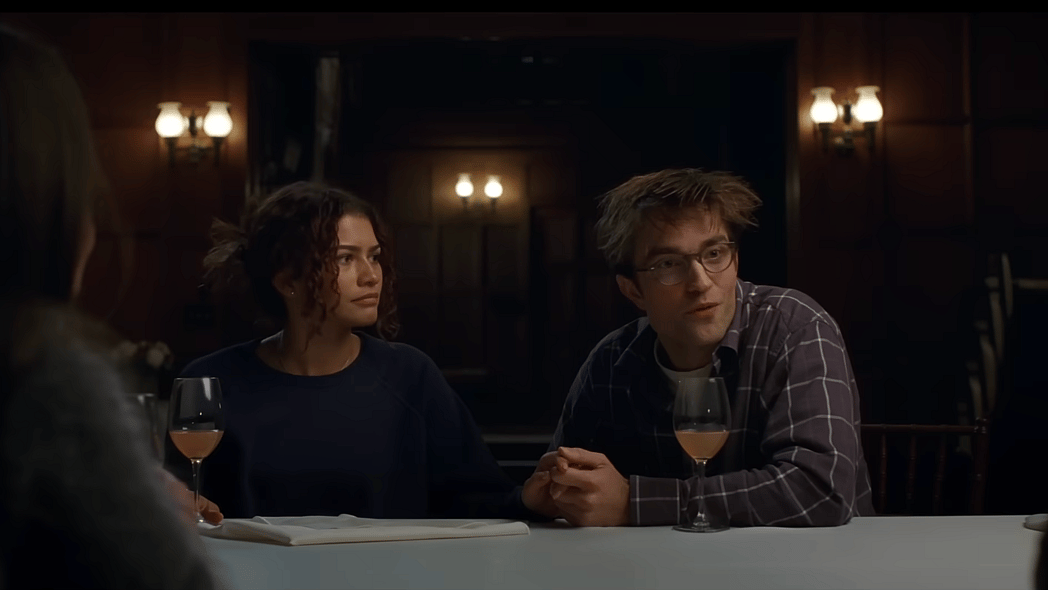
The film follows Emma Harwood (Zendaya) and her fiancé Charlie Thompson (Robert Pattinson), whose relationship begins to unravel during the week leading up to their wedding, after a dinner party game invites everyone to confess the worst thing they’ve ever done. One by one, their friends reveal disturbing stories.
Rachel (Alana Haim), Emma’s maid of honor, recounts an incident where she locked a vulnerable child in a closet in an abandoned camper. Mike (Mamoudou Athie), Charlie’s best friend, reveals he once used someone else’s body to fend off a stray dog attack. Charlie admits to cyberbullying that forced a classmate to move away, he thinks.
Then there’s Emma’s. As a deeply troubled 15-year-old, she once planned a school shooting but never went through with it. When she says it, the air practically leaves the room. No one at the table can get past it.
Emma explains she didn’t follow through and instead found friends and a newfound purpose in activism. But this context barely matters to her fiancé or their friends. Instead, Charlie spirals. Hilarious maladaptive daydreams of what she must have been like follow him everywhere. He rewrites his wedding speech to sound less loving. He emotionally withdraws. He nearly cheats with his coworker Misha (Hailey Gates). Meanwhile, Rachel questions whether she can even stand beside Emma at the altar.
What becomes fascinating is that while Emma’s confession was theoretical harm, everyone else’s stories involve harm they actually inflicted. Yet Emma becomes the moral problem. While extending grace to themselves and expecting it from each other, no one at the table seems to be able to produce any for Emma. Viewed without racial context, this all reads like a story about whether people can accept the darkness in those they love. But viewed through the lens many Black women can’t help but naturally see through, it reads like watching someone be socially exiled for making others uncomfortable, while everyone else remains comfortable with their own wrongdoing.
That dynamic feels intentional even if the film never explicitly meant for it. Because optics always exist, and the optics here are stark. A Black woman is being judged, othered, and psychologically isolated by white peers who fail to interrogate their own behavior.
The social ballet they dance around her even follows a very familiar pattern. There’s the white woman who initiates the moral tribunal. The group aligning against the perceived problem. The one Black male friend who becomes complicit. The white fiancé who suddenly can no longer see his partner as fully human. Even if Borgli didn’t intend to paint this picture, it’s hard to ignore how clearly it emerges.
By the wedding day, Emma is navigating paranoia, tense glances, weird vibes, and whispered judgments. However, she doesn’t actually do anything to cause the incoming chaos. The reception implodes because of Charlie’s anxiety, a cruel speech from Rachel, and a physical altercation sparked by Charlie’s near infidelity. Emma’s past doesn’t destroy the wedding; everyone else’s present does.
The film ends with Emma and Charlie meeting at a diner, and symbolically deciding to start over. We see Charlie’s emotional journey back to her. We don’t see hers. It poses a question the film never fully answers, was she deciding whether to forgive him, or deciding whether or not she had reached her lifetime quota for navigating other people’s projections?
One of the most compelling aspects of “The Drama” is how it serves as a meditation on the “shadow self,” the repressed, less appealing parts of ourselves. The film argues that maturity requires acknowledging this capacity within ourselves rather than pretending moral purity exists.
That disconnect also mirrors the real-world discomfort surrounding the film’s central theme of school violence. Some backlash has questioned whether the premise goes too far or whether the film failed to adequately prepare viewers. But the film’s purpose depends on that shock. Without it, there is no story. And frankly, art has always engaged with uncomfortable realities.
The film “Luckiest Girl Alive” similarly explored trauma tied to school shootings and the messy psychological aftermath survivors carry. Stories about violence are difficult because the reality is difficult but avoiding them doesn’t make that reality disappear.
If anything, “The Drama” suggests that people are often less disturbed by violence itself than by being asked to empathize with complicated people connected to it. Ultimately, the film is most uncomfortable for viewers who cannot accept that ordinary people are capable of harm, growth, love, contradiction, and empathy all at the same time. Maybe that’s the real drama.
