
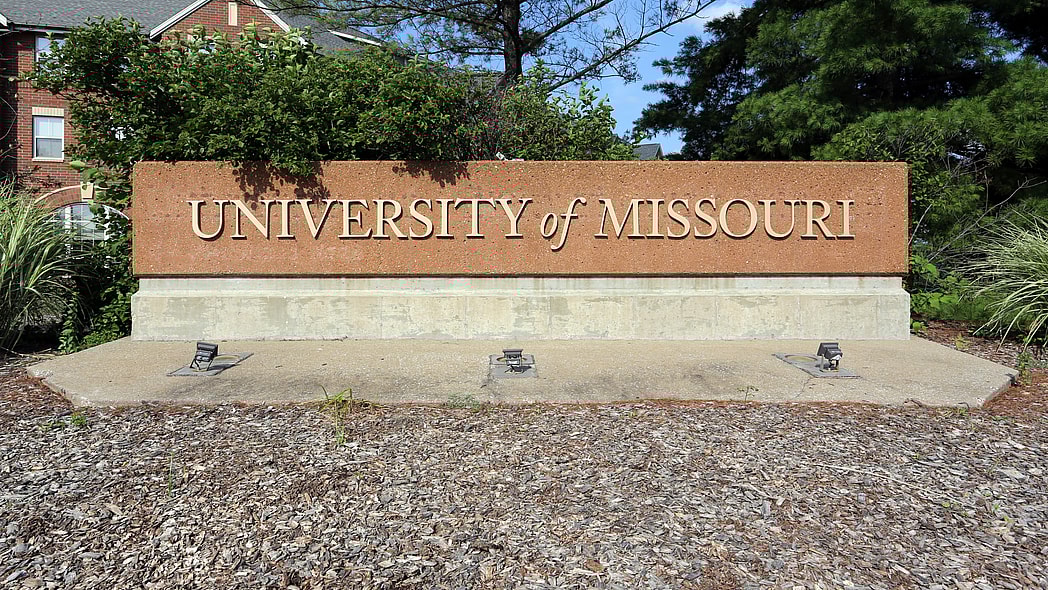
When the University of Missouri told its Black student government it was losing funding and university recognition, administrators framed it as a compliance issue, a necessary response to federal pressure. But for Amaya Morgan, the current president of the Legion of Black Collegians (LBC), it felt like something else entirely: erasure.
“We’re losing legacy,” Morgan said. “As long as we’re a student government, administration is required to meet with us and required to hear us out, and work with us on issues. And definitely, because [we’re not university-sponsored anymore] it gives them more of a reason to toss us to the wayside.”
Morgan is one of many Black students across the country now grappling with what it means to exist on a campus that is actively dismantling the structures built to support them and citing the Trump administration’s memos and directives on DEI as justification. Most recently, at the University of Missouri (Mizzou), the historic Legion of Black Collegians, the only Black student government in the nation, was stripped of its funding and university-sponsored status alongside four other minority student organizations. Founded in 1968—in direct response to the use of Confederate flags and the playing of “Dixie” on campus—the organization was formally recognized as a student government in 1969. Since then, it has played an important role in Black students’ experiences at the university. In 2015, the organization sparked the movement that led to the resignation of then-university president Tim Wolfe after her failed to adequately respond to racist incidents targeting students. For 57 years, LBC has been the reason Black students at Mizzou have had a seat at the table, and now their position is at risk.
Starting in July, LBC and four other affinity-based organizations, including the Association of Latin American Students, the Asian American Association, the Queer Liberation Front, and Four Front, an Indigenous student group, will lose all designated funding and their status as university-sponsored organizations. In a public statement, the university reportedly stated the decision was made in order to remain in compliance with the Department of Justice’s new restrictions on DEI.
“In the past, Mizzou allocated a portion of its student fees to fund certain affinity-based student organizations. These practices must be discontinued to align with federal law as outlined in the memo,” university spokesperson Christopher Ave told Inside Higher Ed. “As a public institution, failure to follow federal law will risk forfeiture of significant federal funds that we receive to support student financial aid, research, and other university programs.”
Students were quick to note that the DOJ memo is guidance, not a law. However, this is not the first time the university has tried to censor LBC. In July 2024, Mizzou dissolved its Division for Inclusion, Diversity and Equity. Then, officials tried to force LBC to rename its beloved “Welcome Black BBQ” orientation event. When LBC refused, the university canceled the event altogether.
“The University is taking calculated steps to push minority students further away from the Mizzou stratosphere,” LBC wrote in an Instagram post. “LBC is hurt, frustrated, outraged, disheartened, and much more. But we promise, we’re not going down without a fight.”
This comes weeks after students at the University of Alabama filed a lawsuit against the institution for suspending publication of its student-led Black- and women-focused campus magazines, “Nineteen Fifty-Six” and “Alice,” in December 2025. Like Mizzou, at the time, the University of Alabama cited Attorney General Pam Bondi’s non-binding memorandum on DEI when announcing its decision. And in March 2026, a group of students, represented by the Legal Defense Fund (LDF), the ACLU of Alabama, and the Southern Poverty Law Center (SPLC), filed a federal lawsuit challenging the suspensions as viewpoint discrimination in violation of the First Amendment.
“The University of Alabama’s decision to suspend these publications is discriminatory and unconstitutional,” said Avatara Smith-Carrington, Assistant Counsel at LDF in a press release shared with theGrio. “Student magazines like Nineteen Fifty-Six and Alice provide students with a critical space to explore culture, build community, bridge divides, and reflect on their lived and shared experiences. Silencing these students sends a troubling message that certain student voices and experiences don’t belong on campus.”
“I believe that freedom of expression on campus should neither be censored nor restricted because of its perceived value or audience,” student plaintiff Rihanna Pointer added. “Nineteen Fifty-Six and Alice have always provided a platform for diverse voices and perspectives that are vital for fostering an inclusive community amongst students on campus.”
What’s unfolding at schools like Mizzou and Alabama are not isolated incidents; it’s a reflection of a pattern. And while institutions and corporations appear to be preemptively surrendering, there is something refreshing in seeing young people pushing for their rights.
As LBC wrote: “This is the time to be loud, to fight, and to activate.”
