
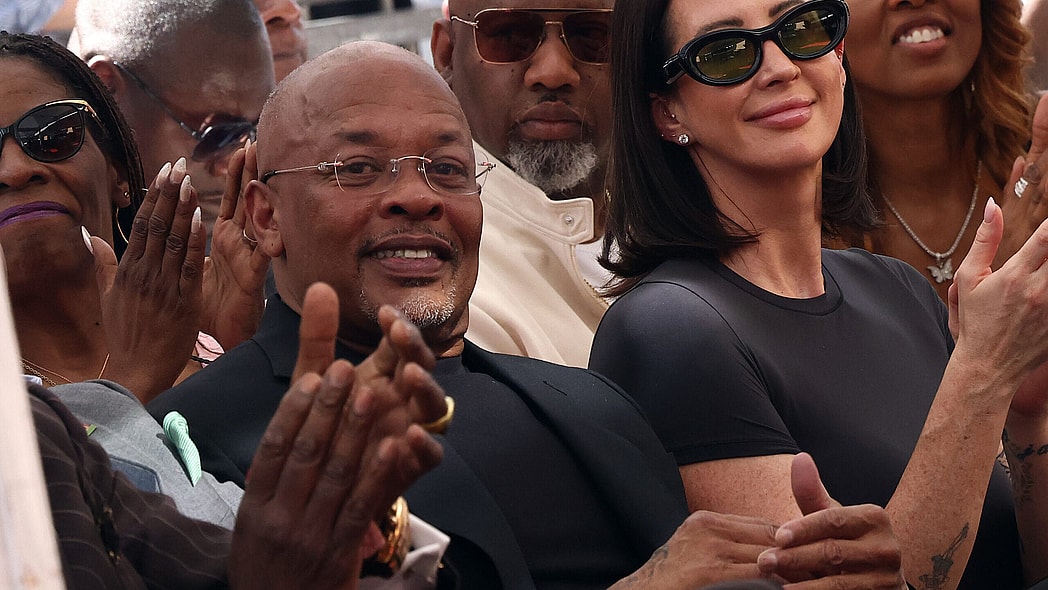
Dr. Dre has officially joined one of the most exclusive clubs in the world, the Billionaires’ Club.
In March, the 61-year-old music mogul, born Andre Romelle Young, landed on Forbes’ billionaire list as only the second rapper to do so, right behind Jay-Z. Alongside the growing value of his music catalog, real estate, and investments, his 2014 sale of Beats by Dre, which included a lucrative stake in Apple, has finally paid off.
“I don’t chase money. I try to make the money chase me,” Dre told Forbes in a profile published Wednesday, April 8, reflecting on finally reaching the milestone. “I’ve always been able to bet on myself, and whatever I do and wherever I go, I know I have my talent with me.”
In addition to the wealth he amassed selling Beats, Dre has sold millions of records across his solo work, N.W.A., and decades as a producer, including more than 6 million copies of “The Chronic” and over 10 million of “2001.” He has built a catalog worth roughly $200 million to $250 million that continues to generate millions annually, and in 2023 sold portions of it for more than $200 million while still bringing in royalties, alongside a real estate portfolio valued at nearly $80 million.
As the billionaire list continues to grow each year, adding at least one new Black billionaire each year, Black artists are proving that genres once dismissed as fads or “too Black” for the mainstream are producing some of the most powerful business figures in entertainment. But looking even closer reveals something worth noting — music alone is not what got any of them, including Dre, on this list.
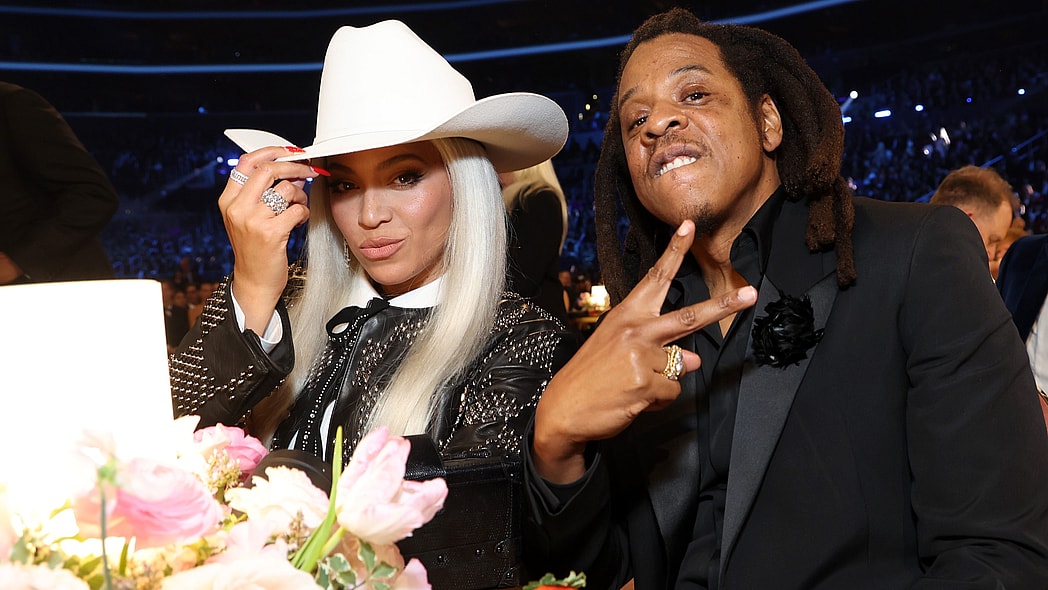
“What’s better than one billionaire? Two,” Jay-Z famously said on “Family Feud” from his 2017 album, “4:44.”
Jay-Z and Beyoncé have built their wealth largely through strategic ownership. Jay-Z famously founded the clothing brand Rocawear in 1999, which he eventually sold in 2007 in a $204 million deal. He founded Roc Nation in 2008, which he still operates. After relaunching Tidal in 2015, he eventually sold it to Square s in 2021, and in 2023 sold a majority stake in D’Ussé. He has also held stakes in companies like Uber and built a valuable art portfolio.
Meanwhile, Beyoncé has built her empire through Parkwood Entertainment, founded in 2010, Ivy Park launched in 2016, and a touring, film, and production business that only continues to expand. In 2024, she launched her haircare line, Cécred, and she introduced her whiskey brand, SirDavis.
Rihanna followed a similar blueprint, launching Fenty Beauty in 2017 and Savage X Fenty in 2018, scaling both into billion-dollar businesses with inclusivity at the center.
For Black billionaires, who now account for 27 names on the global list, including 20 in the United States, it is not about thriving in a single industry, as is often the case with many white tech billionaires or European legacy brands. Instead, the path has often involved leveraging cultural dominance in one arena and then diversifying income through strategic ownership, not to sound like the most annoying guy on your feed, but he has a point.

More than half of the Black American billionaires on the Forbes list built their wealth this way. Oprah Winfrey, worth an estimated $3.2 billion, rose to phenom status in daytime television before transforming that influence into historic media ownership. Michael Jordan, with an estimated $4.3 billion, became a global icon in basketball before selling his majority stake in the Charlotte Hornets in 2023 in a deal valuing the team at $3 billion.
Newer additions like LeBron James and Tyler Perry underscore the same pattern of turning cultural capital into ownership and long-term wealth. However, the wealthiest Black man in America, Alexander Karp, who is of Black and Jewish descent, with an estimated $13.4 billion, co-founded Palantir in 2003, a tech company that has continued to grow in the breakneck era of AI.
It’s no secret that for generations, Black labor, beginning with enslaved labor in this country, built enormous wealth that Black people have been systematically shut out from reaping the benefits of. That reality did not end with slavery. From music to fashion to food to hair and beyond, Black creativity and ingenuity has long driven culture while the profits largely flowed elsewhere. Now it seems after centuries of extraction, exclusion, and being underpaid for what we create, some of that wealth is finally making its way back into Black hands, exactly where it always belonged.
Complete list of America’s Black billionaires according to Forbes:
- Alexandra Karp ($13.4 billion
- David Steward ($12.4 billion)
- Robert Smith ($10 billion)
- Michael Jordan ($4.3 billion)
- Oprah Winfrey ($3.2 billion)
- Shawn “Jay-Z” Carter” ($2.8 billion)
- Adebayo Ogunlesi ($2.5 billion)
- David Grain ($2.3 billion)
- Magic Johnson ($1.6 billion)
- Tiger Woods ($1.5 billion)
- Herriot Tabuteau ($1.5 billion)
- Tope Awotona ($1.4 billion)
- LeBron James ($1.4 billion)
- Tyler Perry ($1.4 billion)
- Stefan Kalunzy ($1.3 billion)
- Sheila Johnson ($1.2 billion)
- Dr. Dre ($1 billion)
- Robert Johnson ($1 billion)
- Beyoncé Knowles ($1 billion)
- Rihanna ($1 billion)
