
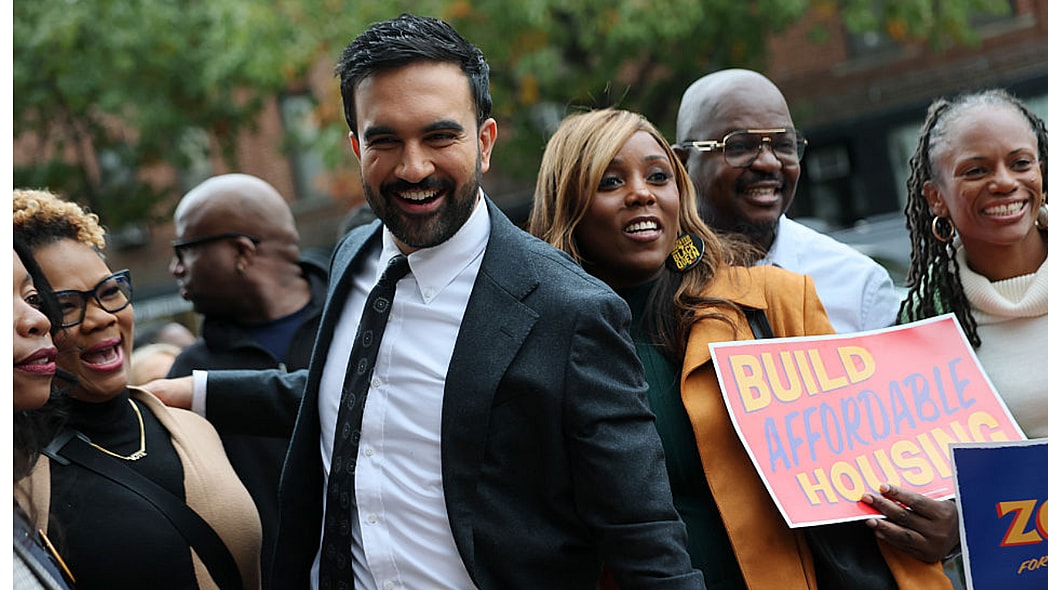
As New York City Mayor Zohran Mamdani marks his first 100 days in office, a majority of Black New Yorkers are pleased with the new mayor’s job thus far, which has focused on his campaign promise to address the city’s affordability crisis.
According to a new Marist Poll survey, 55% of Black New Yorkers approve of Mamdani’s job performance — more than any other racial group. By comparison, 49% of white New Yorkers and 49% of Latino New Yorkers said the same. The poll also found that a majority of Black New Yorkers (67%) have a favorable view of Mamdani, compared to white New Yorkers (51%) and Latino New Yorkers (58%). The same number of Black New Yorkers say they believe Mamdani is changing New York City.
The most striking finding from the Marist Poll is that 80% of Black New Yorkers say Mayor Mamdani is uniting the city, which has long seen racial inequality in wealth, housing, and education. That number was significantly higher than that of whites (51%) and Latinos (66%). Black New Yorkers were more likely to say they trusted the 34-year-old mayor to make decisions that are in the best interest of New York City (72%), more likely to say things in the city are going in the right direction (77%), and more likely to say Mamdani cares about people like them (77%).
Perhaps Mayor Mamdani’s strong favorability among Black New Yorkers is connected to his very explicit overtures and policy rollouts to address racial equity in the city, from free early childcare to crackdowns on housing and rental practices harming Black neighborhoods.
On Monday, Mayor Mamdani fulfilled a campaign promise by releasing a racial equity plan that had been sidelined by his predecessor, former Mayor Eric Adams.
“It is a plan that lays out these first steps to solve decades of neglect and discrimination, and it places the work of 45 city agencies within a singular framework. Too often, the story of Black and Brown New Yorkers is one of being forced to stretch that same dollar that little bit further,” Mamdani said the day the plan was publicly released.
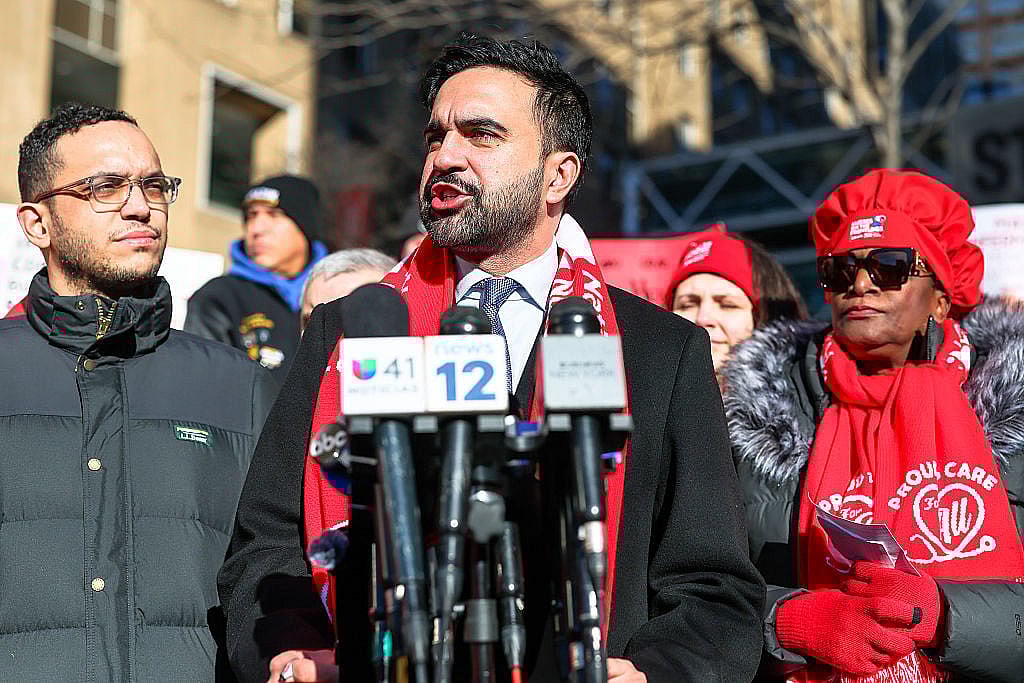
(Photo by Michael M. Santiago/Getty Images)
He continued, “Every year, as wages stagnate, as well as an exodus, an exclusion continues to take place. When I say exodus, I refer to the fact that from 2000 to 2020, more than 200,000 Black New Yorkers were pushed out of this city because they could not afford life in the most expensive city in the United States of America. Because rent was too high, child care was too expensive, and groceries cost too much.”
Black New Yorkers’ embrace of Mamdani is quite a turnaround from when he was just a candidate. He initially lagged in support among Black voters, mostly older Black New Yorkers, in the primary. Ultimately, Mamdani cruised to victory, carried especially by the Black and youth votes. Although the new mayor faced criticisms over the number of Black deputy mayors he appointed in his administration, Mamdani has since appointed Renita Francois as Deputy Mayor for Community Safety. He also appointed Black New Yorkers to key positions, including Kamar Samuels as the New York City Schools Chancellor, Afua Atta-Mensah as Chief Equity Officer, and Commissioner of the Mayor’s Office of Equity & Racial Justice, and Rebecca Jones Gaston as Commissioner of the Administration for Children’s Services (ACS).
Thus far, the Mamdani administration has rolled out its affordability and investment agenda targeting Black neighborhoods that have been historically underserved. The mayor has broken ground on an affordable housing project in East Harlem, expanded free 2-K seats in neighborhoods like Brownsville, Canarsie, and East Flatbush, and announced $50 million in new capital investments in parks across the city, including Bedford Stuyvesant and Harlem.
While unveiling the city’s racial equity plan earlier this week, Mayor Mamdani vowed to dedicate his time in office to addressing the years-long hurdles that have burdened Black New Yorkers.
“We will continue to tackle our city’s affordability crisis without turning away from the decades, and frankly centuries, of disinvestment in Black and Brown New Yorkers,” he vowed. “We will create a New York City that belongs to all who build it, and we will do so together. “
