
Editor’s note: The following article is an op-ed, and the views expressed are the author’s own. Read more opinions on theGrio.
Audre Lorde once wrote: “The master’s tools will never dismantle the master’s house.” I keep returning to that phrase as I read the news about the EPA’s proposed rollback of limits on ethylene oxide.
The master’s tools, it turns out, are not just metaphors. Sometimes they are actual chemicals, drifting over Black neighborhoods while the people charged with protecting us look the other way.
Ethylene oxide, in this case, is, literally, a tool of medicine. It sterilizes the catheters, the pacemakers, the surgical gowns, the syringes that keep people alive. And it is poisoning—dismantling the well-being of—the communities forced to live in its shadow.
In mid-March, the Trump administration proposed gutting the 2024 rule that required sterilization facilities to meaningfully reduce their ethylene oxide emissions. The EPA’s own scientists had determined that ethylene oxide is 30 times more carcinogenic in adults and 60 times more carcinogenic in children than previously understood. It was expected to cut ethylene oxide emissions and the resulting cancer risk to nearby communities by 90%. Nearly 14 million Americans live within 5 miles of a commercial sterilization facility. More than 10,000 schools and childcare centers fall within those zones. The argument being made now is that protecting people costs too much. That supply chains matter more than lungs. That industry continuity outweighs the right of a community to breathe.
While announcing the rollback, the EPA removed its own webpages documenting ethylene oxide’s risks and stripped the EJScreen mapping tool that communities used to document their own exposures. When the Trump administration shuttered the EPA’s Office of Environmental Justice, it made the pattern plain. You cannot protect what you refuse to see. The rollback of ethylene oxide protections is part of a deliberate dismissal of the concerns, health, and well-being of those among the most marginalized communities.
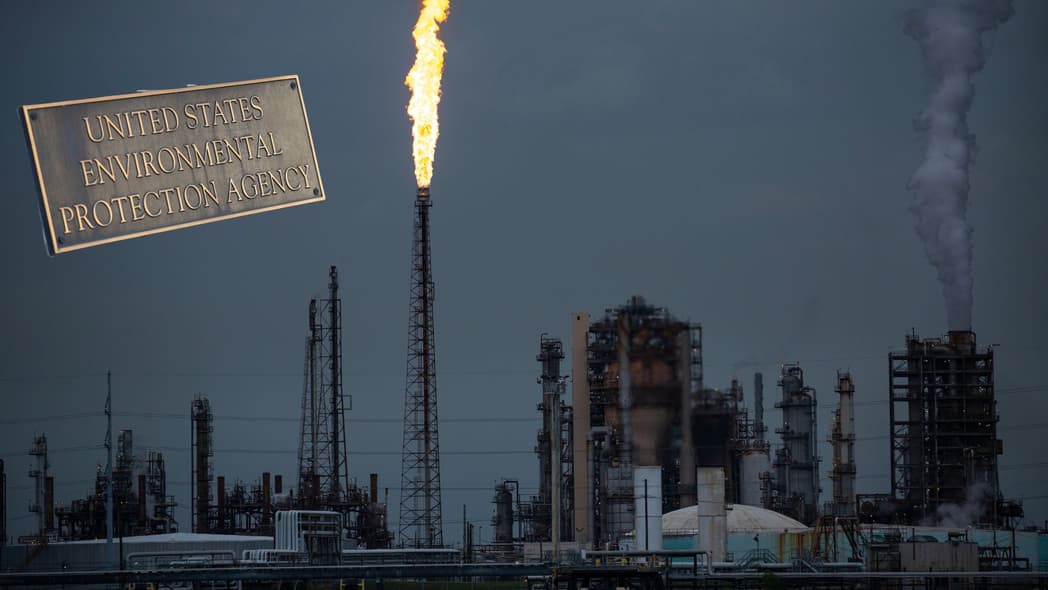
I come to this issue drawing from complementary perspectives. As a psychiatry resident living in New Orleans, at the edge of what people have come to call Cancer Alley–the 85-mile river corridor along the Mississippi River where over 200 petrochemical plants sit adjacent to rural towns, schools, and churches. I also draw on the perspective of my friend Wawa Gatheru, a climate activist and founder of Black Girl Environmentalist.
Science is catching up to what these communities have always known: chronic toxic exposure is not only a cancer story—it is also a mental health story. The anxiety of raising children in a place the government has decided is an acceptable sacrifice zone—the helplessness of watching neighbors get sick and die young. The compounding trauma of being dismissed, denied, and told to wait again.
When I walk through this region, I think about what my patients from the affected parishes carry with them into my exam room before they ever sit down or say a word. Grief. Exhaustion. A low, constant dread that is hard to name but easy to recognize.
Ethylene oxide is linked to leukemia, breast cancer, and lymphoma, with risks unevenly distributed in the population. Yet there is a mental health toll too: The chronic stress of proximity to toxins of unknown concentration and unpredictable spread. The uncertainty of what you’re breathing or whether it’s getting worse. The structural abandonment of watching protections disappear without clear recourse. These burdens are real and largely unmeasured. There is an absence of good national data on eco-anxiety and environmental grief in frontline communities because we have not decided that data is worth collecting.
Communities living near these sterilization facilities are disproportionately made up of people of color. This is not a coincidence. It is the outcome of decades of decisions about where to site facilities, whose complaints to investigate, and whose health to weigh against whose profit. The environmental justice movement was built by Black and Indigenous women long before it had a name, by Hazel Johnson, the mother of the environmental justice movement who documented cancer clusters in Chicago’s Altgeld Gardens in the 1970s; by Beverly Wright, who founded the Deep South Center for Environmental Justice and has spent decades linking systemic racism and systemic harm in the very corridor where I now practice; by Sharon Lavigne who retired from teaching to found RISE St. James and won the Goldman Environmental Prize fighting the industrial logic being rewarded today.
While Black girls and women experience the brunt of environmental injustice, they remain among the least resourced and platformed in the climate movement. That imbalance is not accidental. It is structural. And that is part of what makes this moment so urgent.
What repair actually looks like is not complicated even if not easy. It means resourcing frontline organizations rather than defunding the tools they use to document their own exposure. It means centering the most impacted as architects of solutions not afterthoughts. It means investing in community-led data collection and supporting community advocacy. Find Rise St. James. Find the Deep South Center for Environmental Justice. Find Black Girl Environmentalist. Right now, the EPA’s 45-day public comment period on the ethylene oxide rollback is open as well. Submit a comment; your voice is data they are required by law to receive.
The tools used to clean our medical equipment are poisoning our people. The tools rolling back their protections are the same ones that have always decided Black lives are an acceptable risk. Audre Lorde was right: the master’s tools will not dismantle the master’s house. But silence helps hold its walls in place.

Rachel Bervell, MD, MPH, is a psychiatry resident in New Orleans and a public health advocate focused on health equity, environmental justice, and reproductive and mental health. She is the founder and lead strategist of The Black ObGyn Project, a platform dedicated to educating and advocating for Black reproductive health and equity, and a Public Voices Fellow with The OpEd Project, in partnership with the National Latina Institute for Reproductive Justice and Every Page Foundation.

With contributions from Wanjiku “Wawa” Gatheru, MS, the founder and Executive Director of Black Girl Environmentalist, a national organization advancing pathways for Black girls, women, and gender-expansive people in the climate movement. A Rhodes, Truman, and Udall Scholar and climate storyteller, she is a nationally recognized advocate working to make climate action accessible, inclusive, and community-driven.
