
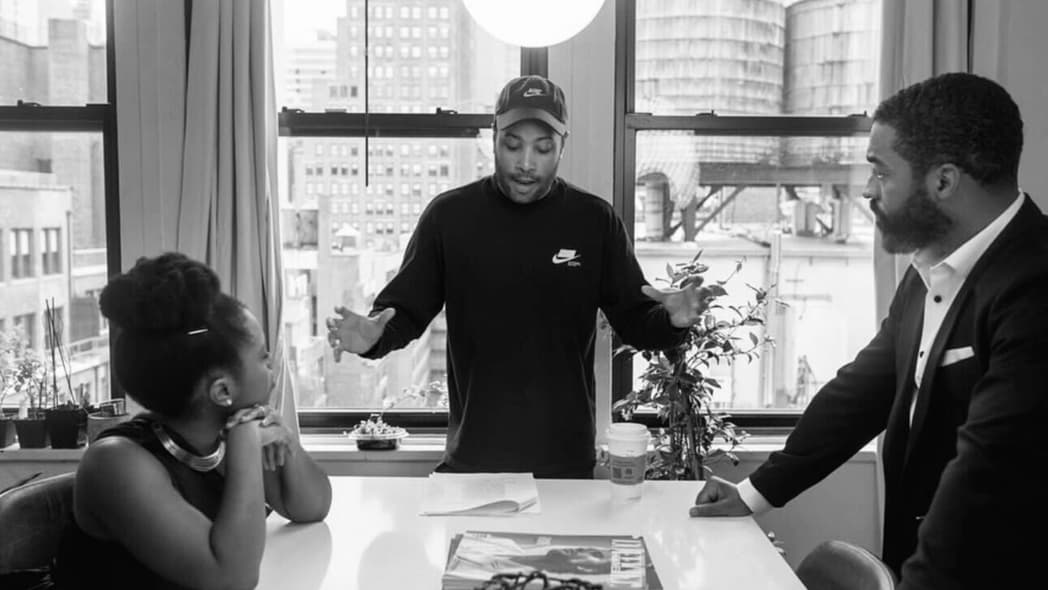
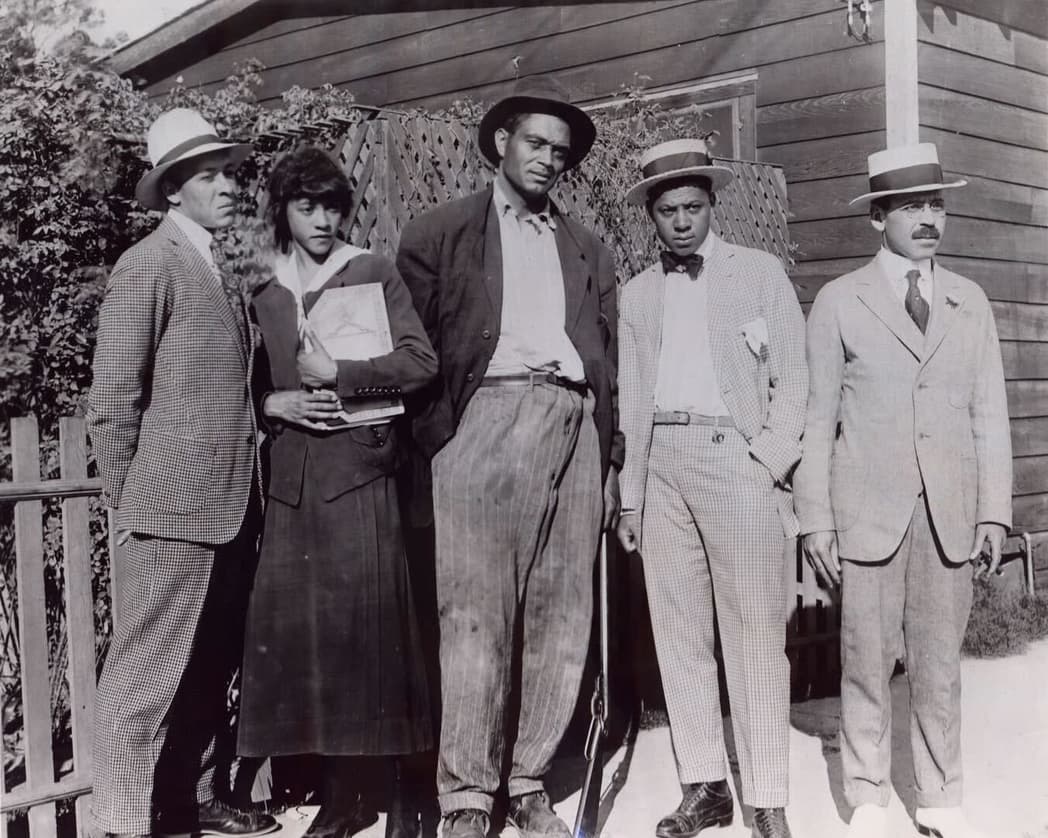
In 1916, brothers Noble and George P. Johnson built something America had never seen before — the first Black-owned film production company in history, at a time when Black people were being actively mocked and misrepresented on screen. Now, 110 years later, filmmaker Brennan DuBose is bringing it back.
DuBose, originally from Prince George’s County, Maryland, lived in New York for over a decade before relocating to the Washington, D.C. metropolitan area to pursue creative endeavors. With a background in social impact investing and finance, DuBose successfully combined his passions for art and history in his career.
“I really kind of decided to just begin to take the entrepreneurial path of really kind of cultivating what I believe will be truly the future for my life and hopefully be an impact for the future of others,” DuBose told TheGrio.
He eventually moved into the film industry, producing several short projects while seriously researching who had built successful film production companies. DuBose landed at the Lincoln Motion Picture Company and chose to revive it.
DuBose, a Howard University graduate, credited the university’s film program, which has produced a notable list of Black filmmakers over its four-decade history. Howard was not just a school for him; it was the foundation of DuBose’s identity as a storyteller.
“When you go to Howard, you can’t help but be inspired. History is everywhere on that campus, so you’re learning about Howard alumni that have made an impact in some way, shape, or form,” DuBose said. “But I think for me, when I went to Howard, Howard was the first place that told me that my dreams were valid, that my dreams, whatever they may be, were valid and that I could do it because I had a point of reference of people that came out of that school that did it.”
For Black filmmakers more than a century ago, that point of reference didn’t exist — so two brothers decided to create it themselves. With no prior film experience, they aimed to portray Black people positively on screen by launching the Lincoln Motion Picture Company.
“It was the first Black-owned production company in America. But then also, it was the first independent production company in America. So it’s kind of got these two incredible lanes of history, where you had two individuals, brothers, come together and say, ‘Hey, let’s put our brains together and let’s do something.’ Let’s tell stories in a way that we haven’t seen before,” DuBose said.
He continued, “The Lincoln Motion Picture Company, the original one, was all about telling positive Black stories. It was about sharing stories that kind of combated negative stereotypes.”
In the latest iteration of the Lincoln Motion Picture Company, DuBose aims to not only tell positive stories about Black experiences but also to share relatable human stories. As the film industry faces uncertainty, filmmakers must connect with their audiences and preserve the cultural significance of their projects.
“There is naturally a responsibility for any filmmaker who is focusing or emphasizing on Black people in this country to make sure that we are telling stories truthfully, authentically, and meaningfully,” DuBose said.
His vision for the Lincoln Motion Picture Company is not merely a revival; it is a reinvention. DuBose is introducing something unique to the independent film industry, continuing the legacy of the Johnson brothers, who aimed to carve out their own niche. DuBose is following in their footsteps and doing the same.
“We are a very innovative company,” DuBose said. “We are 50% research lab and 50% film production company. We’re leveraging both qualitative and quantitative research and data to really kind of shape and hone in on our storytelling.”
He continued, “The original founders of the Lincoln Motion Picture Company were innovators. They really kind of stepped into their own lane and walked down it. And I think that’s kind of what we’re doing or trying to do with Lincoln Motion today, really kind of create our own lane.”
DuBose stated that the new Lincoln Motion Picture Company would use advanced technology to preserve the Johnson brothers’ legacy through both research and cinematic storytelling.
“We are really thinking about a lot of things that the original founders were not as privy to in the early 1900s, such as artificial intelligence,” he said.
As America celebrates its 250th anniversary this year, DuBose confronts a difficult truth: much of what Black cinema has created has never been fully acknowledged in that narrative.
The Lincoln Motion Picture Company remains largely unknown to mainstream audiences, making its revival all the more significant. For decades, Black cinema existed in a separate, parallel space rather than being embraced as part of American history. The nation’s semiquincentennial offers a chance to reckon with that legacy.
“Black history is American history. We always knew that Black cinema was valuable and important to us,” DuBose said.
He continued, “As much as we must look back and understand where we have come from, it’s important to continuously look forward as well. Making sure that we’re creating the balance of both looking back, but then also taking an inventory of what’s changed, what’s really changed.”
For DuBose, one moment this year made that balance between looking back and moving forward feel very real. He described watching “Sinners” win several awards at this year’s Oscars as lighting “a fuse” inside him. But seeing someone from his generation, Michael B. Jordan, win “Best Actor” on Hollywood’s biggest night was inspiring for DuBose.
“Seeing Michael B. Jordan win, somebody who I feel is only a couple of years older than me, and in many respects we all grew up together watching him. Just incredible performances consistently for 20-plus years,” he explained.
Observing a long-time industry professional finally receive recognition for his work inspires DuBose and gives him hope for the future of Black actors and creatives in this industry.
“You can have someone like Michael B. Jordan on one of the biggest stages of the world, winning one of the biggest awards in the world, and be able to acknowledge Sidney Poitier, acknowledge Denzel Washington, acknowledge Halle Berry, acknowledge Will Smith, Forrest Whitaker and Jamie Foxx. That, for me, says, ‘Okay, we’re gonna be alright.’ The kids are alright.”
For DuBose, that energy and inspiration he describes is the fuel for the work he is actively building right now. He is currently working on several projects, including “The Barber,” a short film that has already been submitted to film festivals. Additionally, he has plans for more short films later this year, a documentary about a sports legend, and his very first feature film.
“Right before this interview, I’m finishing up our first feature. I’ve been writing this script for months now. Just thinking about what am I hearing, what am I seeing, what am I feeling, what am I missing, what can we put in here, what needs to be added in here to really kind of crystallize this script,” DuBose said.
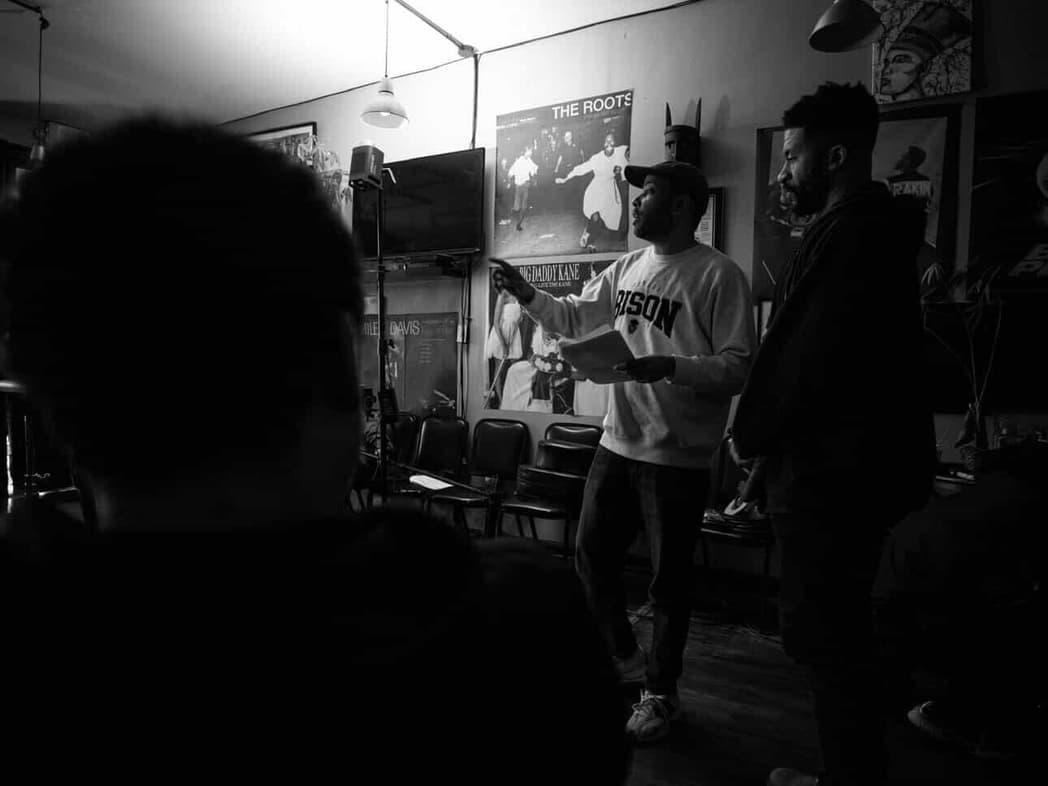
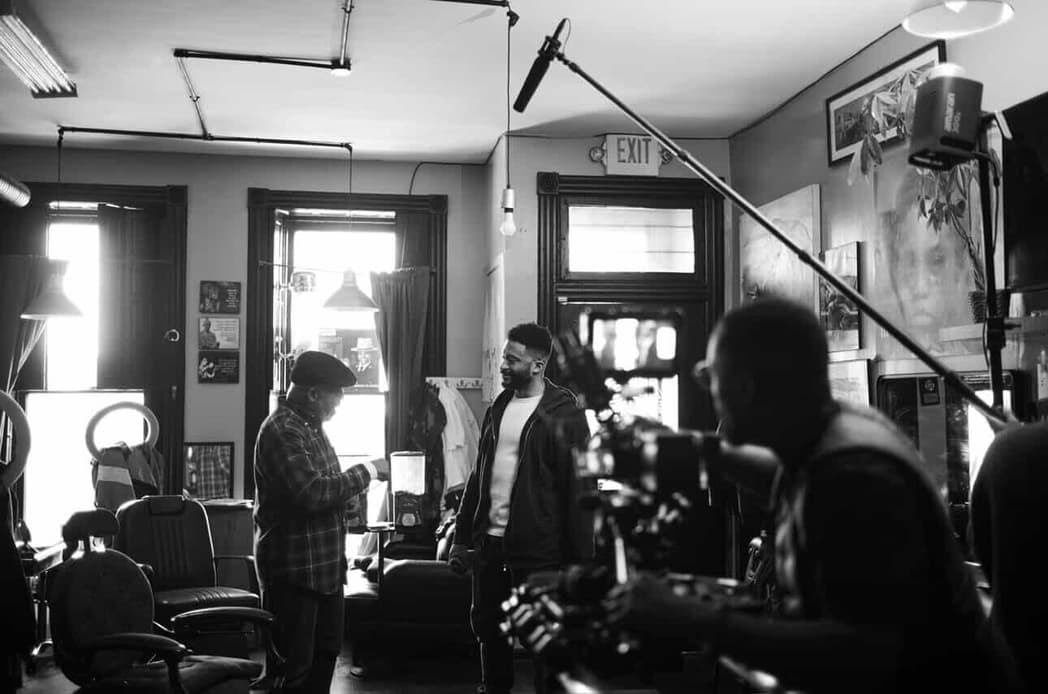
He intends to utilize the Lincoln Motion Picture Company to highlight everyday stories that often go untold by mainstream media.
“What are the stories, those everyday stories, that just really kind of connect, and we can really amplify? That’s what I’m really focused on right now.”
Over a century ago, the Johnson brothers established the Lincoln Motion Picture Company, providing a platform for Black actors to share authentic stories in an industry filled with harmful stereotypes. Today, DuBose is continuing their legacy by forging his own path while applying the knowledge he gained from Howard as an advantage.
“HBCU communities are everything. That’s my direct quote. They are everything. It’s just important to have those communities a part of the sustainability of Black films,” DuBose said.
