
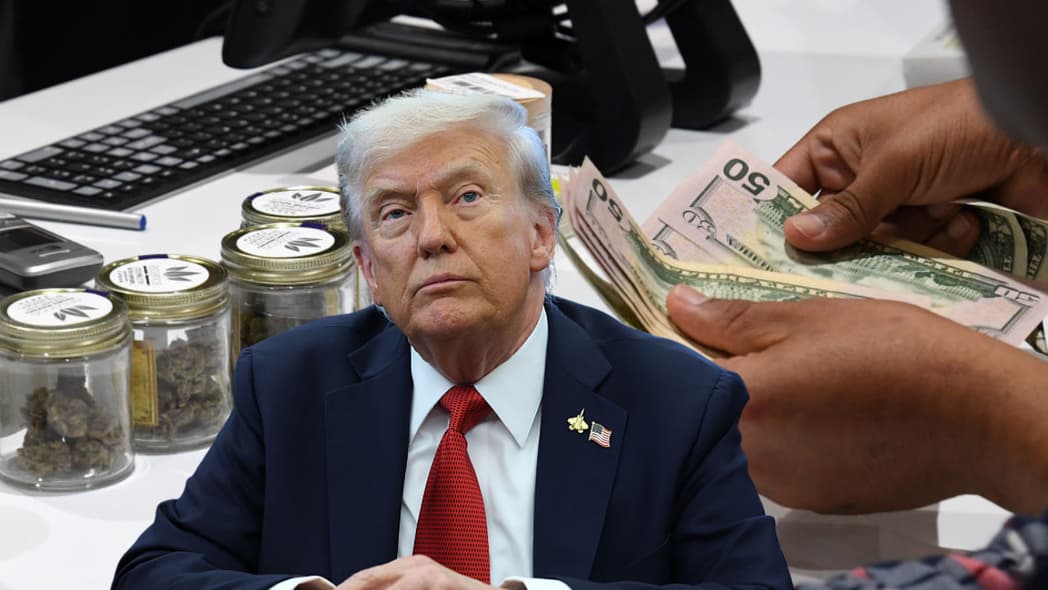
The Trump administration has partially followed through on an executive order signed by President Donald Trump last year that calls for the reclassification of marijuana under federal law.
On Thursday, Acting U.S. Attorney General Todd Blanche issued an order at the Department of Justice to immediately reschedule state-licensed medical marijuana and FDA-approved marijuana products under the Controlled Substances Act, from Schedule I to Schedule III. The first-of-its-kind move will deregulate a certain class of medical marijuana products but falls short of Trump’s order, which called for a full rescheduling of marijuana. Marijuana is still illegal under federal law, and non-medical cannabis will still be classified under Schedule I, which is reserved for addictive drugs like heroin and LSD.
Blanche said the DOJ order delivers on Trump’s promise to “expand Americans’ access to medical treatment options,” adding, “This rescheduling action allows for research on the safety and efficacy of this substance, ultimately providing patients with better care and doctors with more reliable information.”
While the rescheduling order is certainly unprecedented, it is also causing a state of confusion for the cannabis industry and policymakers. What’s more, Black businesses will likely lose out on the cash windfall the order will ultimately bring to cannabis enterprises.
“What was already a complex process has been made a bit messier with this announcement,” says Cat Packer, director of Drug Markets and Legal Regulation at Drug Policy Alliance.
“A lot of folks were assuming that we were going to be rescheduling marijuana wholesale,” Packer tells theGrio. Instead, the leading expert on cannabis law and policy says that the Trump administration has decided to “bifurcate” the rescheduling of marijuana.
Attorney General Blanche said the DOJ would fast-track the full rescheduling of marijuana and announced a hearing to gather evidence on June 29. That process will go through federal rulemaking led by the Drug Enforcement Administration, where a similar process was jump-started by the Biden administration and stalled once Trump returned to the White House.
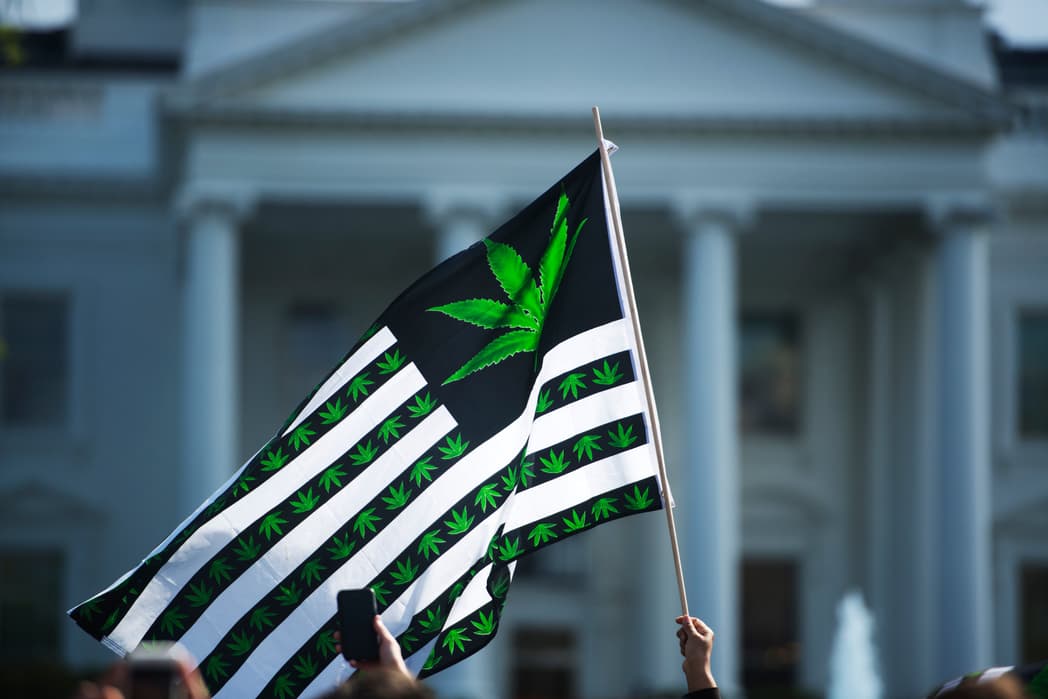
Hundreds of advocates for marijuana legalization rally and smoke pot outside the White House in Washington, D.C. on April 02, 2016.
(Photo by Marvin Joseph/The Washington Post via Getty Images)
Medical treatments aside, Black communities stand to benefit very little from the Trump administration’s moves to reschedule marijuana. Advocates have long pointed out that until marijuana is completely legalized and decriminalized, Black Americans will continue to see disproportionate harms through the criminal justice system.
According to the ACLU, Black people are 3.6 times more likely than white people to be arrested for marijuana possession due to racial profiling and bias in marijuana enforcement. Tens of thousands of Black Americans who are no longer incarcerated also face barriers to employment, housing, and education due to past marijuana convictions–all while the cannabis industry brings in nearly $40 billion in sales annually.
As the Trump administration’s piecemeal approach to rescheduling marijuana takes effect, Thursday’s DOJ order comes with major federal tax breaks for medical-licensed businesses. However, tax windfalls will largely miss Black-owned enterprises as a result of racial inequities in medical marijuana licensing.
“I actually think that this could be particularly disruptive for Black and brown businesses in ways that rescheduling wouldn’t have because, at least, if you know everything were rescheduled, then businesses, similarly, should be treated the same,” Packer explains to theGrio.
While the number of Black-owned cannabis businesses has grown in recent years to almost 2%, it remains low. That percentage is even lower for those with medical licenses.
“This is largely born out of adult use legalization,” Packer said of Black and minority-owned cannabis enterprises. “The reality is that a lot of jurisdictions did not start placing an emphasis on equity in licensing when they just had medical programs.”
The cannabis policy expert explained, “Ownership data is going to look very different for medical marijuana licensees than adult use licensees.”
As a result, says Packer, “This is going to disproportionately disrupt Black and brown businesses, in that they won’t be able to get the tax relief that other operators are afforded because they don’t have medical licenses; they have adult use licenses.”
She added, “And if those businesses and those products aren’t able to take advantage of the tax relief, the gap widens with this movement.”
What’s more, without legalization, Black-owned cannabis businesses face disproportionate barriers to loans, capital, and banking under federal law. Therefore, as predominantly white-owned cannabis owners get to cash in, Black-owned businesses will continue to be left behind.
