
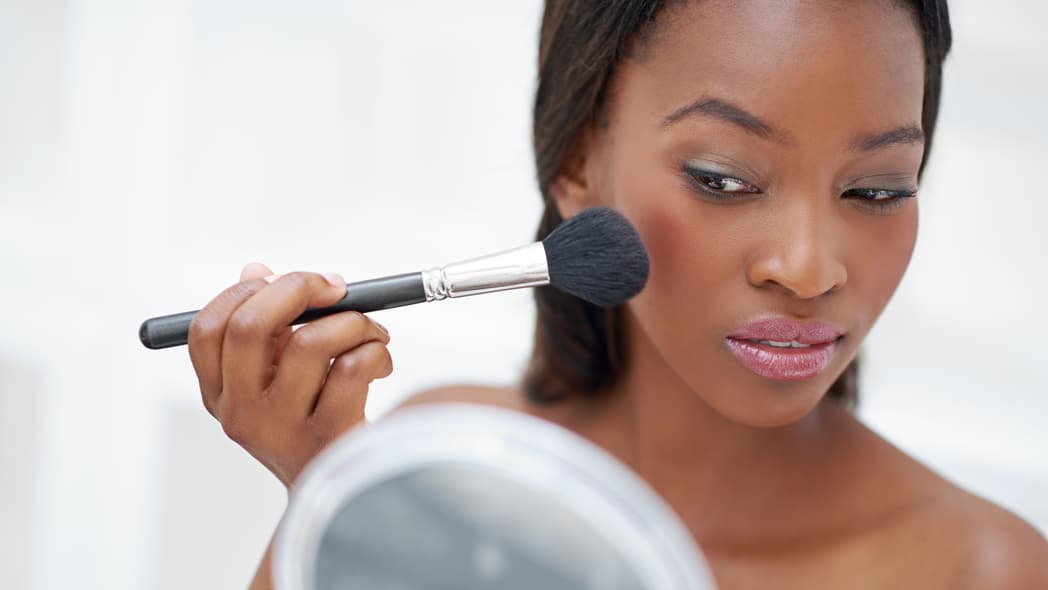
Blush has been around since the dawn of beauty. But leave it to the internet, and one very telling TikTok video, to turn a rosy cheek into a referendum on how the beauty industry treats Black women.
This week, beauty communities across social media are debating, sharing think pieces, and reflecting on Patrick Ta’s latest product release, and to be clear, the issue isn’t the product itself.
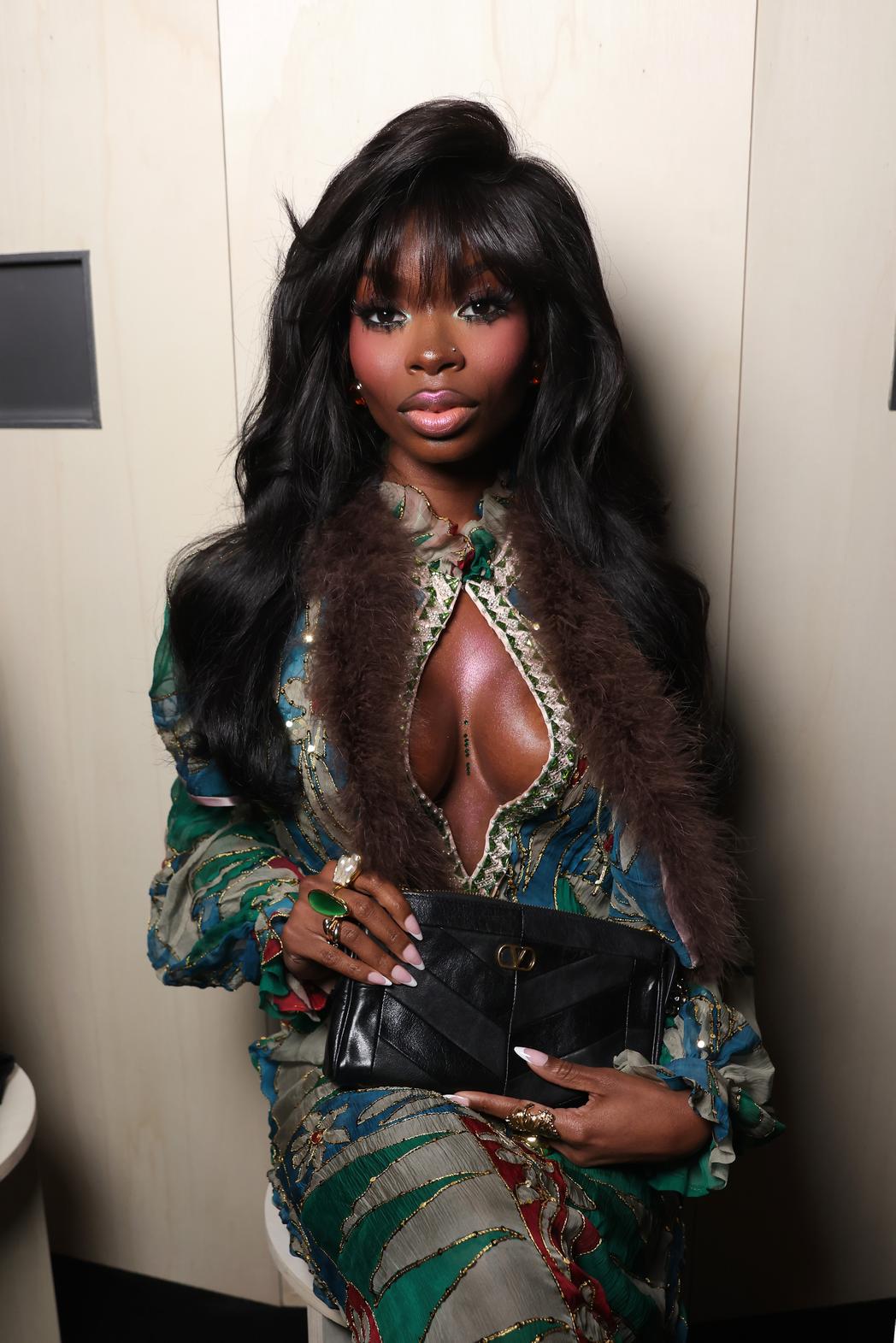
In a video showcasing the brand’s new “transitional” blush duo and coordinating liquid blushes, social media users quickly clocked the similarities between Ta’s technique and that of makeup artist Ngozi Esther Edeme, widely known as Painted by Esther. Edeme, whose work has graced the faces of Naomi Campbell, Kelly Rowland, Viola Davis, and Olandria Carthen, built a signature look around bold, rosy cheeks and under-eyes that flatter every complexion. While she isn’t the first artist to go heavy on blush, her influence is undeniable in the wave of bold blush looks seen on social media, red carpets, fashion shows, and more, particularly among Black women.
But why are people so upset that a brand came out with more about pink, red, and coral-hued powders? They’re upset because Ta, a Vietnamese American makeup artist who launched his eponymous brand in 2019, appears to have capitalized on a technique popularized by a Black woman without crediting her. It’s a quiet, persistent pattern in the beauty industry: Black women consistently serve as the muse, rarely as the credited source of inspiration.
View on Threads
This isn’t the first time Ta has faced criticism involving Black creatives. In 2024, content creator Avonna Sunshine went viral after calling out the brand for failing to pay her for a campaign.
“You see people, especially Black people, riding for the company and[…] I just wonder, if those Black creators that are supporting you so heavily knew that you were out here not paying Black creators, how would they feel? I don’t think they’d be okay with that. I’m surely not,” she said in the viral video.
Avonna’s video, which garnered millions of views, led Ta to share a since-deleted apology video to the creator, claiming he had not seen her previous attempts to contact him privately and asking to be compensated as soon as possible. Around that same time, Jools Lebron, the creator behind the viral “very demure, very mindful” phrase, claimed that Ta also failed to pay her for a campaign they did together in New York.
Two years later, the pattern continues.
In response to the growing discourse, Ta posted a TikTok captioned: “I do not own this look @Paintedbyesther she Is Amazing and so talented,” he wrote in the caption. “She popularized this look through her work and through Olandria. I also have been doing this blush look since 2021. Not the same as Esther but my own version. I am a makeup artist. For context, I filmed this video on March 5th. I have nothing but love and respect for Esther.”
However, his post came after Edeme herself broke her silence in a TikTok video, which, notably, she did so with visible hesitation.
“I’m tired of constantly being spoken for and being scared to speak because I am a Black woman,” she said, addressing how quickly society slaps the “angry Black woman” label on anyone who dares to advocate for themselves. She was careful to reject any claim of ownership too: “This whole thing is particularly strange to me. I’ve never [once] said I started anything… because that’s silly because I’m an artist. My goal is to constantly reference Kevyn Aucoin, Danessa [Myricks], and Pat [McGrath]; how they move with grace and intentionality. I am an artist; my driving force is to create and share it. My end goal is to teach and spread my knowledge.”
@paintedbyesther I’ll only speak about this once.
♬ original sound – Paintedbyesther
However, the Ta situation feels particularly strange for the budding MUA after she recalls a “weird” experience with a member of Ta’s team who allegedly booked her for a “do and go” service, which, unlike her teaching offerings, just entails her doing the client’s makeup and leaving. However, things took a turn when a member of Ta’s team requested to record the session, which she said “didn’t sit right with her” and felt “conniving.” She went on to call out the convenient coincidences between her and Ta’s videos. Ultimately, she stressed how exhausted and frustrated she is by the chatter.
“It’s already hard being Black and being a woman in this industry. You have to fight twice as hard to get just half of what you deserve,” she noted. “I will reiterate: I did not start anything. I am 29 years old. That would be ludicrous to claim ownership of anything. But what you will not do is belittle my influence.”
Edeme also raises a fair point that’s easy to miss amid the noise: there are a lot of people speaking on her behalf, whether it be well-intentioned or not. And while social media platforms are literally designed for conversations, the question now becomes: are these public debates causing more harm than good, especially when a Black woman is at the center of it?
At the end of the day, the patterns are there. The writing is on the wall, and all Ngozi Esther Edeme, and frankly, Black women in this industry at large have ever asked for is some R-E-S-P-E-C-T. Which, in this case, would just be acknowledging Painted by Esther’s undeniable influence.
