
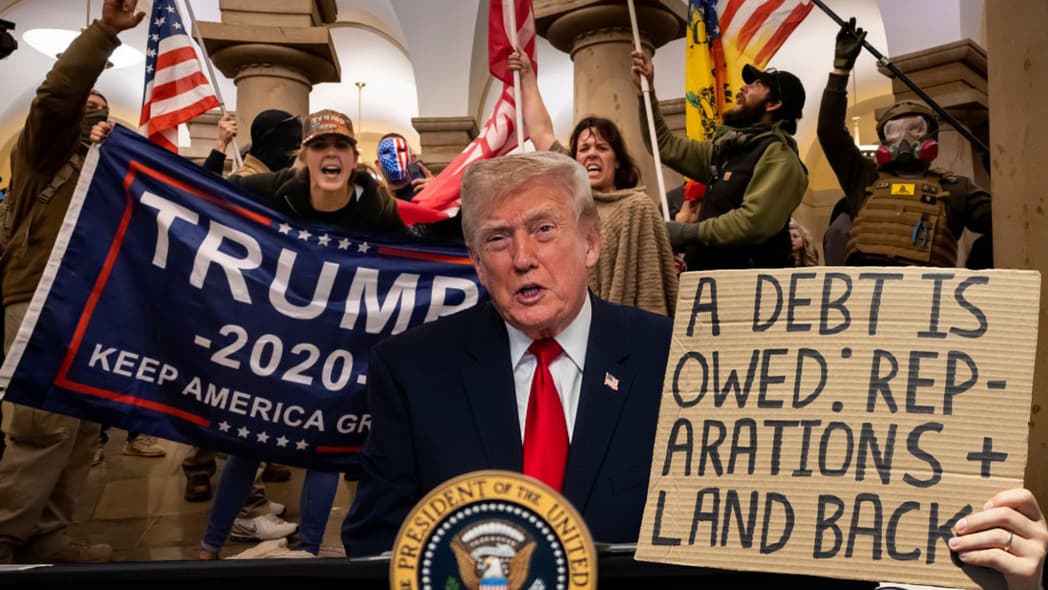
The Trump administration is reportedly set to back off its effort to award nearly $1.8 billion to allies of President Donald Trump following legal challenges and political pushback.
Several outlets, including NBC News and the New York Times, have reported that the so-called “anti-weaponization” fund, established by the Department of Justice as part of a settlement in Trump’s personal lawsuit against the IRS, will soon be eliminated.
Individuals and groups targeted by Trump sued the administration, argued in court that the “slush fund” was unconstitutional and a blatantly partisan scheme to compensate the president’s supporters who violently stormed the U.S. Capitol on Jan. 6, 2021, and attacked law enforcement officers.
Last week, a Virginia U.S. District Court judge temporarily blocked the administration from identifying claimants for the fund and from disbursing any money. Separately, a Florida U.S. District judge ordered Trump’s personal attorneys to respond to a motion filed by 35 former federal judges who said the fund amounted to fraud on the court. They argued that, as head of the executive branch, the president’s suit against the IRS was essentially him suing and later settling with himself. In addition to the $1.777 billion fund, the settlement included an agreement that Trump, his family, and his businesses could never again be audited by the tax agency.
Skye Perryman, president and CEO of Democracy Forward, one of the groups that legally challenged the weaponization fund, told NBC News that Trump’s backing away from the fund would be a “major victory,” but added, “Until the administration fully abandons the scheme, it’s beyond dispute that it will not recur, and our clients’ harm is remedied, we will be in court challenging it. We look forward to the government’s response to the courts and to our filings, and to prevailing on behalf of our clients.”
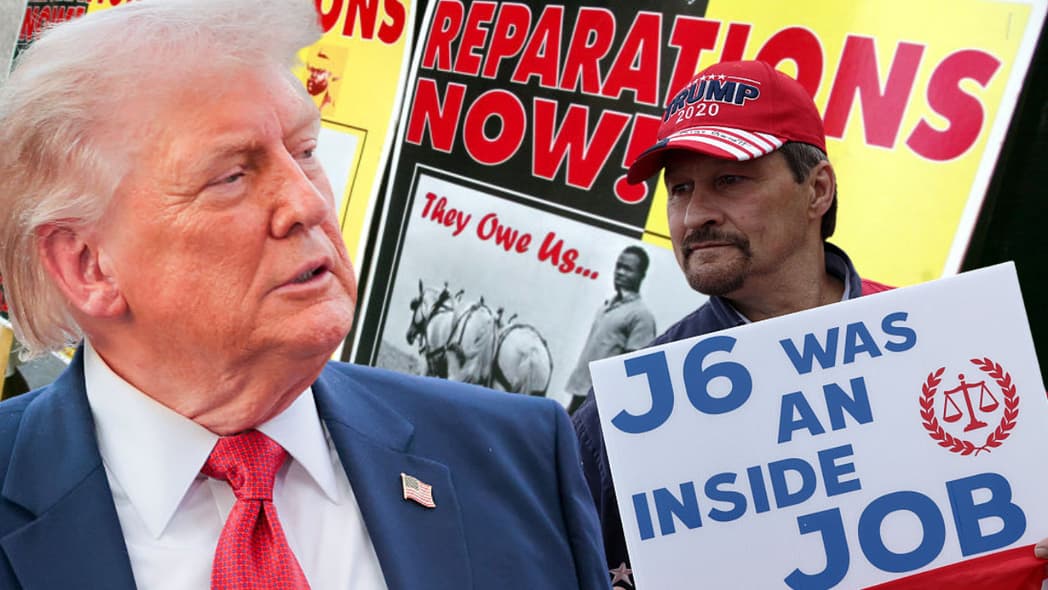
While there has been bipartisan pushback against the idea of a president compensating supporters who broke into the U.S. Capitol and physically assaulted police officers in an attempt to stop the certification of the 2020 presidential election, Trump’s anti-weaponization fund particularly drew the ire of racial justice advocates who said the fund was an insult to Black Americans and the decades-long fight for reparations.
“Not only is Trump’s slush fund unlawful, it’s a downright denial of reparative justice for those who deserve it. Trump would sooner reward white supremacists who attacked our democracy than Black folks plagued by the inequities perpetuated by slavery & discrimination,” said U.S. Rep. Ayanna Pressley (D-Mass.), a progressive Democrat who is the lead sponsor of H.R. 40, a bill that has been introduced in Congress since 1989 to establish a commission to study U.S. slavery, its impact on Black Americans, and a legislative framework for reparations.
After Friday’s ruling temporarily blocking the Trump fund, Dreisen Heath, reparations researcher, policymaker, and founder of the Why We Can’t Wait Reparations Network, told theGrio that the order “does the minimum required and prevents taxpayer funds from moving before a single dollar is irreversibly spent on what amounts to a slush fund for Trump’s personal grievances.”
However, she noted, “The narrative damage is already done.”
“Framing January 6 defendants as victims of ‘weaponization’ distorts who the actual victims of systemic harm in this country are — and that distortion doesn’t get walked back by a court order,” said Heath. “We’ll keep fighting on all fronts to make sure the public channels their righteous anger where it belongs: into reparations for Black Americans.”
