
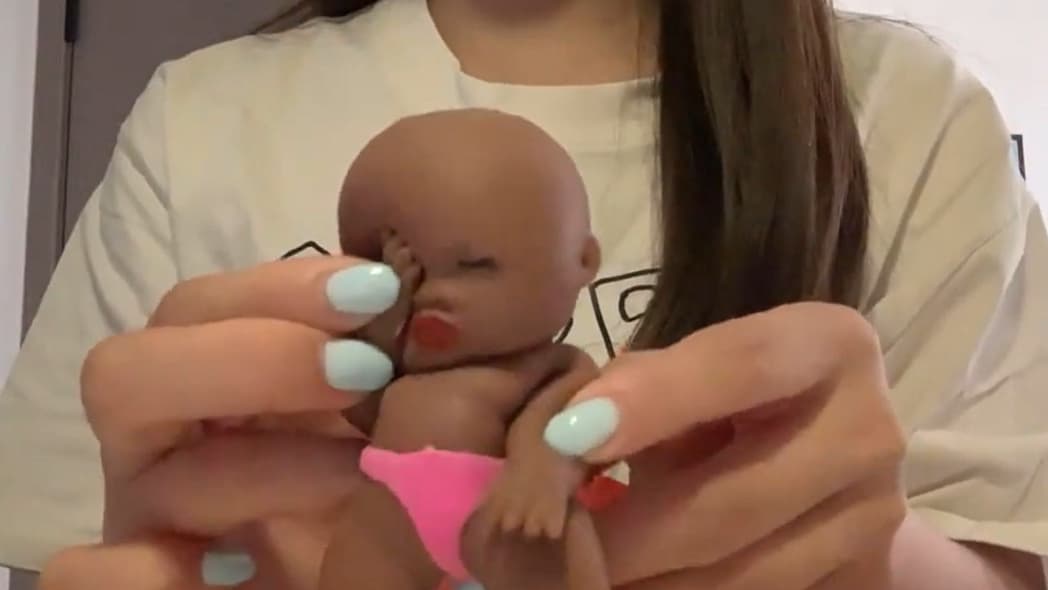
A baby-shaped stress relief toy sold in China has drawn widespread criticism as several users on Chinese social media platforms like Rednote have called out users for using the toy to perpetrate acts of violence. However, in America, the issues with the toy’s use go far beyond mere violence.
The “Natasha” trend has lit up social media in recent weeks, driven by shock value and the various ways people can commit violent acts on a stress toy. The issue, as pointed out by OkayAfrica, is that the stress toy is a Black baby, making viewers wonder about the racial undertones of the trend and why the doll often used for “Natasha” videos happens to be a small Black baby.
“The Black female, to go along with Malcolm X, has always been the most disrespected and unprotected person in the world and they have been a punching bag for white folks, obviously the Chinese, and unfortunately sometimes Black men,” Dr. Allan Cofield told the Washington Informer. “This doll carries that tradition and there’s no merchant who should be willing to carry this obscene and racist toy that satisfies the violent and hateful instincts of those who are seeking to buy such objects.”
Critics also suggested the use of the doll for such acts echoed stories of alleged real-world abuse and exploitation of Black children globally. The issue has also extended to mental health experts, who suggest that the “Natasha” doll trend could carry the same kind of societal impact for children that being asked to pick between white and Black dolls has had for generations.
“When Black children repeatedly see images that resemble them being beaten, mutilated, and discarded for entertainment, that becomes internalized,” Dr. Elizabeth Dania, a psychiatric and adult nurse practitioner, said. “It does not just pass through them. It shapes how they see themselves and how they believe the world sees them.”
The original “Natasha” video can be tied back to a vlogger who mistakenly dropped the doll on the ground, referring to the doll as his actual daughter. The video went viral, prompting copycats, according to Chinese media outlet Xinhua. The Hong Kong Free Press reported that the China Consumers Association and the State Administration for Market Regulation have stepped in to ban videos of the doll, and the doll is banned from Chinese schools.
Still, as the trend continues to pick up steam, more and more people, from mental health professionals to civil rights and anti-racist activists, are sounding an alarm on a troubling yet growing social media trend.
