
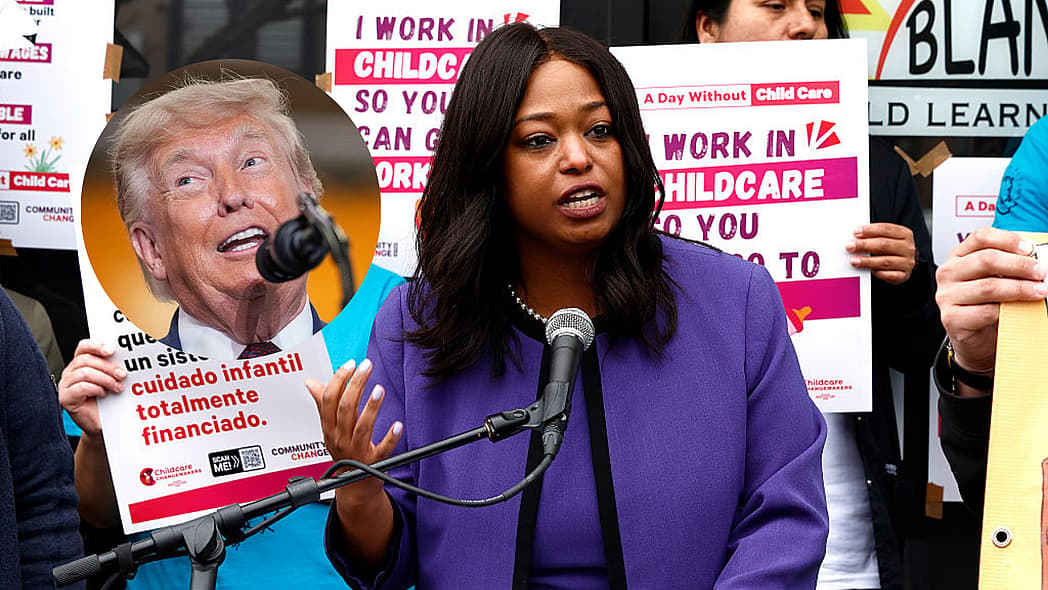
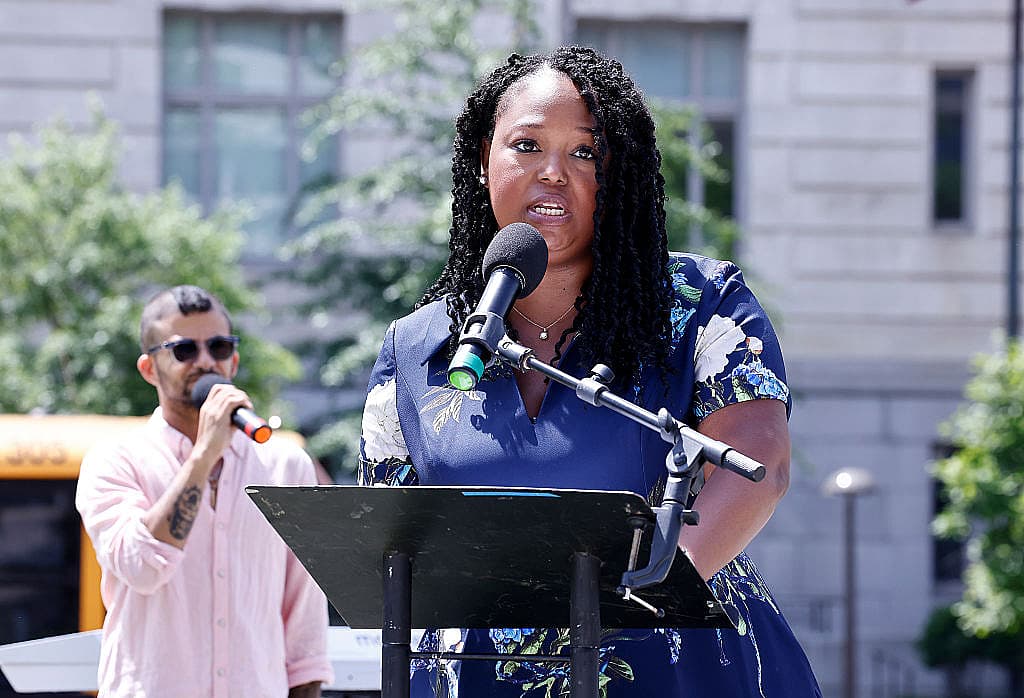
Janeese Lewis George becoming the Democratic nominee for DC mayor all but guarantees the city councilwoman will become the next mayor of the District of Columbia, once historically known as “Chocolate City.”
While celebrating the presumptive Democratic nomination last week, Lewis George, a 38-year-old Democratic socialist who ran forcefully against President Donald Trump and his policies impacting DC, was asked about how she planned to navigate the U.S. president, who tussles with Democratic leaders for sport.
“We are not going to get ICE off our streets by fearing the president,” said Lewis George, referring to the Trump administration’s deployment of federal agents in the District to enforce the president’s aggressive immigration enforcement policies. She continued, “And we are not going to be able to stand up for our autonomy and fight for DC statehood ultimately by just complying in advance.”
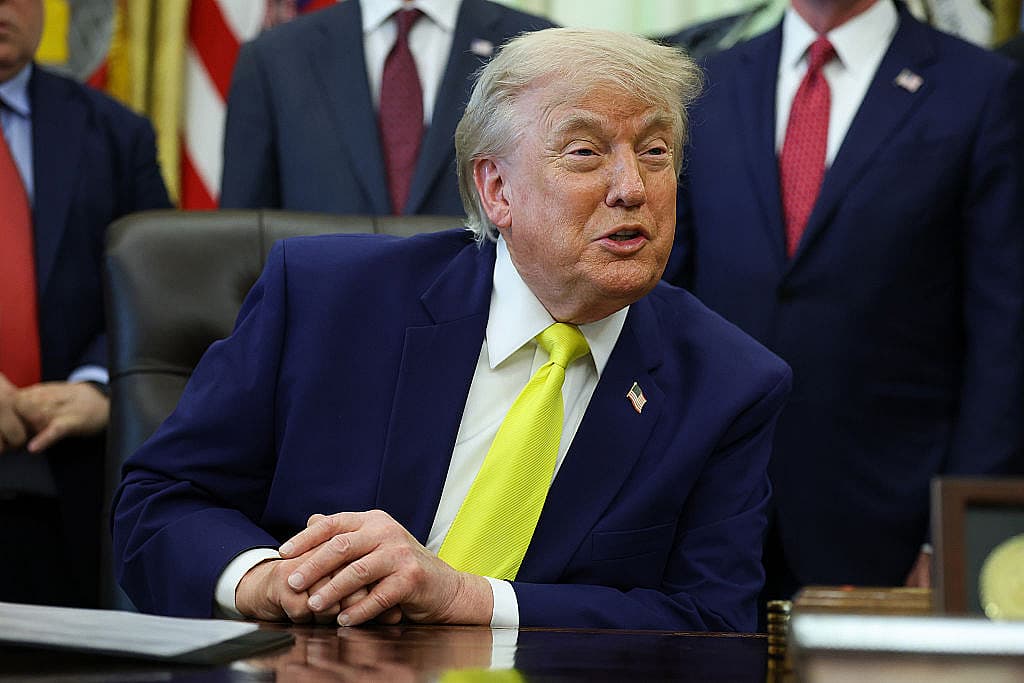
Days before the DC primary election, Trump criticized Lewis George’s progressive views and threatened to “take back Washington” if she were elected mayor of the nation’s capital.
“We won’t put up with it. We’re not going to lose our businesses,” Trump told reporters in the Oval Office.
That threat looms over Lewis George’s likely upcoming mayorship, signaling a potential political clash that current DC Mayor Muriel Bowser has worked to avoid, though she has faced criticism for not doing enough to stand up to Trump.
While Lewis George said she was prepared to defend DC, she made clear: “I will work with anyone, including the president, and for the best interest of DC residents.” She added, “I am hoping that we can work together, as every mayor of the district has had to work with any president of the United States, no matter their party, and to do the work that is ahead.”
Lewis George’s ascent in the race for DC mayor has drawn parallels to New York City Mayor Zohran Mamdani. They are both Democratic socialists who defied the perceived Democratic Party establishment with a broad coalition of multi-racial and multi-generational voters.
Despite his sharp rhetoric criticizing Trump, including calling him a “fascist,” Mamdani extended an olive branch to Trump, visiting the U.S. president twice at the White House. The 34-year-old mayor said he was willing to work with Trump to achieve success for New Yorkers, most notably by securing more affordable housing — a key campaign promise Mamdani made to voters.
Lewis George has also made affordable housing a marquee issue in her campaign, promising to build 72,000 new housing units, lower costs, and increase homeownership.
But would a clash with the ever mercurial 80-year-old Trump prevent the likely future mayor from achieving her ambitious goals?
Trump’s recent threat over Lewis George echoed a similar one made last year when he briefly clashed with Mayor Bowser when he declared a crime emergency and deployed the National Guard on DC’s streets. DC is not a state and therefore under federal jurisdiction; it is governed by the 1972 Home Rule Act, which grants local government powers to the mayor and the DC City Council. However, without statehood, DC is vulnerable to federal oversight.
But advocates and residents tell theGrio that despite Trump’s threat to interfere in DC, he is limited in what he can do given the constraints of Home Rule.
“The president can’t come over and just take over the job of the mayor,” said Patrice Willoughby, chief of policy and legislative affairs at the NAACP and a DC resident.
Willoughby told theGrio of Trump’s threat to “take back” DC: “He starts to bluster more and more because the policies lack substance, and because the policies have not had a positive effect. His polling is in the absolute toilet right now.” She added, “When bullies are threatened, that’s when they typically bully even more.”
Jamal Holtz, president of DC Young Democrats and a DC native, told theGrio, “I don’t think the president has ever even read the Home Rule charter and knows any aspects of what it says, what it means, or how to materialize it.”
Under federal law, a U.S. president has the authority to federalize the police for up to 30 days and deploy the National Guard under an emergency, as Trump did last summer, making the presence of U.S. troops a mainstay on DC’s streets. The president can also work with Congress to attach legislative riders to federal spending bills that specifically restrict how DC can spend its locally raised tax dollars.
Markus Batchelor, national political director at People For the American Way, and a DC native, told theGrio that while there have been more threats to the DC local government’s autonomy in recent years, Trump is “overplaying his ability to unilaterally do things in the district.” However, he said, “the fight is definitely going to be in Congress.”
In 2023, Congress, led by Republicans in the House, voted to override DC’s criminal code under the guise of rising crime in the city, which was ultimately signed by Democratic President Joe Biden. It marked the first time in more than 30 years that the federal government interfered in DC’s governance.
Batchelor said the “best case scenario” for DC’s next mayor is that she walks into a “different political reality than Mayor Bowser had to deal with over the last two years.”
He explained, “The hope is that, and all signs point to, given any more obstruction by the president, the Democrats will take back the [U.S. House of Representatives]. Building positive relationships and strong bonds with a Democratic majority in the House, and hopefully the Senate, is going to be important, so that they are also our partners.”
Of course, while Trump may be legally limited in what he can do in DC, there remains the chance that he will make Janeese Lewis George his latest political target.
“Donald Trump has a history of attacking Black women who are elected to office, and trying to place his power over Black leaders who lead Black cities,” said Holtz of DC Young Democrats.
Advocates admit a future Mayor Lewis George will have to walk a tightrope between standing up for DC residents and working with the Trump administration when necessary.
“It’s important to take the approach where we defend all of our neighbors, that we don’t throw anybody under the bus for political expediency, where we work together with the administration where we can, but that we don’t abandon our values in the face of that,” said Batchelor.
Ultimately, for DC residents and advocates, the true goal is to achieve statehood by making DC the 51st state of the U.S. — a political battle that has lasted for decades.
Holtz told theGrio that statehood is DC’s “north star.” But until then, he said, “We have to find common ground, but common ground cannot come at the compromise to our right to self-governance and living up to the interests of DC residents.”
