
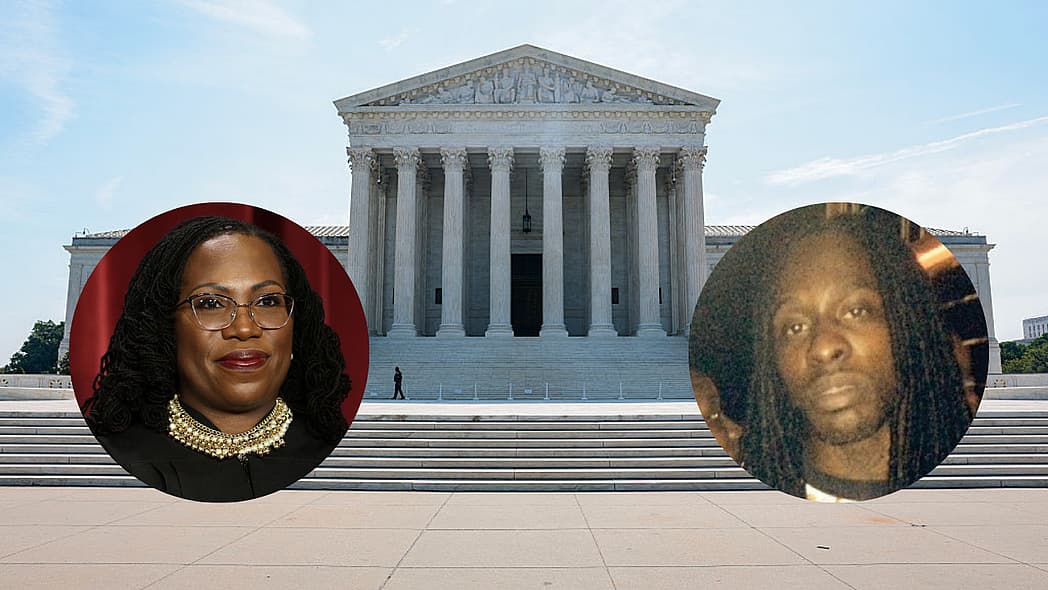
Justice Ketanji Brown Jackson scolded her conservative colleagues on the Supreme Court over a Tuesday ruling against a Rastafarian man in Louisiana who sued a state prison for cutting his dreadlocks, despite their religious value.
In a 29-page dissent, Jackson argues that there is a fundamental flaw in the majority court’s decision not to allow Damon Landor, an ex-inmate, to seek money damages from the state.
“Prisoners like Landor who suffer violations of their religious freedom in state prisons—no matter how blatant—will often be left remediless,” Jackson said of the consequences of the court’s decision.
In 2020, after serving out most of his five-month sentence for a drug-related charge, Damon Landor was moved to Raymond Laborde Correctional Center in Cottonport, Louisiana, to serve out the remaining days. In an attempt to protect his dreadlocks from being shaved, Landor, a member of the Rastafari faith, carried a physical copy of a Supreme Court case, Ware v. LDOC, that upheld that prisons are prohibited from cutting Rastafarians’ hair.
Despite this, correction officers threw the papers in the trash and proceeded to shave his head, violating his religious beliefs. Landor had grown his dreadlocks out for two decades—what is known as the Nazarite Vow—allowing his hair to grow to his knees.
As Jackson, who also wears dreadlocks, writes in her dissent, “Damon Landor’s Rastafarian faith requires him to ‘let the locks of the hair of his head grow.’ The Holy Bible, Numbers 6:5 (King James Version). For a Rastafari like Landor, locks are ‘the physical embodiment of . . . spiritual identity and connection to God.'”
The conservative majority argued that a federal law enacted under the Religious Land Use and Institutionalized Persons Act in 2000—which requires state and local prisons that receive federal funds to accommodate religious freedoms—does not compel the state to award money damages to Landor because the prison guards in question did not “consent” to Congress’s authority, whereas the state did.
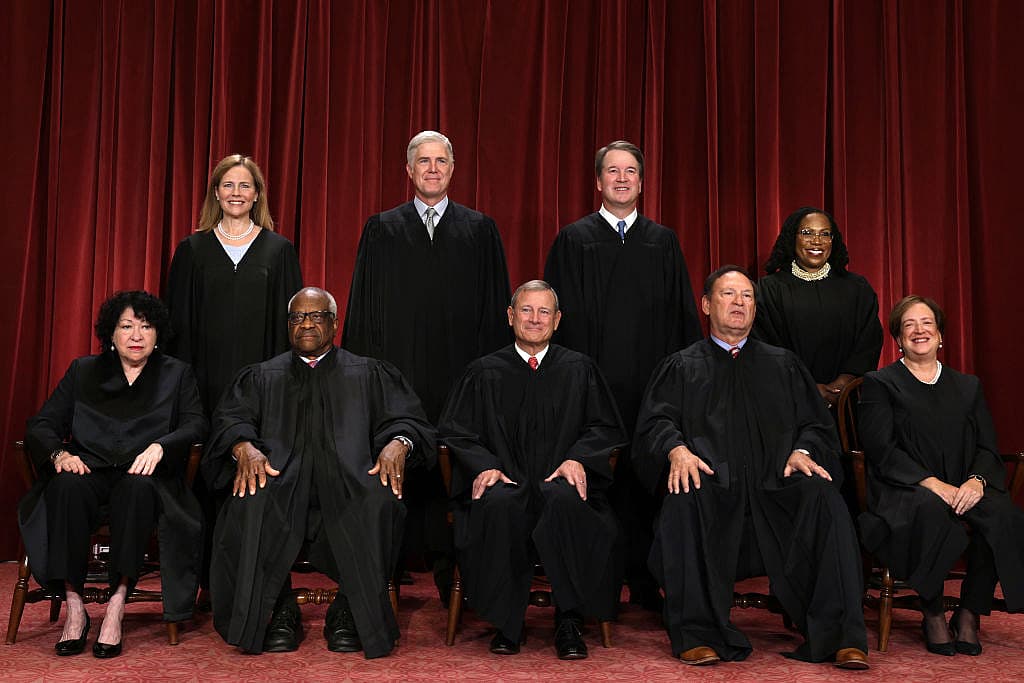
That legal interpretation, says Jackson, treats the case as a contract rather than federal law enacted by Congress under the Spending Clause of the U.S. Constitution. As a result, she argues that “encroachments on prisoners’ statutory rights are likely to happen with fair frequency, as state-empowered prison officials will have little incentive to abide by federal law, even if it is handed to them on a piece of paper.”
Justice Jackson, the first Black woman to serve on the Supreme Court, said Landor had “federal law on his side,” adding, “He did everything he could do in real time to ensure that prison officials knew that.” Instead, the officers “held him down, and ‘uncrowned him before God.'”
By ruling against Landor, Jackson said the majority conservative court imposed a “scheme” that sets a new, dangerous precedent.
“The Court does so by concluding that, even where Congress can legislate under the Spending Clause, it may be left powerless to enforce that legislation in the way it chooses,” she wrote. “This development is as new as it is peculiar, and it devalues precedent and congressional authority alike.”
Jackson said the court ignores “decades of precedent” that affirm Congress’s authority to “use the power of the purse to govern.”
“In the end, the Court reduces some of Congress’s greatest legislative achievements—federal laws that secure civil rights, environmental stability, healthcare, and more—to nothing more than the wheelings-and-dealings of an especially wealthy private party,” she wrote. “Because I would not so trivialize a federal statute or the constitutional powers pursuant to which it was passed, I respectfully dissent.”
