
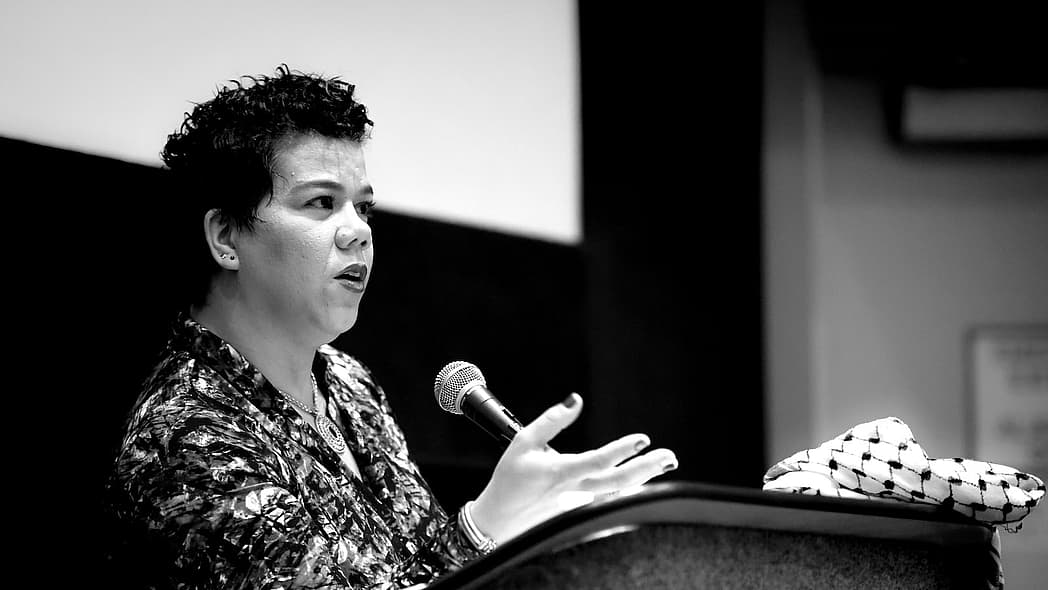
For years, Dr. Rosa Clemente has watched conversations about Black-Latino identity become more visible across social media, academia and popular culture. But visibility alone, she argues, does not address the anti-Blackness many Black Latinos continue to encounter within their own communities.
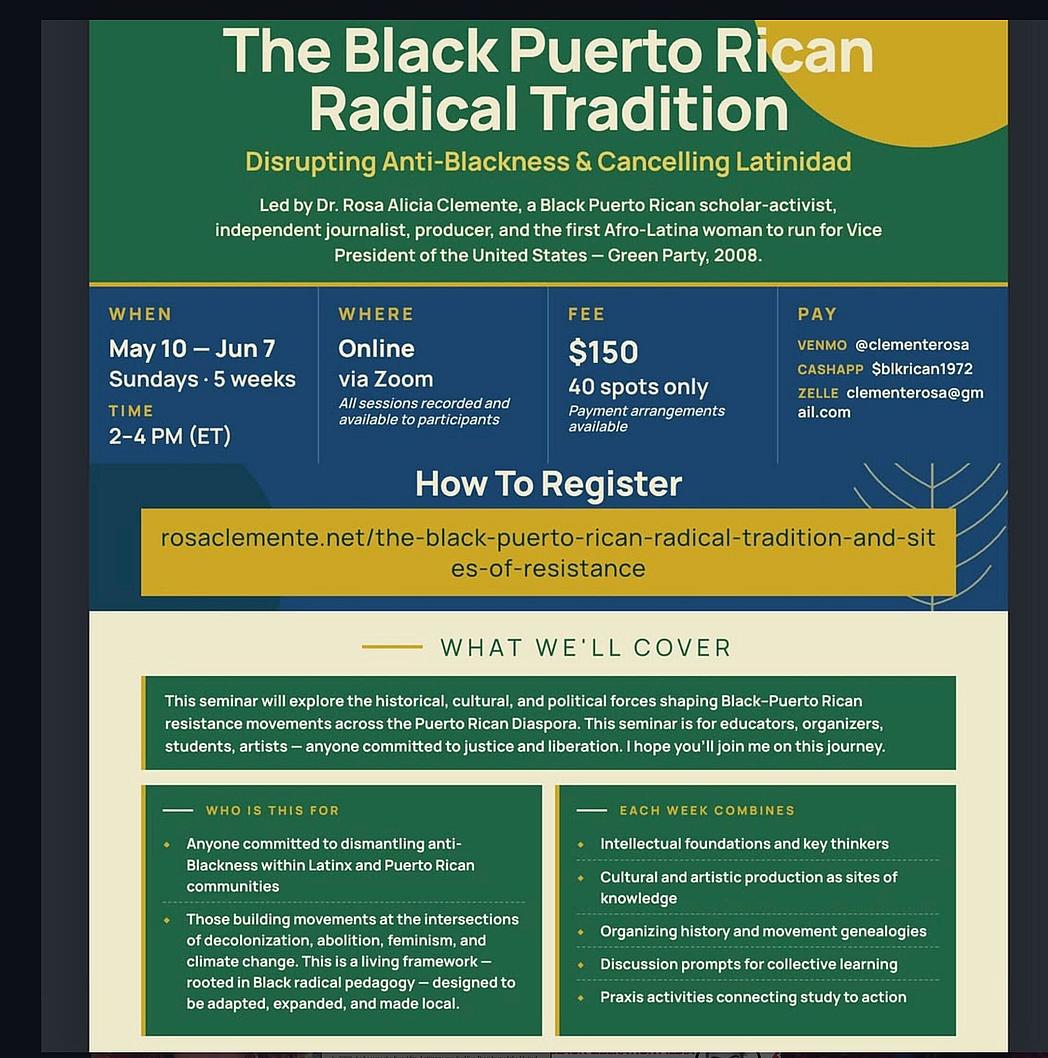
That belief is at the center of “The Black Puerto Rican Radical Tradition: Disrupting Anti-Blackness & Cancelling Latinidad,” a five-week seminar Clemente created to explore Black Puerto Rican history, political organizing and the realities of anti-Blackness. The course recently completed its fourth cycle, bringing together participants from across the country to discuss identity, liberation and what it means to embrace Blackness beyond culture.
Led by the scholar, journalist and activist, the seminar examines the historical, cultural and political forces shaping Black Puerto Rican resistance movements throughout the diaspora. Across four seminar cycles, 101 people have participated in the program. Clemente said she offers five scholarships during each cycle, while most participants pay to attend. For many, the seminar provides conversations and historical context they say are missing from classrooms, workplaces and even their own communities.
“Once people started paying, I knew,” Clemente told TheGrio. “I knew how big the need was out here and then within it.”
The seminar’s focus on anti-Blackness is rooted in Clemente’s own experiences. While attending SUNY Albany, she identified as a person of African descent, changed her major to Africana studies and later became president of the Black Student Union. The reaction from some Latino student groups and administrators was immediate.
“Once I got elected, I got backlash from the Latino student groups and some Latino administrators,” Clemente said.
One administrator, she recalled, told her: “You can’t be both, you know, you got to pick a side.”
Years later, Clemente expanded on many of those experiences in her 2001 essay, “Who Is Black?,” which challenged readers to think critically about race, Blackness and identity within Latino communities. The piece sparked conversations at a time when terms such as Afro-Latino were not yet widely used in mainstream discussions and raised questions that continue to shape debates around Black identity today.
Those experiences helped shape a seminar that explores everything from colonialism and liberation movements to organizing strategies and Black political traditions. Many participants arrive carrying questions about identity, family history and anti-Blackness that they have never had an opportunity to explore.
“There are definitely some of the younger folks that look back at their childhood and may be angry at someone or their parents or whatever because they didn’t know who they were, or then [it] might also be, they grew up around anti-Blackness as Latinx younger people,” Clemente said.
Participants often spend the five weeks unpacking experiences they have struggled to process on their own while examining how anti-Blackness operates within families, institutions and communities.
“Everybody at one point in all the sessions identified when they encountered anti-Blackness and what they’re doing to disrupt it,” she said.
According to Clemente, younger participants frequently find themselves confronting anti-Blackness within their families, workplaces and social circles while feeling isolated in the process.
“The younger folks are in a space where they just don’t know how to become an organizer, or sometimes they just are isolated in certain geographical areas, and then they’re coming with this, and they’re confronting their family and their workers, and then they often feel like they’re alone,” she said.
The seminar is designed not only to provide historical context but also to create community. Participants remain connected after the course ends, sharing resources, supporting one another and continuing conversations that began during the five-week program.
“We’re in community together,” Clemente said.
Discussions around Blackness and identity have become more common in recent years, but Clemente said greater awareness has not necessarily led to greater power.
“I don’t think it’s gotten better,” she said. “I just think it’s gotten visible, and visible does not lead many times to power.”
That view also informs the seminar’s use of the phrase “Cancelling Latinidad” in its title. Clemente argues that the term often groups people together in ways that obscure racial differences and minimize conversations about anti-Blackness. Rather than rejecting Puerto Rican or Latino identities altogether, the seminar challenges participants to think critically about how broad labels can sometimes mask the experiences of Black people within those communities.
The seminar also challenges participants to think about how they engage with Black identity and what that engagement looks like beyond personal identification.
“What they’re doing is using it as an artistic expression, which is fine, you know, or a cultural, but that has nothing to do with what I call the Black Puerto Rican radical tradition,” Clemente said.
She continued, “So what’s happening is that people are claiming the culture, but they’re not claiming the politic.”
Throughout the seminar, participants are encouraged to connect historical lessons to contemporary struggles and consider how to apply them in their own communities.
“My goal in it too was that people are becoming activists and organizers because they attended,” Clemente said.
Clemente said those conversations often lead participants to reflect on their own families, something she has experienced throughout her life. Coming from a large Puerto Rican family, she said, becoming politically conscious forced her to confront anti-Black attitudes she had previously overlooked. Those experiences became even more pronounced after becoming a mother.
“When I had my daughter, Alicia,” Clemente recalled, “one of my cousins said some stupid [expletive].”
The remark centered on her daughter’s complexion and hair, something Clemente viewed as an example of the anti-Black attitudes she had spent years challenging. She immediately confronted her cousin about it.
Reflecting on the seminar, Clemente said many participants identify similar moments within their own families.
“A lot of the discussions we had through these seminars, everybody would remember something anti-Black that someone in their family did,” she said.
For Clemente, confronting those experiences is part of a larger process of understanding identity, challenging anti-Blackness and building stronger communities. As she prepares for another seminar cycle later this summer, she hopes participants continue the work long after the course ends.
Asked what advice she would offer younger generations navigating conversations about race, identity and anti-Blackness, her answer was simple.
“Consistency, be consistent,” she said.
“There are going to be some times when you’re alone, but believe me, those times you feel alone are the times where people are going to be like, oh [expletive] yeah, A B C D person, you’ve been saying this for 30 years, and you’ve never wavered.”
