
Editor’s note: The following article is an op-ed, and the views expressed are the author’s own. Read more opinions on theGrio.
Growing up, my father loved to tell me, “You’re Haitian, you can do anything.” And while I used to always find myself rolling my eyes at his patriotic words of encouragement, this year, when Haiti qualified for the FIFA World Cup, I finally understood exactly what he meant.
For too many of my formative years, the only time Haiti broke into the mainstream news cycle was during natural disasters, political unrest, and TPS policy debates. So, honestly, I wasn’t sure I’d ever see the day when Haiti was celebrated on a global stage. Because while I was raised by parents who made sure I saw the beauty and resilience rooted in the island I will forever call home, the looks of pity, shock, and confusion that filled people’s faces when I shared my ethnicity, I learned that the rest of the world does not see Haiti that way.
So when I learned Haiti had qualified for the World Cup for the first time in 52 years, “joy” felt like too small a word for what moved through me. Watching major outlets finally lead with something worth celebrating felt like exhaling after holding your breath for years. Not just because the story finally changed, but for the thousands of Haitians across the diaspora quietly carrying the grief of remembering the Haiti they once knew, and the Haiti portrayed in the mainstream. The island that has always somehow managed to defy the odds.
And with this World Cup run, Les Grenadiers (Haiti’s Team) did exactly that.
Despite never playing a home match on Haitian soil. Despite the absence of major sponsorships. Despite fielding players of Haitian descent who have never been able to set foot on the island, Haiti became one of five Caribbean nations to qualify for the World Cup, and the first to do so twice.
“We have many players who have never been in Haiti, so before the game starts, sometimes I used to share with them the reality of the country, the responsibility we have on our shoulders,” Haiti’s all-time leading scorer Duckens Nazon told the BBC. “When we put the shirt on, it’s more than a normal game. We are the first independent Black nation in the world. We have a lot of history. We have to assume this role.”
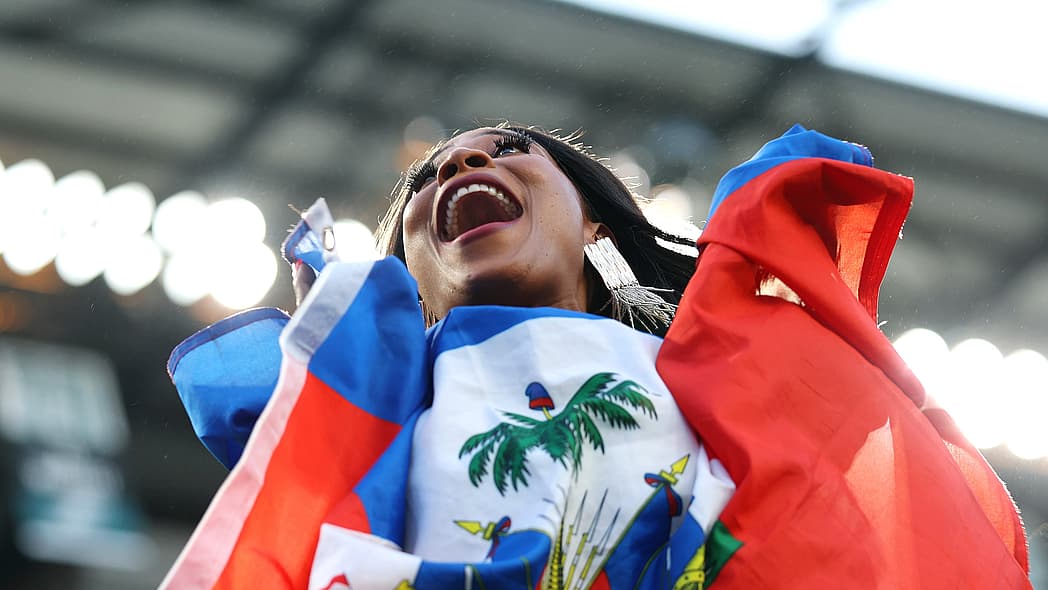
And while the players carried the weight of a nation’s history on their backs, Haitians around the world were already celebrating before their cleats ever touched World Cup turf. Because for us, making it there was already the win.
Whether you remember cracking open kenep on the island or learned what it means to be Haitian through the smell of épis rising from the kitchen, mixed with the rhythms of konpa and the bass of loud, loving family conversations that often sounded like debates, this moment belonged to all of us. And Haitians around the world showed up and showed out. From designers like Stella Jean and Ayida Solé of the Haitian Croissant to Brooklyn Circus creative director Ouigi Theodore, crafting jerseys that honored the island’s legacy, to bands bringing the ancestral power of “Rara” music into the stadiums to empower players, every match felt like a party and family reunion.
As the sounds of my native tongue filled stadiums and local watch parties alike, and as I relished in seeing more Haitian flags waved across the country than I think I’ve ever seen at any Labor Day parade on Eastern Parkway (iykyk), I was grounded in the fact that this is about so much more than soccer.
The celebrations were for the kids who were bullied for their last names. For those who fled the island and built new lives in its honor. For the people, like my father, who dreamed of seeing Haiti qualify for the World Cup but weren’t alive to see this milestone. For the young people on the island struggling to dream big. And for the young people who may only know Haiti as the country their parents are from, this was their introduction to the undeniable, electric spirit of its people, a spirit no headline has ever fully captured and no hardship has ever been able to extinguish.
So to Les Grenadiers: mèsi anpil. See you again in 2030.

Haniyah Philogene is an award-winning multimedia storyteller and staff writer at theGrio, where she covers the intersection of culture, identity, and current events. Driven by a passion for storytelling and digital media, she focuses on uncovering untold narratives and finding innovative ways to share stories that center on Black figures and cultural trends.
