

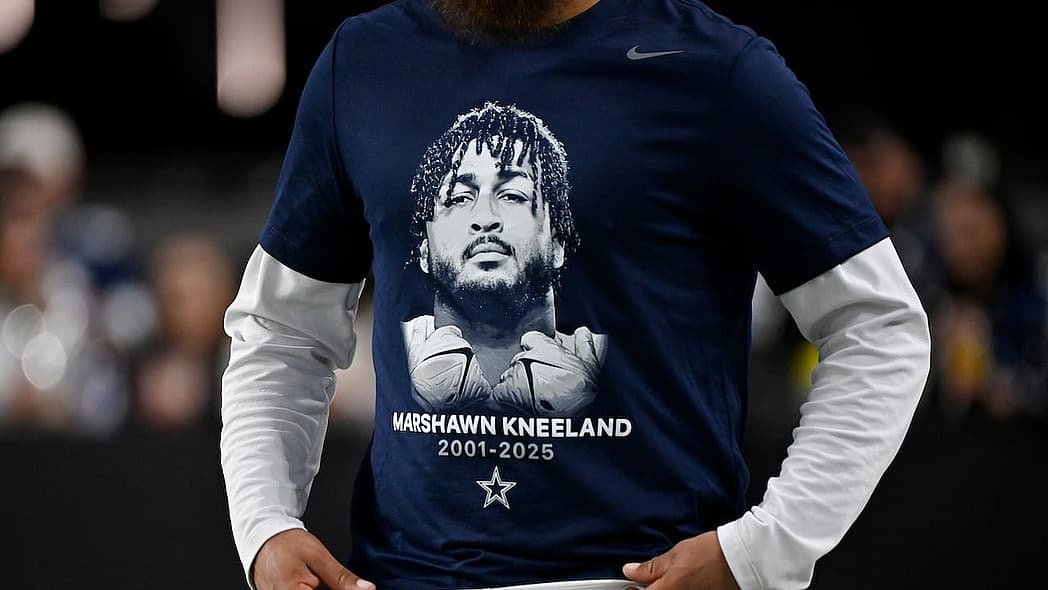
The family of former Dallas Cowboys defensive end Marshawn Kneeland has revealed that he was diagnosed with early-stage chronic traumatic encephalopathy (CTE) following his death in November 2025. They say the findings provide important context about the challenges he may have faced and hope sharing the diagnosis will help raise awareness about the long-term effects of repeated head injuries in contact sports.
As reported by APNews, the diagnosis was made by researchers at the Boston University CTE Center, who examined Kneeland’s brain tissue after his death. The former NFL player, who was 24 years old, was found to have Stage 1 CTE, the earliest of the disease’s four stages.
Kneeland died by suicide in November 2025 following a high-speed police chase. CTE can only be diagnosed after death and has been associated with repeated blows to the head sustained by athletes in contact sports, military veterans and others exposed to repetitive brain trauma. Researchers have linked the condition to symptoms including depression, impulsive behavior and severe mood changes, though symptoms and experiences vary from person to person.
In a statement released through the Concussion Legacy Foundation, Kneeland’s family, including his girlfriend Catalina Mancera, said the diagnosis helps provide a greater understanding of what he may have been experiencing.
“While this diagnosis does not change the tragedy of his passing, it provides important context about some of the struggles he may have been facing. We share this information to help people understand what NFL and other high contact sport athletes might be struggling with.”
The family said they decided to make the findings public in hopes of increasing awareness about the long-term effects of repetitive head injuries among football players and other athletes. “Raising awareness is important to us. We continue to remember Marshawn with compassion for the person he was, rather than defining him by the final moments of his life. One Love.”
The findings add to the growing body of research examining the long-term neurological effects of repeated head impacts in football. The Boston University CTE Center has studied hundreds of donated brains from former athletes, contributing to ongoing conversations about player safety, concussion protocols and brain health across all levels of contact sports.
While researchers continue to study the disease, experts note that CTE cannot currently be diagnosed in living individuals. Scientists are continuing to investigate why some athletes develop CTE while others do not, as well as ways to better detect, prevent and treat brain injuries associated with contact sports.
If you or someone you know is struggling or experiencing thoughts of suicide, help is available by calling or texting 988, the Suicide & Crisis Lifeline in the United States, or by contacting local crisis services in your country.
