
I’ve always wondered what my first trip to Central America would be like. I imagined a lush rainforest, native culture, and breathtaking beaches and views. Luckily, I recently had the chance to experience Belize, and it was everything I imagined and more, including delectable cuisine, a fascinating culture with ancient artifacts, and a wellness oasis nestled in the rainforest with a relaxing atmosphere.
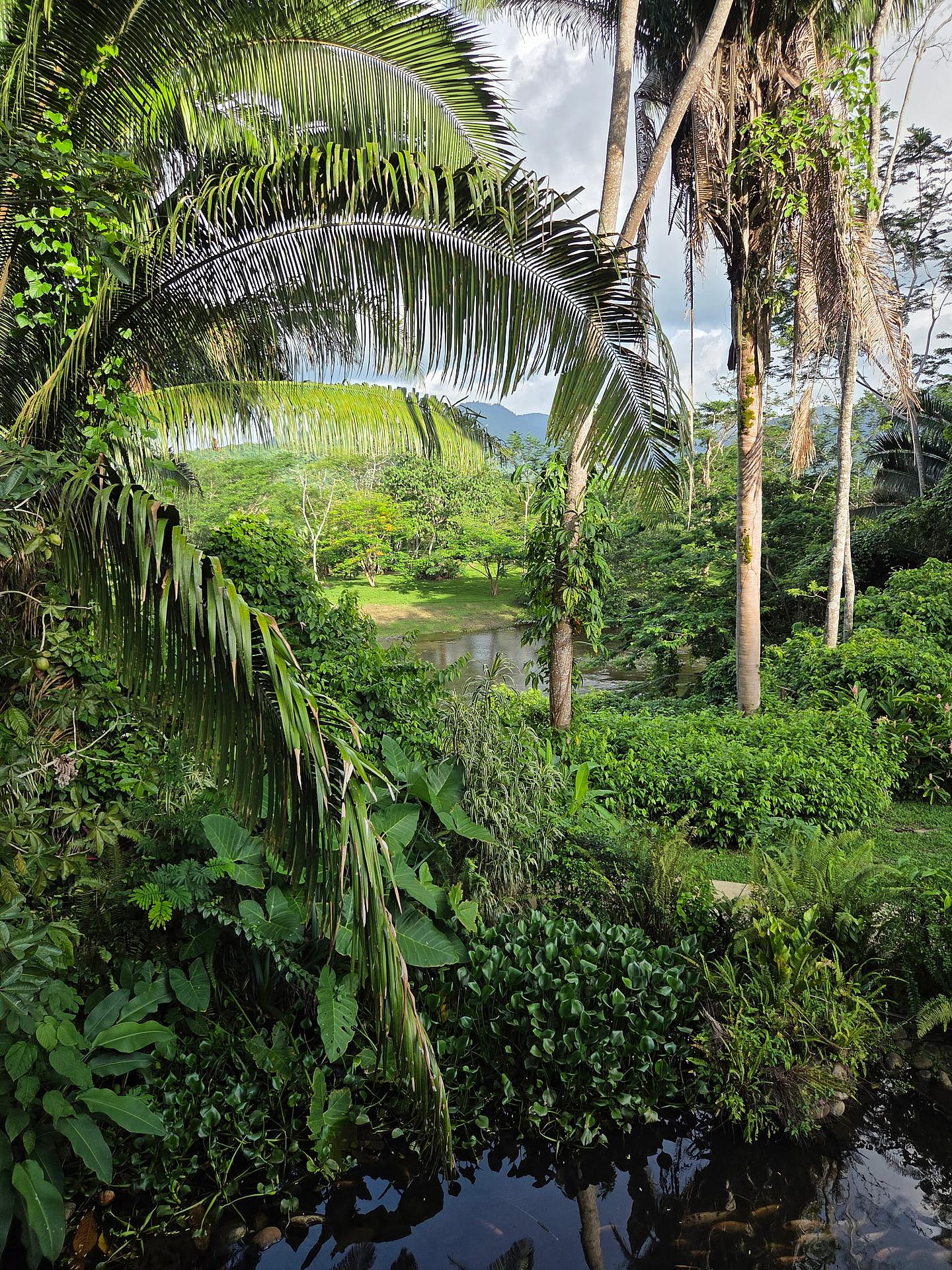
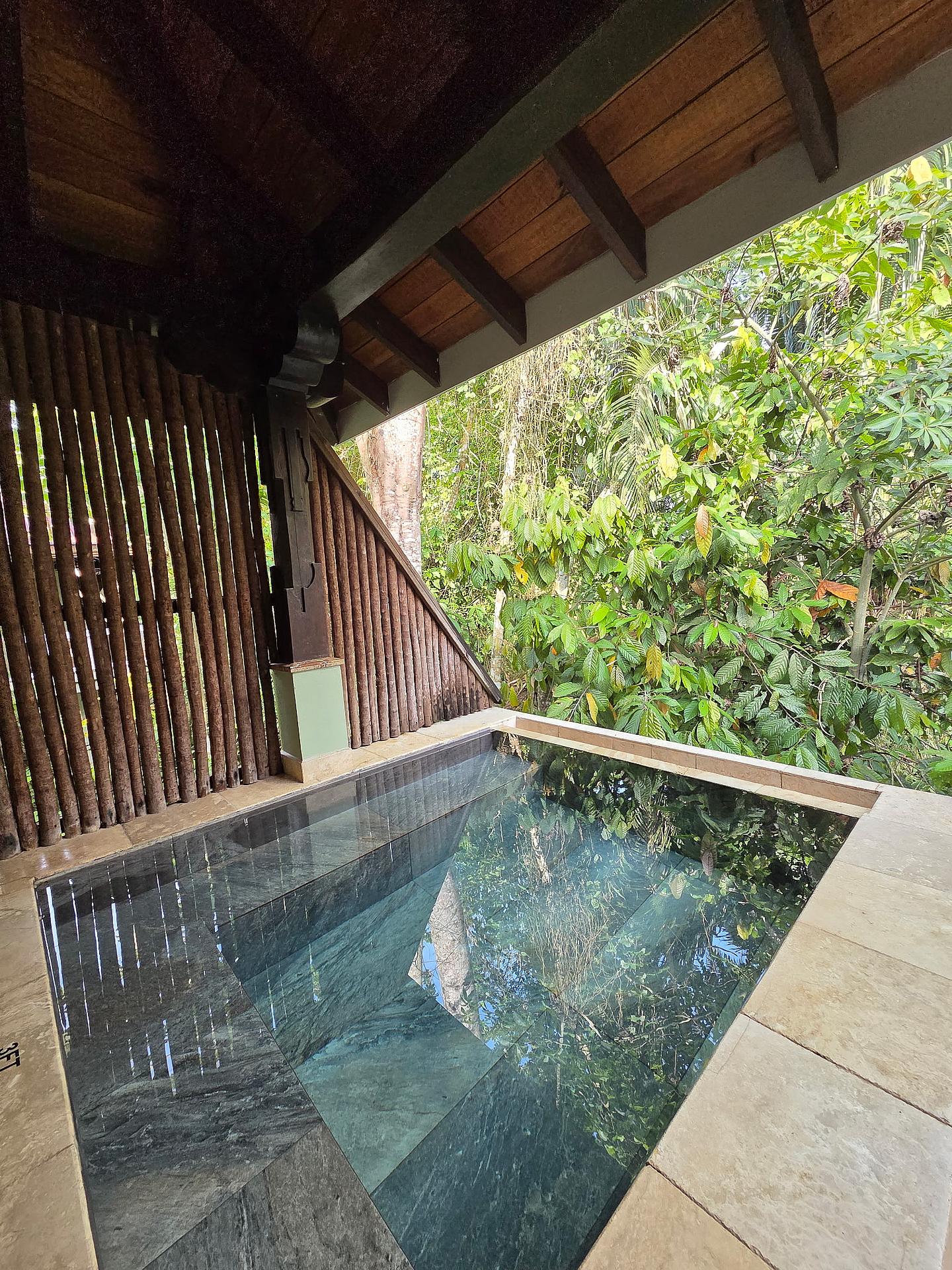
When I first arrived in the country, the Belize Collection hospitality team whisked me away to the Cayo District of western Belize, tucked into the Sibun River Valley alongside the Hummingbird Highway, for a few nights at the picturesque Rainforest Lodge at Sleeping Giant. The Rainforest Lodge at Sleeping Giant is an award-winning eco-resort spread across 600 acres in the Maya Mountain foothills and bordering the Sibun Forest Reserve. During my stay, I experienced an immersive jungle escape, perfect for unwinding by the water in tranquility.
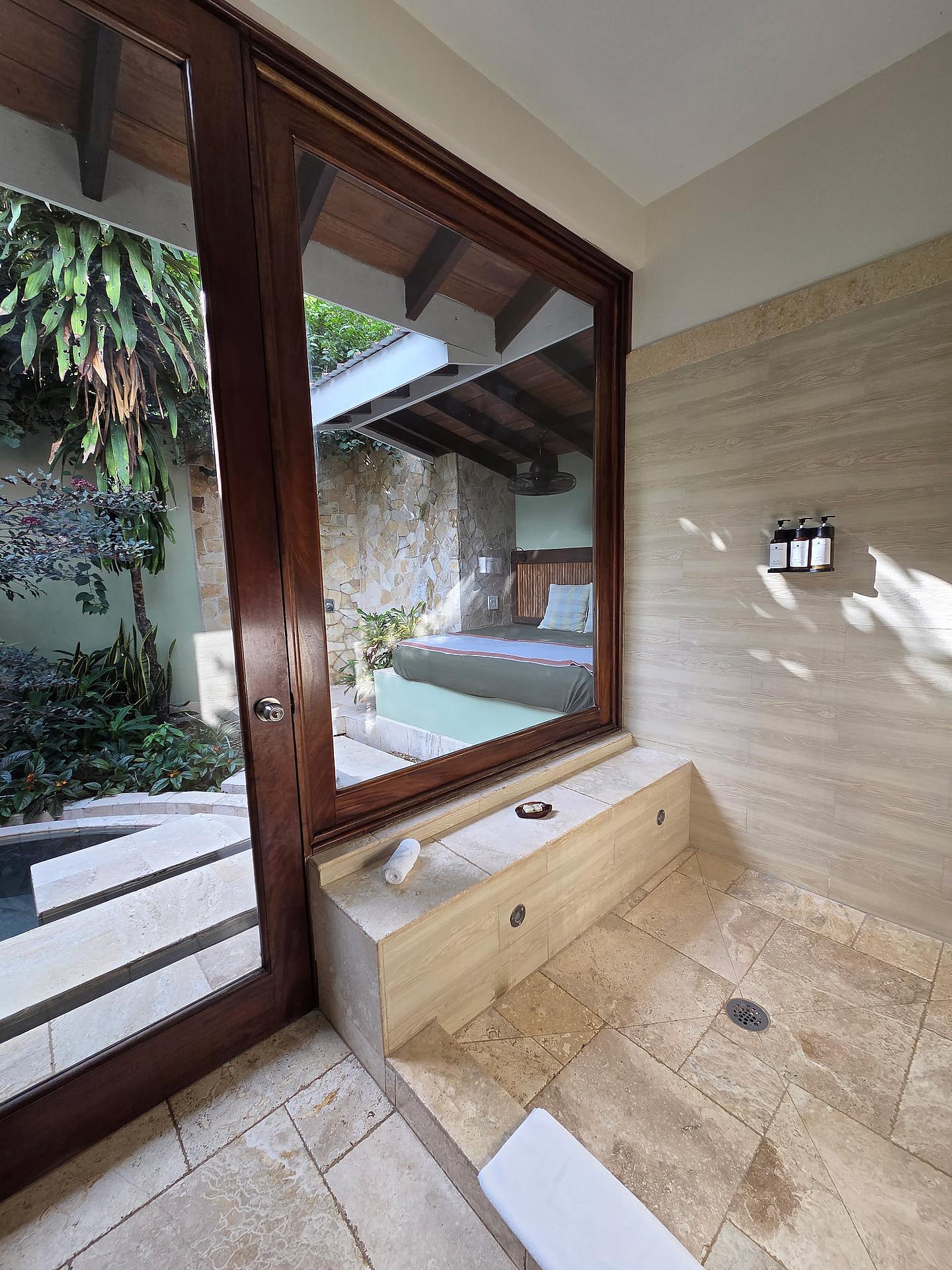
After checking into my suite, complete with a rainforest view and private plunge pool, I headed to Grove House restaurant to taste Central American cuisine. There, I fell in love with indigenous Mayan, Spanish colonial, and Afro-Caribbean flavors—think rice and beans, plantains, slow-cooked meats, rich stews, and my favorite, Belizean fry jacks. It was good I ate well, given the next day I set out on an epic adventure filled with Mayan history, artifacts, and hiking.
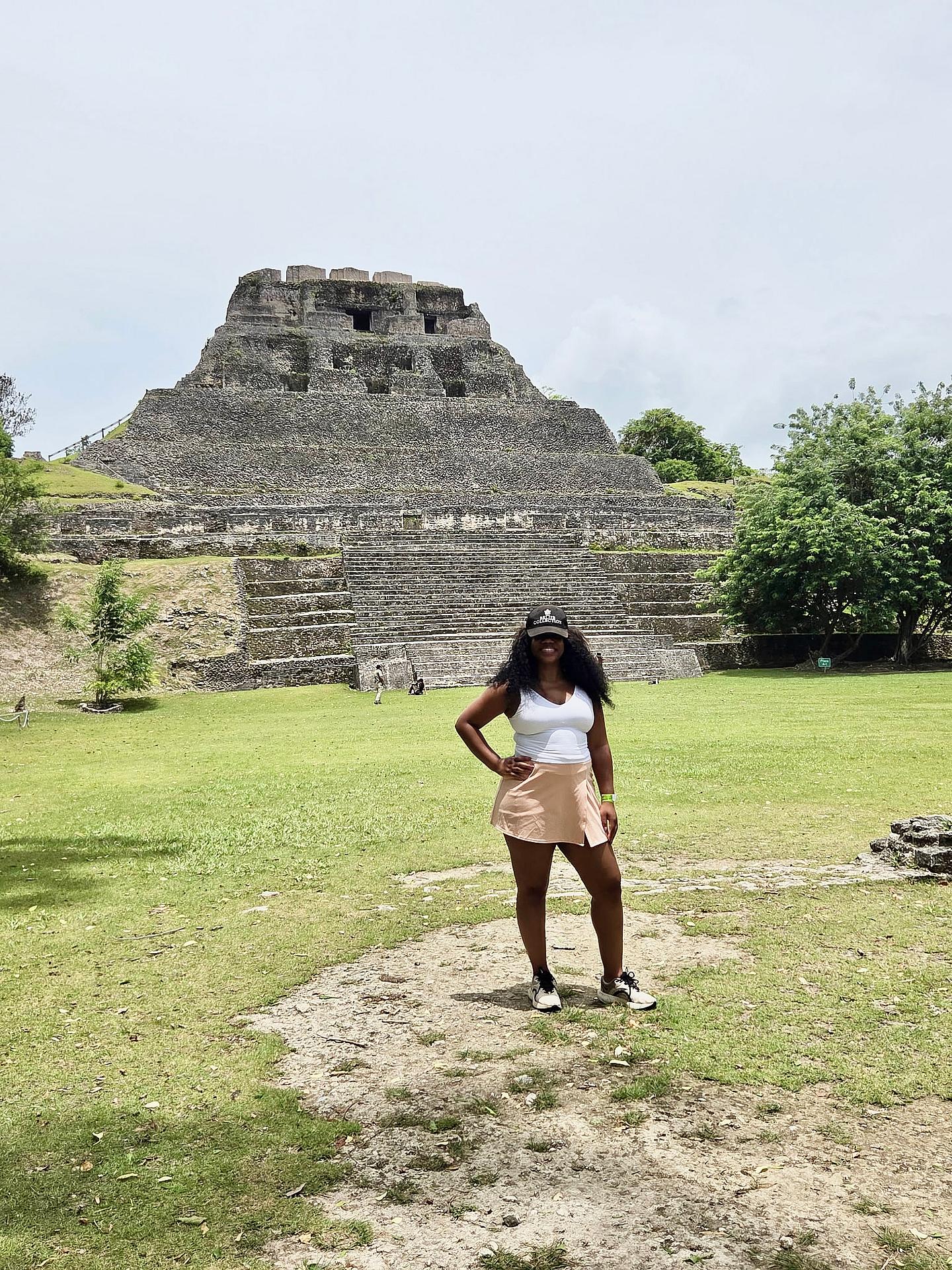
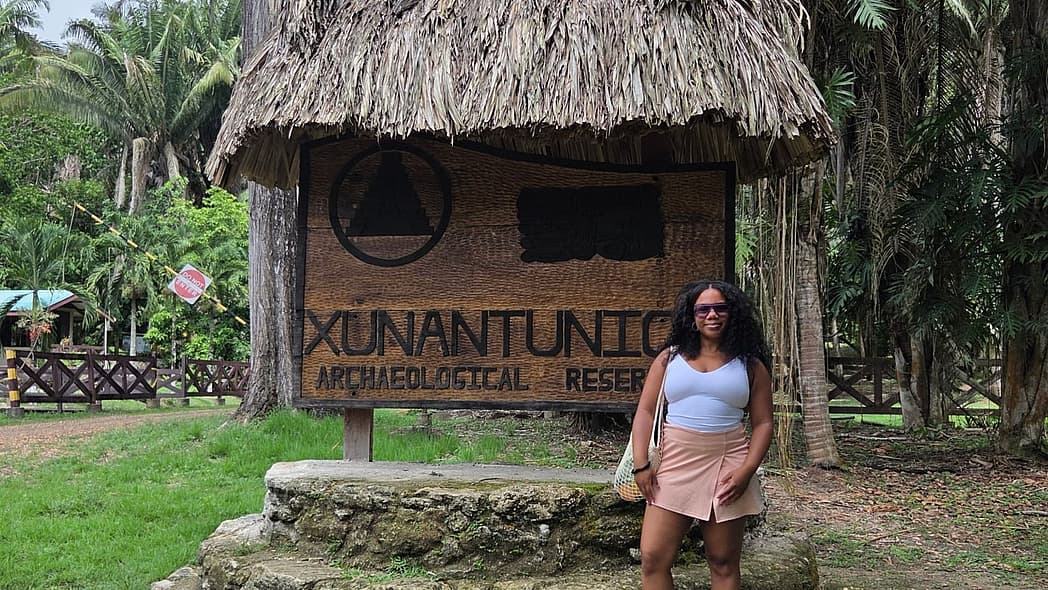
Visiting the Xunantunich Mayan Site: I’d previously visited a historical archaeological Mayan site in the Yucatán Peninsula, Chichén Itzá. But I heard about Xunantunich and desperately wanted to tour it for its sweeping views. It features “El Castillo,” a towering 130-foot pyramid you can climb for panoramic views over the Guatemalan border and the Cayo District, along with 25 structures in total, including impressive pyramids and ceremonial plazas. When I arrived, I immediately felt the spiritual presence of the Classic period of Mayan civilization (between 600 and 900 AD).
I felt calm, curious, and ready to explore the site; what I didn’t know was that our tour group would be climbing “El Castillo,” the site’s featured pyramid. On the climb, I saw intricate stone carvings and hieroglyphs that provided insight into the mythology of the Mayan civilization, and I learned about some of the rituals that took place there. At the top, we saw the other pyramids’ cascades; it was beautiful, and I tried to envision a time when Mayans populated the grounds.
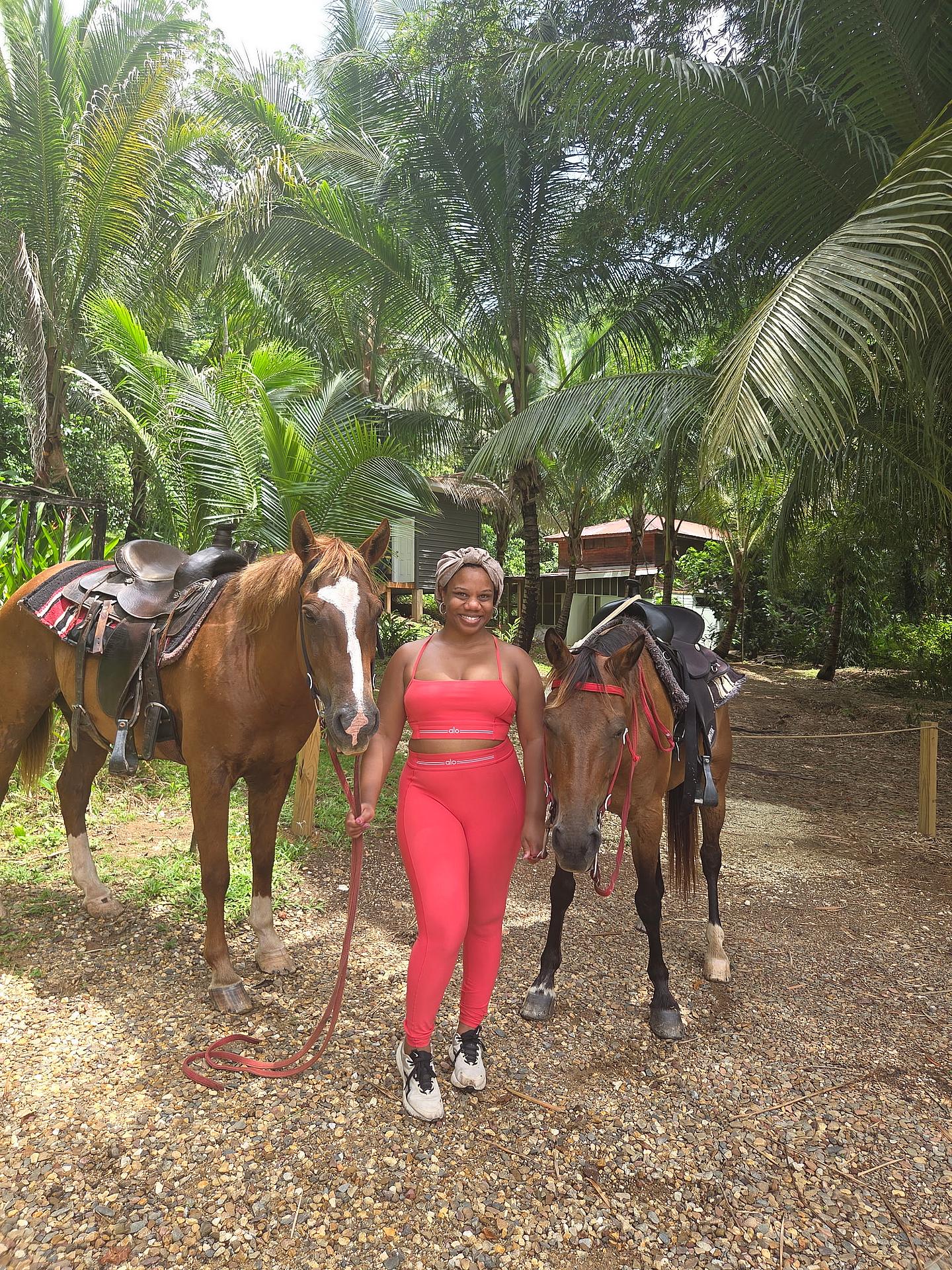
The next day, I decided to spend some time at the Rainforest Lodge at Sleeping Giant by going on a 1-hour individual horseback ride through the grounds and jungle trails with a tour guide, as the hotel has on-site stables. Over the years, I have grown fond of horseback riding as a hobby, but I haven’t done so internationally. The experience was magical; I got to see the many trails, bridges, rivers, and wildlife of Belize.
Before leaving the resort, I had the opportunity to have dinner at The Banks, the property’s sister hotel about a mile away. I enjoyed sweeping views of the gentle slopes of the Maya Mountains and 10,000 acres of boundless, wild paradise. The hotel is gorgeous in its own right, with exclusive villas elevated by private pools and a perfect balance of indoor-outdoor living.
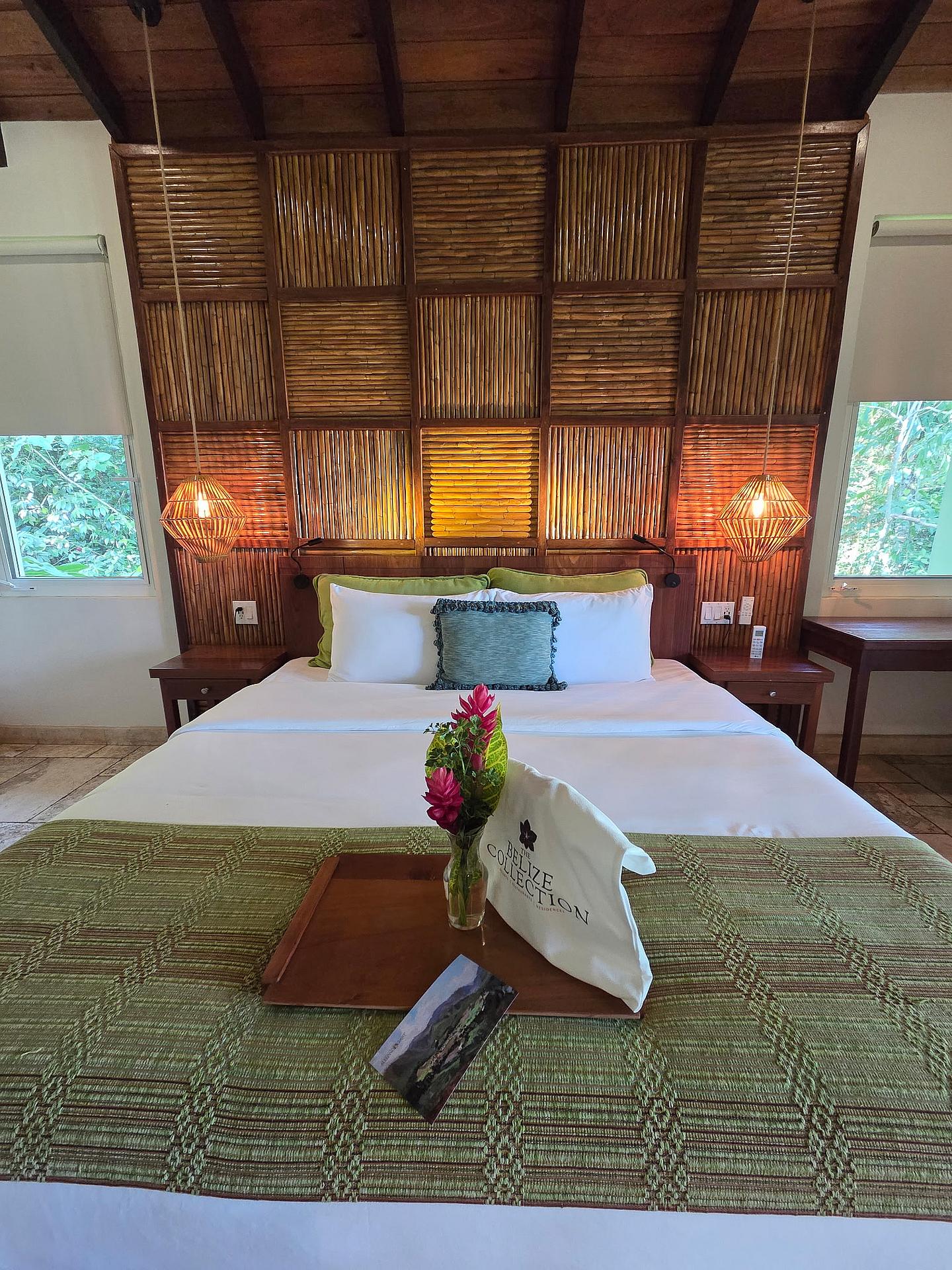
Next, I began my stay at The Lodge at Jaguar Reef, a beach-chic getaway in Hopkins, Belize. Hopkins is a coastal village in southern Belize and is celebrated as the cultural heart of the country’s Garifuna population. While getting settled in after eating lunch at their Big Dock Ceviche Bar, the striking two-story over-the-water ceviche and cocktail bar, I noticed my charming bungalow, a seafront Suite with pool, which allowed for rest and restoration.
In addition to relaxing at the beach and pool during my stay at The Lodge at Jaguar Reef, I made sure to learn about the rich Garifuna culture. The Garifuna are a prominent and vibrant Afro-Indigenous people of mixed West African and Arawak/Kalinago ancestry, originating from the Caribbean island of St. Vincent. The British exiled them in the late 18th century, as the descendants of the Garifuna were West Africans who found themselves liberated from bondage when the Spanish ship they were held captive on crashed. The Garifuna’s resistance to British and French slave labor practices led to their exile and a multi-generational exodus that carried them across the Caribbean Sea, leading them to reside in Belize. Now they have established thriving communities along the Caribbean coast of Central America (Belize, Honduras, Guatemala, Nicaragua).
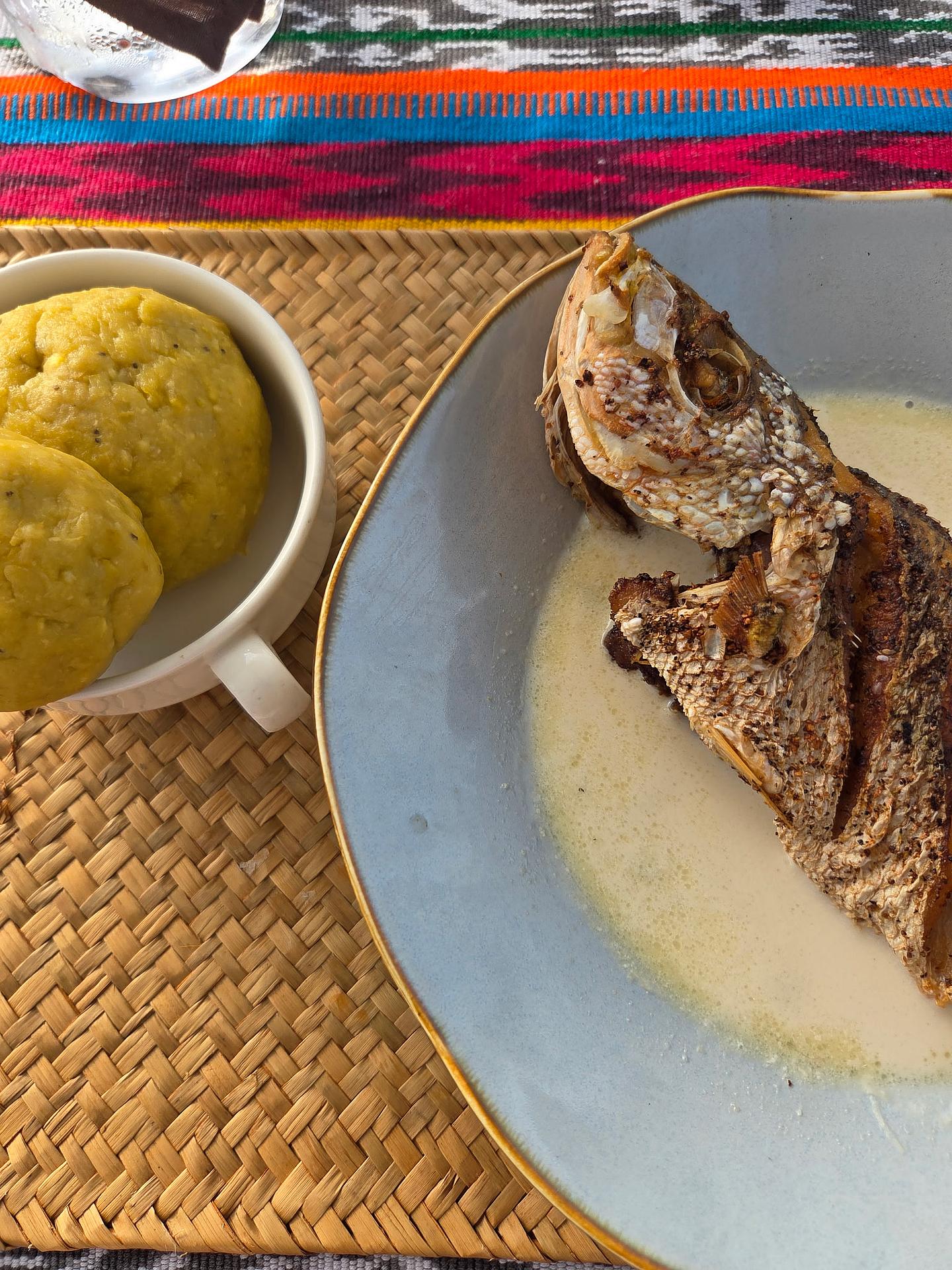
While at Jaguar Reef, I immersed myself further in Garifuna culture by taking an authentic private cooking class on-site with a Garifuna chef. Together, we made a traditional and beloved dish, Hudut. Hudut is essentially a stew that includes fresh fish simmered in a rich, creamy coconut broth called sere. It is served alongside fu-fu, a starchy ball of mashed green and ripe plantains. I immediately noticed the crossover between African and African-American influences, as fu-fu can be found in traditional African dishes, and Hudut also reminded me of New Orleans gumbo.
To close out the trip, I ended up in Southern Belize on the Placencia Peninsula at the boutique hotel, Blue Reef Beach and Marina, where I enjoyed scenic views and a signature massage before heading back home to the States.
For travelers seeking a rich cultural adventure in Central America, Belize is a destination worth exploring, offering a vibrant blend of history, cuisine, and natural beauty.
