
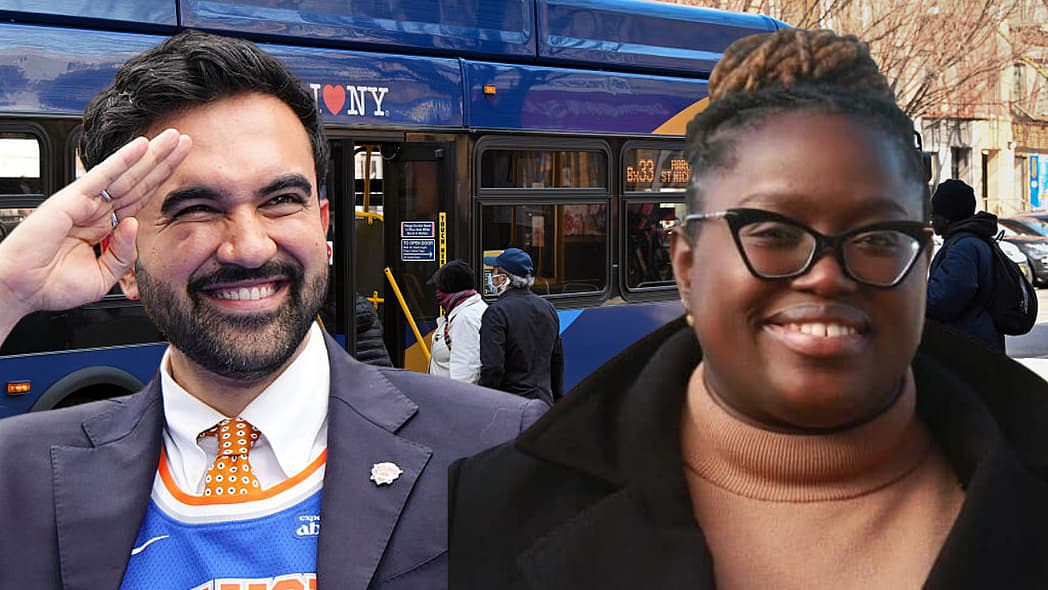
New York City Mayor Zohran Mamdani recently announced nearly $900 million for what the mayor and the New York Governor’s Office are calling a “new generation” of the Big Apple’s public bus system, making them faster and more reliable for everyday working New Yorkers.
“For working New Yorkers, every minute matters. But for too long, our buses have been stuck in traffic instead of keeping pace with the city that never sleeps,” Mayor Mamdani said in a statement announcing the new program expected to be completed by the end of his four-year term. “When a commute stretches longer than it should, that’s less time with your kids, less time with your loved ones and less time enjoying the greatest city on earth.”
Mamdani said he and Governor Kathy Hochul are “investing in faster, more reliable buses because New Yorkers deserve a transit system that respects their time.” He added, “This plan will make it easier to get to work, school, and home — and build a city that works better for the people who keep it running.”
The “Next Stop: Fast Buses, Better Service” project stands to transform, in particular, Black and brown communities across the city that have experienced the intersection of socioeconomic barriers and unreliable transportation for generations. Mamdani’s plan deliberately targets Black communities in Brooklyn, Queens, and the Bronx with the intent to provide a more equitable transformation of New York City’s transportation system.
Diniece Mendes, who is leading Mamdani’s ambitious project at the NYC Department of Transportation in collaboration with the Metropolitan Transportation Authority, tells theGrio, “We’re really excited to make [this] a reality.”
The city official, who has lived in NYC for many years and grew up in New Jersey, explained that the mayor’s north star is to ensure faster, more reliable transportation–most especially for Black and other disadvantaged New Yorkers.
“When we looked at really who’s riding the bus, we’re looking at folks who are low income. We’re looking at people of color and women,” said Mendes.
As a Black woman, she noted that she embodies the “key characteristics” the mayor is the aiming to support, adding, “It’s very close to me in being a part of the solution to improving bus service because there are many folks that look like me who rely on the bus to get around, to go to school, to work, to appointments, etc.”
Mendes said that for many Black, brown and low-income New Yorkers the bus system is a “lifeline,” explaining, “[They] don’t necessarily have an option, particularly in a city that’s extremely expensive when you think about affordability.”
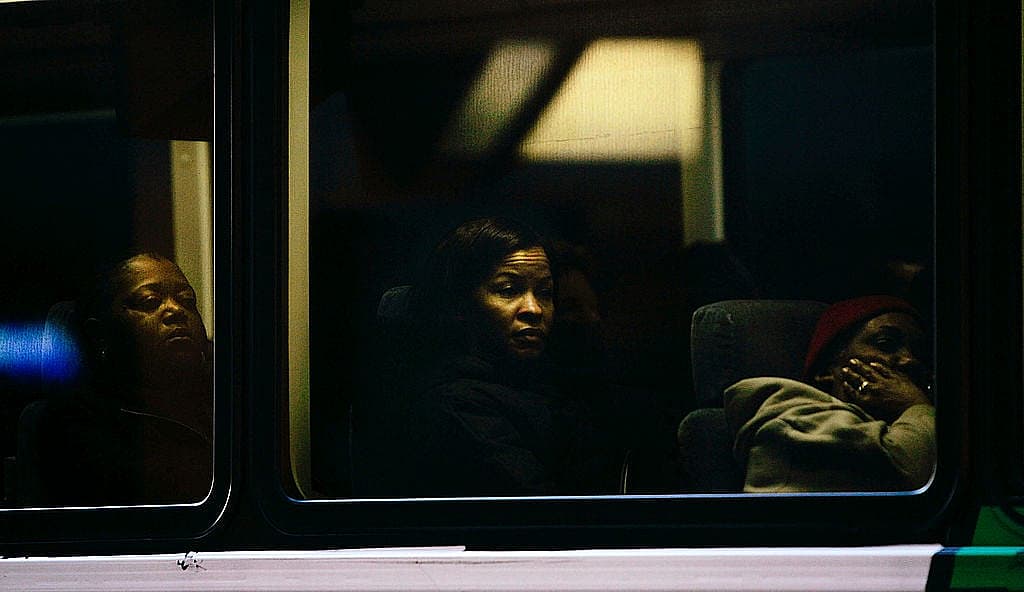
To ensure the “Fast Buses” transformation actually touches Black and brown communities in a meaningful way, Mayor Mamdani’s office collected data to determine the key areas across the city that saw the longest bus commutes and from there identified 50 priority corridors for speed improvements, as well as five next-generation rapid bus routes that promise to save riders as much as six minutes each ride.
“If you take that bus, say to and from work every day, by the time you get to the end of the year, that’s about two whole days that you’re actually saving,” said Mendes. “Being able to give people back a little bit more of that time or reduce the anxiety on your commute is extremely important, and really why we’re sort of centering and thinking about the rider experience.”
The bus plan includes the installation shelters and seating at hundreds of bus stops, roll out thousands of new buses, the phasing in of all-door boarding by 2027 and deliver what the Mamdani administration is calling a “new, world-class rapid bus route” on Flatbush Avenue, a predominantly Black neighborhood, including a large population of immigrants, by 2030.
Mendes said the transformation is not only impacftul for riders but local businesses near the bus corridors. She told theGrio, “It focuses on sort of broader equity [and] sort of the the ridership demand, the economic sort of connection and development with the surrounding community as well.”
The multi-million-dollar project is a tall order, and Mendes admits she’s “feeling the pressure,” however, she was essentially built for this moment.
She takes on the massive project after working at DOT for over 12 years, where she has implemented her critical background in engineering. Prior to her current role, she led New York City’s freight mobility program, modernizing how goods moved through the city while balancing sustainability and quality of life.
Mendes received her bachelor’s and master’s degrees in civil engineering at City College of New York and University of Texas at Austin, respectively. Given that Black women make up less 2% of the engineering workforce, Mendes’s role in transforming the nation’s largest city transportation system is significant. She credits being introduced to engineering at a high school mentorship program that brought inner-city kids to connect with real-life architects, engineers and construction professionals.
“We got a firsthand view, being able to go to construction sites or speak with engineers and planners and speak to them about their profession and actually learn about engineering,” Mendes shared.
She told theGrio, “I’m really honored and excited,” adding, “It is a lot of responsibility and a lot of that’s weighing on this…[we’re] but also rising to the occasion because we deserve that for New York City.”
Mendes praised Mayor Mamdani for his leadership and setting the path for what will be a historic infrastructure build in the city that never sleeps.
“I think the mayor has shown that when you invest inthe key issues for New Yorkers and actually deliver on that, that brings a certain level of credibility,” she told theGrio. “His focus on improving people’s daily lives lands with so many other folks. It resonates strongly just because he is actually delivering on what he said he would be doing.”
