
For many Black Americans, Kyle Rittenhouse’s acquittal on all charges by a Wisconsin jury on Friday confirmed their belief in two justice systems: one for white people and another for Black people.
Rittenhouse, the two men he killed and the man he wounded were all white, but the case has been linked from the start to issues of race and the criminal justice system.
Activists have previously pointed to differences in how police handled Rittenhouse’s case and that of Jacob Blake, the Black man who was shot by a white Kenosha police officer in August 2020, sparking protests in the city that became destructive and violent.
Video footage played during the trial showed Rittenhouse running toward police still wearing his rifle, and continuing past the police line at officers’ direction. He turned himself in to police in Antioch, Illinois, early the following day.
And though Kenosha prosecutors filed serious charges that had the potential to put Rittenhouse in prison for life, the criminal trial also struck many activists as unusually deferential to the defendant.
“You can really smell and see the underlying systemic racism that’s in the judicial system and the policing system,” said Justin Blake, Jacob Blake’s uncle, following the verdict.
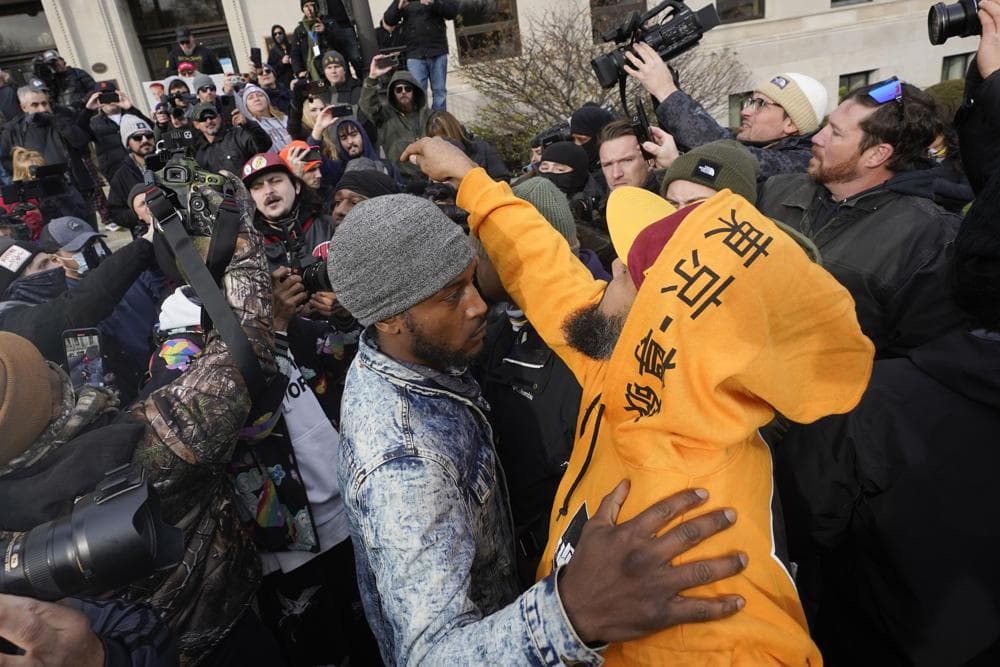
Black activists in Kenosha said the verdict showed they need to continue pushing for change in their city and state — in local elections, in education and in changes to policing.
“You cannot tell me that these institutions are not sick,” said Kyle Johnson, an organizer with Black Leaders Organizing Communities. “You cannot tell me that these institutions are not tainted with racism.”
Many legal experts had said Rittenhouse had a strong argument for self-defense under Wisconsin law and could be acquitted. Prosecutors had to overcome Rittenhouse’s claim that he feared for his life, and some of the states’ own witnesses made that more difficult.
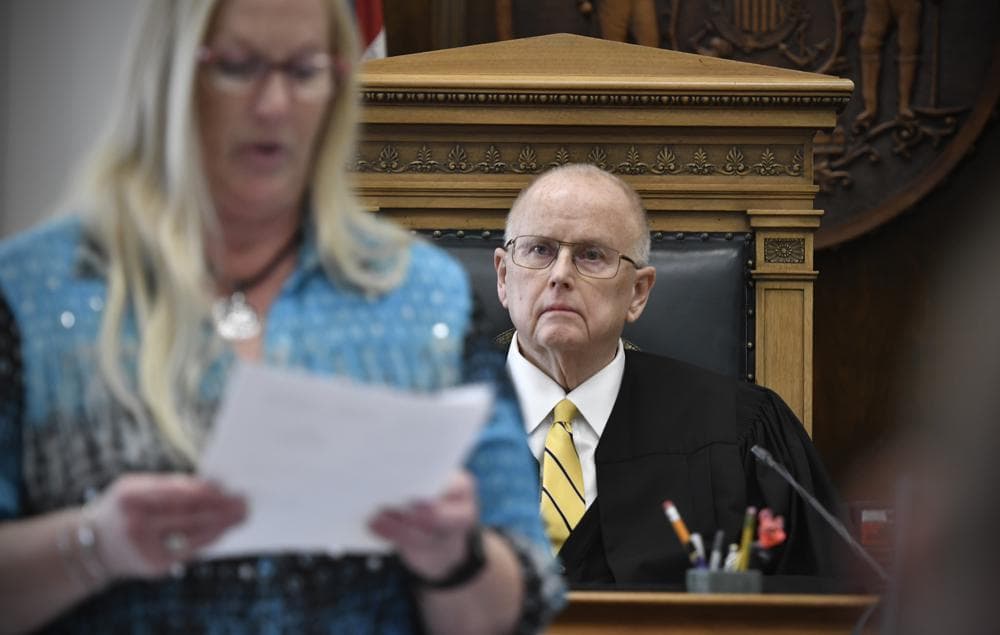
Still, Judge Bruce Schroeder’s handling of the case drew scrutiny at several points, including when he said before it began that the men Rittenhouse shot could not be referred to as “victims” at the trial — a longstanding rule in his courtroom. Schroeder also led a round of applause for military veterans just as a defense witness who had served in the Army was about to testify, and let Rittenhouse himself draw juror numbers to dismiss alternates — also his longstanding practice.
Local attorneys characterized most of the 75-year-old judge’s rulings and methods as typical for his courtroom and within the boundaries of the law, and Rittenhouse attorney Mark Richards said he had “never seen so much made of so little.”
But others questioned whether Schroeder’s decisions influenced the jury.
“From the outset, this case has pulled back the curtain on the profound cracks in our justice system — from the deep bias routinely and unabashedly displayed by the judge, to the apathy of officers who witnessed Rittenhouse’s crimes and did nothing,” said Ben Crump, a civil rights lawyer who has represented the families of Jacob Blake, Trayvon Martin and Ahmaud Arbery. “If we were talking about a Black man, the conversation and outcome would be starkly different.”
Richards said Schroeder has a reputation for tough sentences but “gives you a fair trial as a defendant.”
“And if we lost, we knew what was going to happen,” Richards told reporters after the verdicts. “So it wouldn’t have mattered whether it was that judge or some other judge. He’s getting life in prison.”
Frankie Cooks of Kenosha, standing at the courthouse steps shortly after Rittenhouse’s acquittal, wasn’t angry over the outcome. She said she couldn’t be sure jurors got it wrong.
The complaint from Cooks, who is Black, was that she has never heard of Wisconsin’s self-defense laws working in favor of those in her community.
“Rittenhouse wouldn’t have been acquitted if he was a Black man,” Cooks said.
For Cooks it’s personal. She said her 20-year-old son, Tyrese Sherrod, is charged with opening fire at several men who she says attacked him at a Kenosha gas station in October. He faces five felony counts, including first-degree recklessly endangering safety and first-degree reckless injury, according to the Kenosha News.
According to a complaint and video in the case, at least one person who Sherrod shot at had earlier pulled a gun on him. After Sherrod fired around 10 shots, he reportedly fled the scene.
“I’d like to see them handle his case — the case of a Black kid — like they handled this one,” she said. “I want to see that.”
Rittenhouse’s acquittal created fear that protesters against racial injustice and other causes will be in danger from right-wing causes that already deemed Rittenhouse a hero after the shootings. The Rev. Jesse Jackson, the longtime civil rights leader and activist, told The Associated Press that it suggests “it’s open season on human rights demonstrators.”
“The concern over this verdict is compounded by the fact that (Jacob) Blake, who was originally the issue, was shot by a policeman seven times in the back. He’s in a wheelchair today, paralyzed forever. And that policeman is walking the streets of Kenosha, on the force today,” Jackson said.
Have you subscribed to theGrio podcasts, Dear Culture or Acting Up? Download our newest episodes now!
TheGrio is now on Apple TV, Amazon Fire, and Roku. Download theGrio today!
