
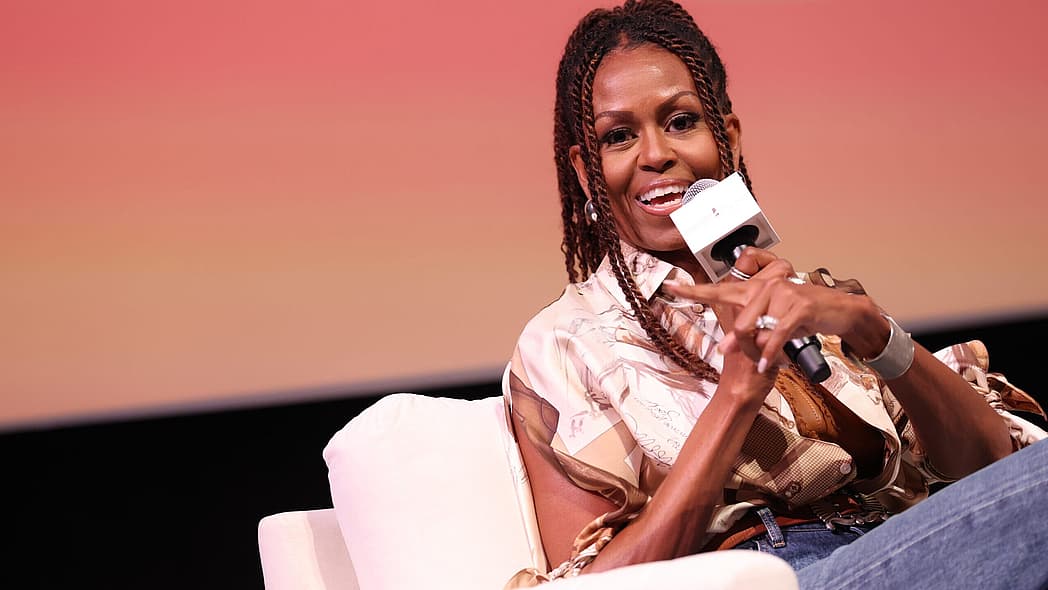
Michelle Obama may be sporting her signature silk press on the cover of People magazine’s latest issue, but the former First Lady is reveling in the “freedom” of being able to control her style.
In a new profile with the outlet ahead of the release of her upcoming coffee table book “The Look,” which chronicles her style during her tenure as the first Black First Lady—out November 4—the 61-year-old author and podcast host opens up about her personal style and why, in particular, she wears braids.
“It’s freedom,” she said, before touting how convenient they are for her busy lifestyle now.
“[In the White House] I wasn’t sure whether the country was ready for it. The Crown Act hadn’t been passed yet, and just like fashion, I didn’t want my hair to become a distraction,” she continued. “But I understood the significance of wearing braids to our portrait unveiling. I wanted to send a message, add to the discourse of Black women in places of power, saying, ‘This, too, is an appropriate and beautiful way to wear your hair.’”
In the nearly ten years since the Obamas left the White House, Michelle’s style has undergone a striking evolution. The crisp jewel-tone sheath dresses, structured cardigans, and classic pumps that once defined her diplomatic wardrobe have given way to statement looks—think thigh-high holographic Balenciaga boots, flowing box braids, and bold prints. Yet, for all the ease and playfulness of her current style, Michelle clarified that her fashion choices as First Lady weren’t restrictive so much as intentional.
“I just understood the assignment,” she said. “It was a complicated assignment. The role of First Lady is a kind of job, non-job. You know that you’re supposed to be inspirational, yet accessible. You should be uniquely yourself, authentic, but representational at the same time. And as a Black woman, I felt that I had to make sure that people could see my feminine side.”
Early on in the campaign, Michelle recalled the ways her femininity was being attacked as an “angry Black woman,” a “shrew,” and for potentially demeaning her husband.
“All these labels were coming in on me that were essentially trying to rob me of that femininity,” she explained. “I understood that, going into it. And I didn’t feel like it was a struggle to do it, because number one, I respected the position. I took the role as First Lady very seriously. I was a famous person, but I wasn’t a starlet. And so that meant that the clothes could never speak louder than anything I had to say.”
