
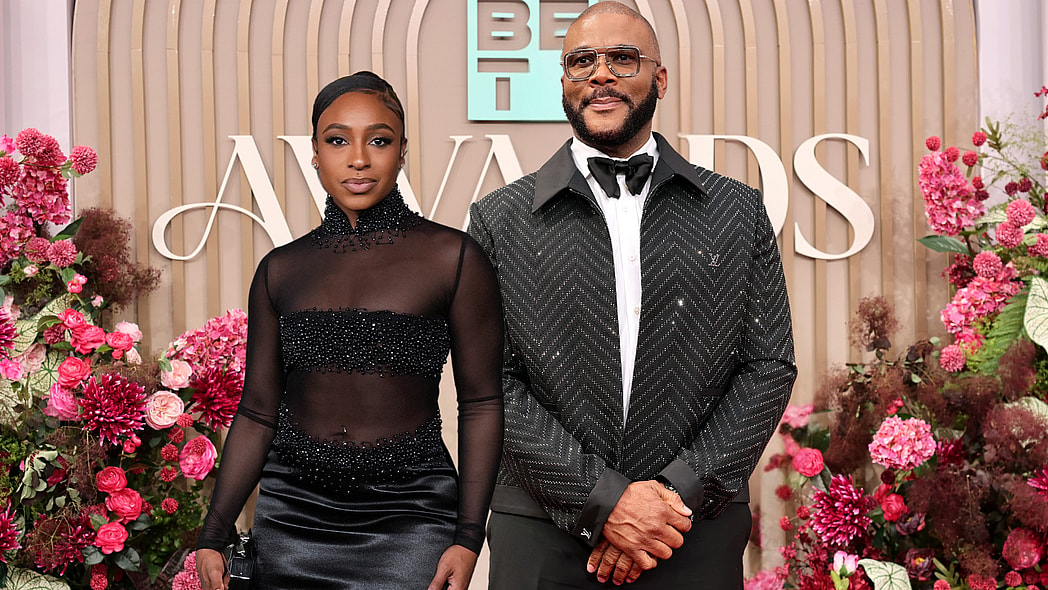
Social media users are never shy about sharing their opinions, especially when it comes to Tyler Perry productions. From his films to his television shows, Perry’s productions are guaranteed to have drama and spark mixed reactions on social media.
While speaking to theGrio, Taylor Polidore Williams, the leading lady in the Netflix series “Beauty In Black,” addressed some of the criticism Perry receives for his depictions of Black women.
“So my biggest thing with that type of commentary is Black women…Black people are not a monolith. We’re not one way,” Williams said. “And I think if you have so much criticism about the story of these women in Tyler’s projects, go through and say, ‘I don’t know that it shouldn’t be depicted.’ I’m not sure what the actual action behind the commentary is, but it’s extremely alienating to the hundreds and thousands of women who say, ‘I’m just like you. I’m just like this character. I went through that, I feel seen.’”
In the Netflix series, Williams plays Kimmie, a stripper who viewers get to see evolve into a boss through a series of unexpected circumstances. Beyond Kimmie’s character, “Beauty In Black” spotlights themes of trafficking, sex work, power, manipulation, and more.
“He speaks to those people, those women who have been through this, who do feel seen in these characters, and honestly, just like any art, if it doesn’t resonate with you, cool, don’t watch it,” she continued. “That’s the beauty of having so many other filmmakers, and why we need black people to tell our stories, because maybe that’s not your story. These are Tyler’s stories. These are things that mean something to him, and he’s telling them.”
She continued: “So it’s like, if you want to do something different, you do it. [Tyler Perry] champions and stands for that. If you want to tell a different story, tell a different story. This is the story he’s going to tell, because it is reflective of people’s experience, and just because it isn’t your experience doesn’t invalidate those who it does reflect.”
The actress herself admits that, even though she and her character are drastically different, she was able to build a connection with Kimmie in terms of her resilience and advocacy.
“Kimmy and I are really different in a lot of ways,” she told theGrio. “I do think the protector aspect of Kimmie is something that resonates deeply with me. I’m a big sister, but I’m also an advocate for young people, for children’s rights. My court-appointed advocate for youth and foster care. So when it comes to speaking up for people, particularly people I care about, or groups that have been marginalized, I take that very seriously. And I think in the same vein as Kimmie, it’s easier for me to fight for others than to fight for myself.”
Ultimately, Williams’ final message to critics is simple: “You can think whatever you want, but people do feel seen. I get messages every day that are like, ‘wow, this is what I’m going through. I dealt with this.’ So if it’s not for you, it’s not for you.”
