
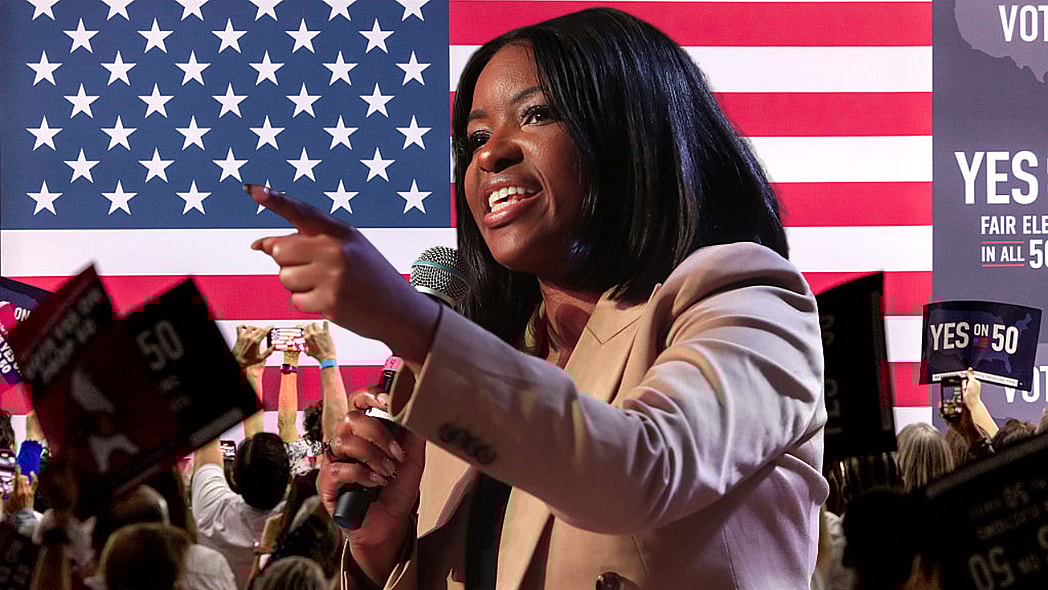
Jasmine Crockett, the high-profile congresswoman from Texas, has officially launched her campaign for the U.S. Senate, marking the beginning of a historic campaign that could see her become the first Black woman to hold the seat from the state. It would also mark the first time in the history of the Senate that three Black women have served simultaneously.
Crockett filed paperwork to become a candidate for the Democratic primary election on March 3.
The 44-year-old congresswoman has hinted since October that she would consider running for the Senate after Texas Republicans redrew the state’s congressional maps, impacting several districts represented by Black and Latino Democrats. Crockett’s bid for the Senate means she will have to resign from Congress, leaving her 30th district wide open for a Democratic primary.
“Congresswoman Crockett has been an unapologetic voice fighting against the Trump Administration’s attacks on working-class people and everyday people,” Jamarr Brown, former executive director of the Texas Democratic Party, told theGrio.
He continued, “Whether the attacks on DEI programs, the attacks on reproductive health care, the attacks on the economy, the elimination of federal jobs…She has been a leader in voicing the opposition in the halls of power.”
Crockett is a former civil rights attorney and served in the Texas State House of Representatives, where she became a vocal opponent of Texas Republicans’ voter restriction laws. Since entering Congress, she quickly emerged as a popular Democrat, resulting in her name being repeatedly mentioned by President Donald Trump.
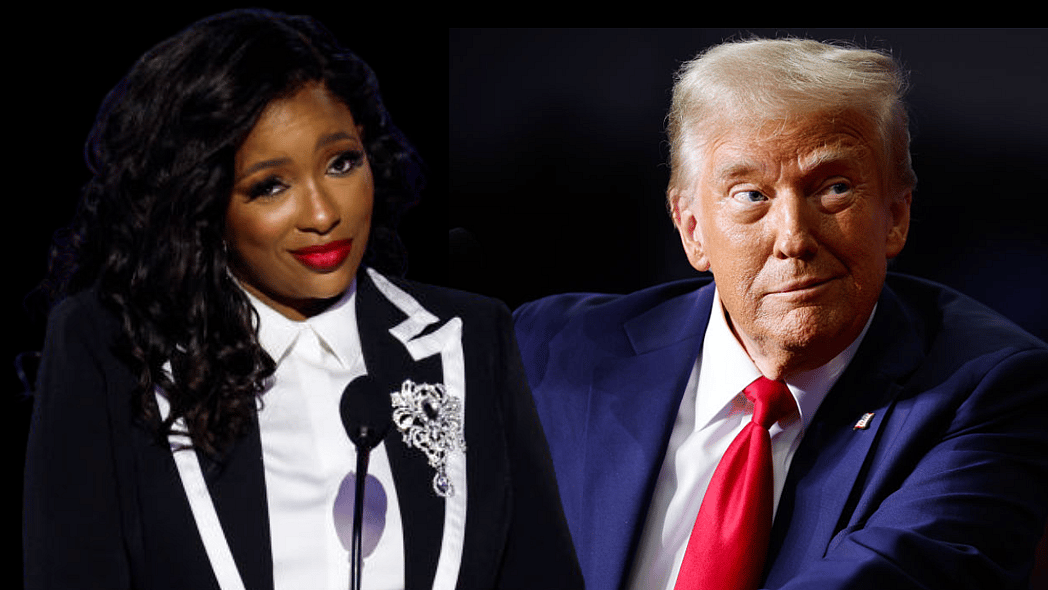
Crockett will have to survive a Democratic primary against James Talarico, whose national profile has been growing in recent months. However, if she successfully wins the nomination, she faces an even greater uphill battle against the Republican nominee in a “red” state that hasn’t elected a Democrat to the seat since 1988.
Democratic strategist Dallas Jones, who is based in Houston, told theGrio, “You can’t count Jasmine Crockett out.”
“Can she pull it off? She absolutely can. I think she represents the best and brightest of our state,” said Jones, who is president and CEO of ELITE Change, a political consultancy firm.
“You can look at her rise and trajectory; even from the moment she ran to the State House, she ran against the establishment of the party. When she ran for Congress, there were people who thought that there might have been others who would have emerged in that seat. And not only did she win it, she ran away with it,” Jones explained.
Jones said that while some of his fellow Democratic colleagues have argued that Crockett would be the “worst candidate” to run in a general election, he believes “that’s not necessarily true.”
“In a majority-minority state, we’ve got dormant people, communities that have traditionally stayed home because we have not yet had a candidate to electrify them,” he told theGrio.
He said her candidacy could especially galvanize Black voters.
“When was the last time we had a major candidate at the top of the ticket here in Texas who could excite Black folks in such a way?” said Jones.
Brown noted that Crockett is “well-respected” amongst the Democratic electorate, most especially Black voters and voters of color.
“It will be a challenging race, but not an impossible race, and I think that she has what it takes to do that,” he said.
As a Black woman, Crockett would make history and further drive home the fact that Black women continue to be the base of the Democratic Party and the “bedrock of progress in our country,” said Brown.
“We have had a Black woman as the Vice President of the United States, and I do think that we have opportunities to elect Black women in government spaces all across the country. Just last cycle, we elected two Black women, Angela Alsobrooks and Lisa Blunt Rochester, to the United States Senate,” he noted.
“This could be a potential opportunity to elect another, but also represents how Black women have shown up in the Democratic Party and in the country for a long time.”
