
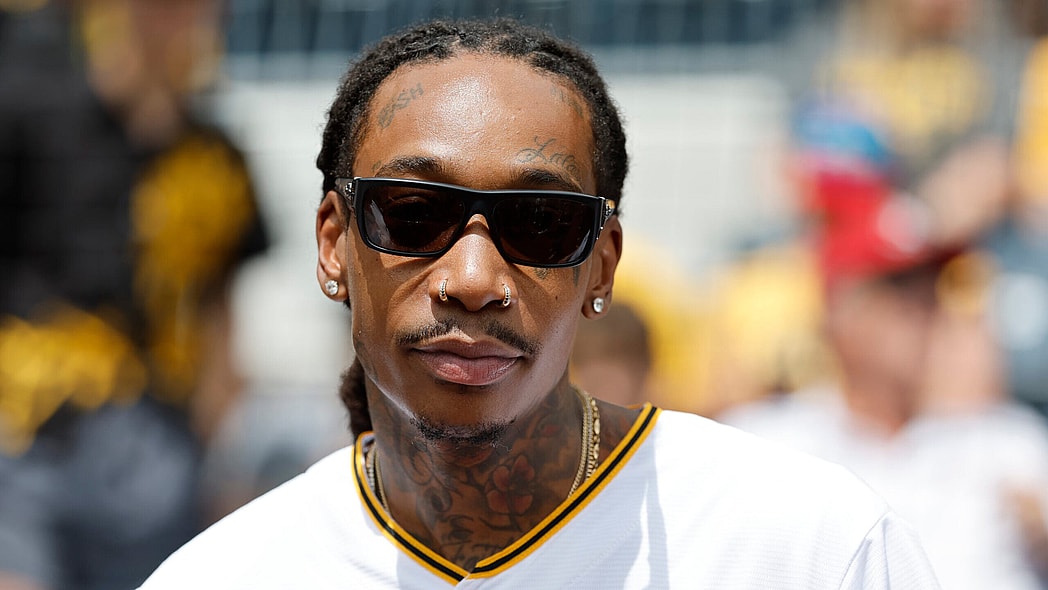
Wiz Khalifa comes from some extraordinary folk.
The 38-year-old rapper, born Cameron Jibril Thomaz, appeared on the latest episode of PBS’ “Finding Your Roots,” hosted by historian Henry Louis Gates Jr., to learn more about his family history.
During his episode, which also features actress Sanaa Lathan, the “Black and Yellow” artist learns that members of his family relocated to Pittsburgh from the South during the Great Migration, an exodus of Black Americans from the South to the North during the early to mid-1900s, when many fled Jim Crow oppression in search of better opportunities across the country. He also discovers that at least one of his relatives, his fifth great-grandfather Howard Williamson, may have been enslaved in Alabama in 1870.
According to census records Gates presented, Williamson lived next door to a white family with the same surname, including a white man named Thomas J. Williamson, who would have owned the property.
“I think I’m programmed to feel a little bit pissed,” the “Khaotic” artist said as he processed the information. “But just him owning my family just sounds crazy. It sounds wild. Yeah… I feel some type of way about that.”
In addition to the census listing, Gates explained they also uncovered a slave schedule connected to Thomas that documented enslaved people by color, age, and gender, rather than by name, including an entry for a 14-year-old boy Gates believed may have been Howard.
“It’s crazy to see him as a nameless person on a grid,” Wiz said, adding, “And to know how valuable that property is because it’s a life and it’s not actually property. It’s a person.”
After emancipation, Williamson went on to build a life working as a tenant farmer, though Gates noted that true financial independence remained out of reach for him. Records also show that Williamson registered to vote, a courageous act at a time when Black Americans faced serious threats and retaliation for attempting to participate in democracy in the years following the Civil War. Over time, he would become the patriarch of a large family, with at least seven children and twenty grandchildren.
Reflecting on what he thinks his ancestors would make of him today, the “Young, Wild, and Free,” rapper said he believes they’d be “proud.”
“They’d be proud that I own some stuff for myself,” he said. “They’d be proud of the attitude that I carry, the confidence that I have, the love that I have for my family, the appreciation that I have for what they’ve done, and even I feel all of them around me, I just don’t know who they are, so now I’m able to say their name.”
