
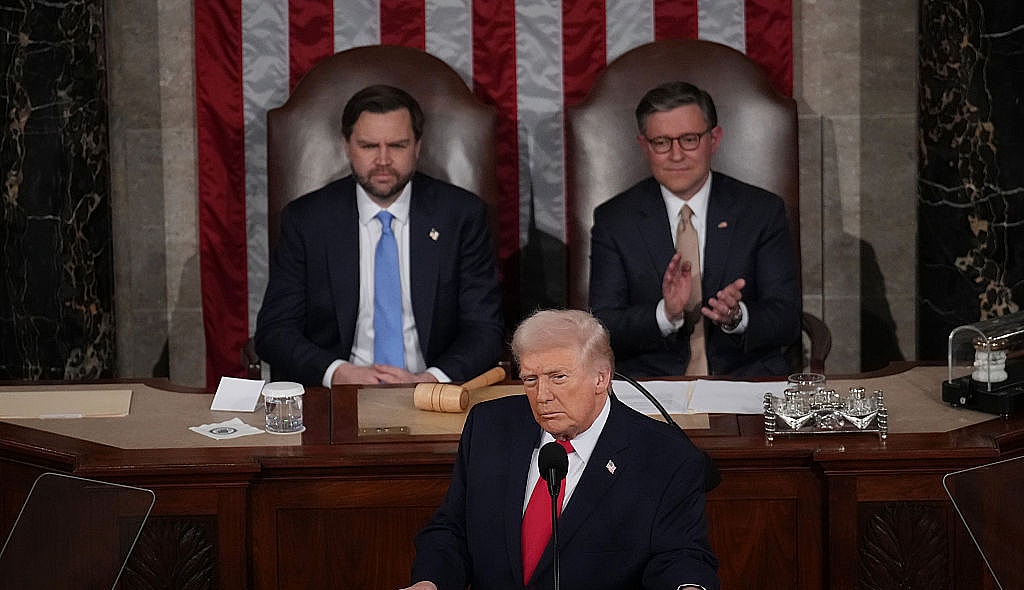
During his State of the Union address on Tuesday night, President Donald Trump gleefully celebrated that DEI in America has ended, drawing strong applause from Republicans.
But is DEI really dead?
Trump’s executive orders (“Ending Radical and Wasteful Government DEI Programs and Preferencing” and “Ending Illegal Discrimination and Restoring Merit-Based Opportunity“) created federal pressure to ban diversity, equity, and inclusion programs and policies, resulting in thousands of Black workers losing their jobs in both the public and private sectors. Trump’s anti-DEI agenda has also caused several companies and universities to roll back their DEI policies. However, DEI is very much alive.
“DEI is not dead. There’s a clear attack on DEI programs, and there’s a clear attack on protections that DEI brings amongst various communities that are engaging in our society,” said Democratic strategist Jamarr Brown, who previously served as executive director at Color of Change PAC.
Brown told theGrio that through their anti-DEI crusade, “Donald Trump and the Republicans are trying to maintain white supremacy and white power at the top.”
Despite their efforts, more than 100 companies–like Apple, American Express, Nike, and LinkedIn–are still upholding their DEI policies in the face of coercion from the Trump White House. In fact, Trump’s war on DEI is either losing or actively being litigated in the court system.
In February, a federal court lifted an injunction on Trump’s executive orders targeting DEI throughout the federal government, impacting federal jobs, offices, and contracting–dealing a blow to legal challenges. However, the court made clear that future lawsuits could be filed if the government implements the EO’s improperly, and other challenges to the EO’s remain pending in other federal courts.
The Trump administration also recently lost in a similar challenge to its threat to withhold billions of dollars in education funding from states and schools that refused to sign a document attesting that they did not have diversity and equity programs. Trump’s order to dismantle DEI at federally funded institutions was recently allowed to move forward; however, the case remains in litigation for further proceedings.
As for companies that have rolled back their DEI policies, members of the Congressional Black Caucus tell theGrio, should Democrats win back control of Congress in the 2026 midterm and 2028 presidential elections, they will seek to hold those companies accountable.
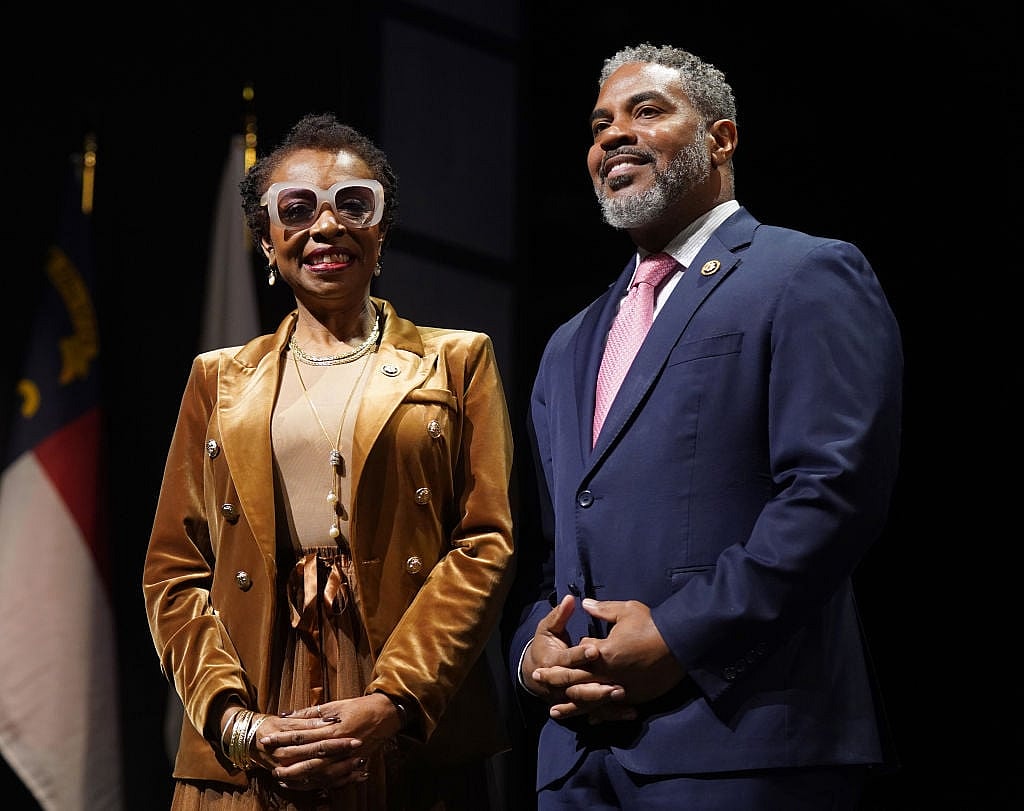
“The pendulum always swings,” U.S. Rep. Steven Horsford, D-Nev., told theGrio. “It’s a business imperative, and so if they want to collude with this administration while dismantling opportunity for Black people…those companies who chose to walk away from their own commitments, their own customers, their own communities, they will be held to account for that.”
U.S. Rep. Yvette D. Clarke, D-N.Y., the chairwoman of the Congressional Black Caucus, told theGrio, “These folks have become wealthy because Black communities across this nation spend billions of dollars in their corporations. Many of their corporations have become lucrative because talented Black people have worked there and continue to work.”
While Clarke acknowledged that there are many corporations that have “pushed back” against the Trump administration’s efforts to rid DEI from corporate America, she said, “I wish many more had that level of integrity.”
The congresswoman added, “The question is, were they genuine in their interest to begin with?”
Some critics question whether DEI policies have ever worked for Black Americans in ways they should.
“Folks must remember that DEI programs were originally started to engage and support white women who were trying to move up in academic and professional and corporate spaces, and people have to remember that at its core,” said Brown, the Democratic strategist.
He continued, “So this is not just an attack on Black communities or brown communities in the way that Donald Trump and Republicans are making it to be. It’s even an attack on their own base.”
